
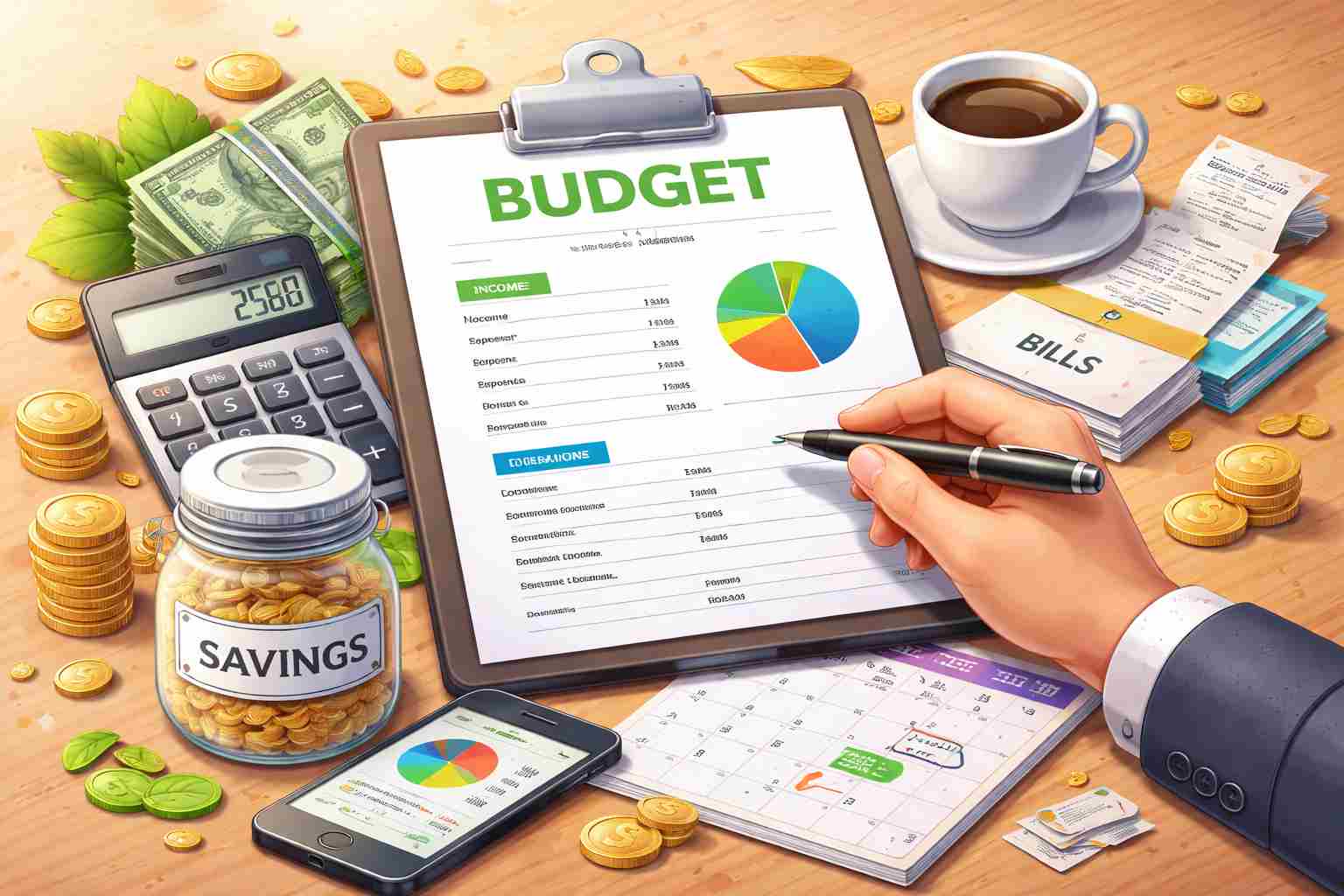
Making a budget means creating a clear plan for how money enters and leaves your life. The Consumer Financial Protection Bureau defines a budget as a written plan that tracks income and expenses over a set period. A budget exists to control cash flow, reduce financial risk, and support savings and goal achievement. This guide explains how to make a budget step by step, using simple English, structured logic, and proven financial practices.
Why Learning How to Make a Budget Matters
A budget matters because money without structure leads to uncertainty. According to data from the Federal Reserve, households that track expenses show higher savings consistency and lower missed payment rates. Budgeting improves decision accuracy because spending becomes intentional rather than reactive.
Key outcomes of budgeting include:
-
Better control of monthly expenses
-
Clear visibility of spending patterns
-
Improved savings behavior
-
Reduced financial stress
A budget is a planning system, not a restriction system.
What You Need Before You Make a Budget
Before learning how to make a budget, preparation is required. Accurate data improves budget reliability.
Collect financial information
Gather the following documents:
-
Recent pay stubs or income statements
-
Bank statements for the last 1–3 months
-
Credit card statements
-
Utility bills and subscription records
Choose a time frame
Most budgets use a monthly cycle. Monthly budgeting aligns with rent, utilities, and billing schedules. Weekly budgets suit short-term cash control but require more tracking.
How to Calculate Your Income Correctly
Income is the starting point of every budget. Financial institutions such as NerdWallet and Bank of America recommend using net income, not gross income.
Identify income sources
Income includes:
-
Salary or wages after tax
-
Freelance or contract income
-
Government benefits
-
Verified side income
Handle irregular income
If income changes each month:
-
Review income from the last 6–12 months
-
Calculate an average
-
Use the lowest monthly amount as the budget base
This method reduces the risk of overspending.
See More: Home Buying Tips for Single Mothers USA – Complete Practical Guide
How to List and Organize Expenses
Expenses define where money goes. Correct expense listing is essential when learning how to make a budget.
Fixed expenses
Fixed expenses remain stable.
Examples include:
-
Rent or mortgage
-
Insurance premiums
-
Loan payments
-
Internet and phone bills
Variable expenses
Variable expenses change month to month.
Examples include:
-
Groceries
-
Fuel
-
Dining out
-
Entertainment
Periodic expenses
Periodic expenses do not occur monthly.
Examples include:
-
Annual insurance
-
Car repairs
-
Medical bills
-
Holidays
Divide annual costs by 12 to convert them into monthly amounts.
Expense Categories Table
| Expense Type | Examples | Budget Behavior |
|---|---|---|
| Fixed | Rent, insurance | Predictable |
| Variable | Food, fuel | Adjustable |
| Periodic | Repairs, gifts | Planned monthly |
How to Set Financial Goals Inside a Budget
Goals give direction to money. The Federal Reserve links goal-based budgeting to higher emergency savings.
Types of financial goals
-
Short-term: emergency fund, bill payments
-
Medium-term: vehicle purchase, education
-
Long-term: retirement, property ownership
Prioritize goals
Rank goals by urgency and importance. Allocate funds to goals before discretionary spending.
How to Choose the Right Budgeting Method
Different methods suit different income styles. Choosing the correct method simplifies how to make a budget.
50/30/20 budgeting
This method divides income as follows:
-
50% needs
-
30% wants
-
20% savings and debt
This method suits stable income earners.
Zero-based budgeting
Zero-based budgeting assigns every dollar a task.
Income minus expenses equals zero.
This method increases control and awareness.
Envelope budgeting
Envelope budgeting sets category limits.
Spending stops when the category limit ends.
This method improves discipline.
Budgeting Methods Comparison Table
| Method | Best For | Key Feature |
|---|---|---|
| 50/30/20 | Beginners | Simple ratios |
| Zero-based | Detail control | Every dollar assigned |
| Envelope | Overspend control | Category limits |
How to Build Your Budget Step by Step
Building a budget means turning numbers into a system.
Create categories
Standard categories include:
-
Housing
-
Utilities
-
Food
-
Transportation
-
Insurance
-
Debt
-
Savings
-
Discretionary spending
Assign spending limits
Base limits on past spending and future goals. Adjust numbers to ensure savings remain funded.
Add a buffer
Include a small buffer category to absorb price changes or unexpected costs.
How to Track Spending Accurately
Tracking keeps the budget functional. The Consumer Financial Protection Bureau confirms that regular tracking improves budget accuracy.
Tracking methods
-
Spreadsheet tracking
-
Budgeting apps
-
Manual expense logs
Tracking frequency
-
Daily logging improves accuracy
-
Weekly reviews reduce workload
Tracking connects planning with reality.
How to Automate a Budget
Automation improves consistency. MoneySmart Australia identifies automation as a key factor in successful budgeting.
Automate savings
Schedule savings transfers immediately after income arrives.
Automate bills
Set automatic payments for fixed expenses to avoid late fees.
Automation reduces errors and missed payments.
How to Review and Adjust Your Budget
Budgets require updates. Consumer.gov recommends monthly reviews.
Monthly review process
-
Compare planned spending vs actual spending
-
Identify categories with overages
-
Adjust limits based on real data
Budget reviews keep plans realistic.
How to Fix a Budget That Does Not Balance
A budget imbalance occurs when expenses exceed income.
Fixing steps
-
Reduce discretionary spending first
-
Review subscriptions and services
-
Adjust savings temporarily if required
-
Increase income through verified sources
Correction restores balance.
How to Make a Budget With Low or Irregular Income
Irregular income requires priority-based budgeting.
Create a baseline budget
Cover only essential expenses using the lowest income level.
Allocate extra income
Use higher-income months to fund savings and future expenses.
This method stabilizes cash flow.
Common Budgeting Mistakes to Avoid
Mistakes reduce effectiveness.
Frequent errors
-
Ignoring irregular expenses
-
Using gross income
-
Excluding savings
-
Not reviewing the budget
Prevention strategies
-
Normalize all costs monthly
-
Track consistently
-
Review every month
Tools That Help With Budgeting
Budgeting tools improve execution.
Tool types
-
Spreadsheets for flexibility
-
Apps for automation
-
Printable templates for manual control
The Financial Consumer Agency of Canada supports tool-assisted budgeting.
Frequently Asked Questions
How long does it take to make a budget?
Creating a first budget usually takes 30–60 minutes using complete financial records.
How often should a budget be updated?
Most financial authorities recommend monthly updates.
How much money should go into savings?
Federal Reserve data shows common savings rates between 10% and 20% of net income.
Can a budget work without tracking?
Budgets without tracking lose accuracy and effectiveness over time.
Is budgeting useful for high-income earners?
Budgeting benefits all income levels by improving allocation efficiency.
Conclusion
Learning how to make a budget means learning how to control money with clarity and structure. A budget starts with accurate income, organizes expenses, assigns goals, and adapts through review. Financial authorities confirm that budgeting improves stability, savings behavior, and financial confidence. A well-built budget functions as a living financial system that evolves with income and life changes.
