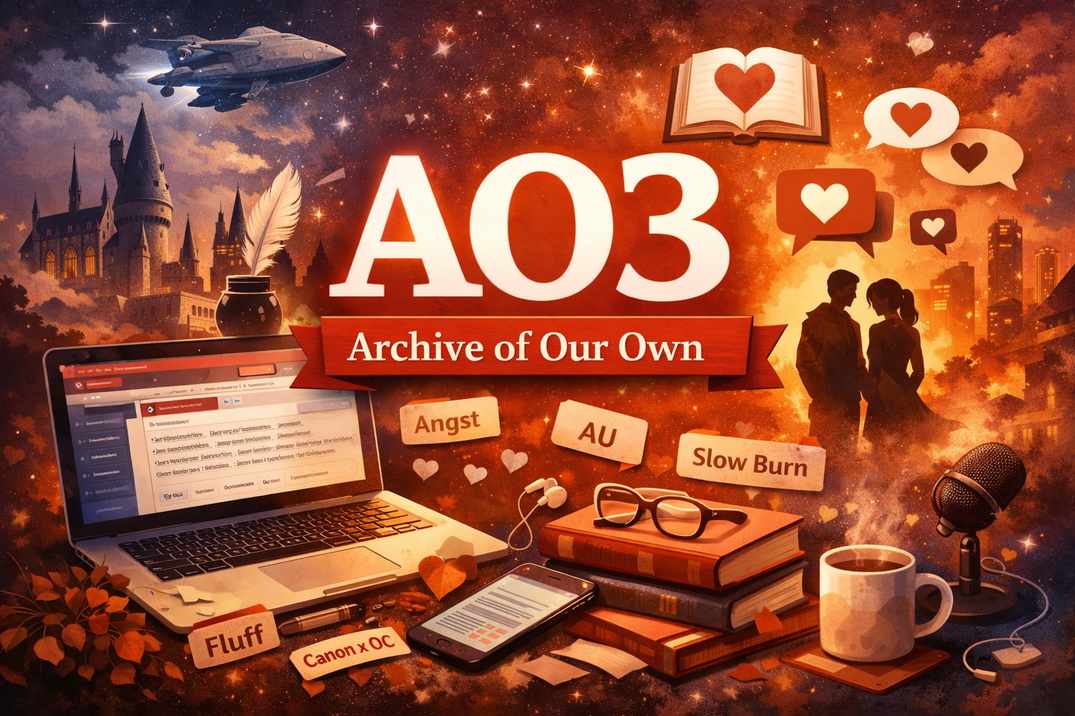
AO3, short for Archive of Our Own, is a large online platform created to store and share fan-created works. AO3 is known for fanfiction, but it also includes podfic information, meta essays, and other transformative fan content. AO3 operates as a nonprofit archive and focuses on long-term preservation, free access, and user control. AO3 does not function like social media. AO3 functions as a searchable archive built around clear rules and structured data. AO3 was created to solve problems found on commercial platforms, such as censorship, content removal, and algorithm-driven visibility. AO3 provides stability, transparency, and detailed filtering tools. These features make AO3 unique among fan platforms.
What AO3 Is and Why It Exists
AO3 exists to preserve fanworks. AO3 stores creative works created by fans based on books, movies, games, TV shows, and real people. AO3 treats fanworks as cultural records rather than trending content.
AO3 is maintained by the Organization for Transformative Works (OTW). OTW is a nonprofit organization registered in the United States. OTW focuses on protecting fan rights, documenting fan history, and supporting fair use. AO3 is one of OTW’s main projects.
AO3 does not sell user data. AO3 does not run ads. AO3 does not promote content for profit. AO3 is funded by donations.
How AO3 Is Different From Other Platforms
AO3 differs from platforms like Wattpad or social media sites because AO3 does not use recommendation algorithms. AO3 does not push content based on engagement patterns. AO3 allows users to decide what they see.
Key differences include:
-
AO3 uses tags instead of algorithms.
-
AO3 allows explicit content when labeled correctly.
-
AO3 does not hide or boost works automatically.
-
AO3 gives readers full filtering control.
-
AO3 focuses on archiving, not virality.
These differences support niche fandoms and long-form writing.
How AO3 Organizes Content
AO3 organizes content using structured metadata. Each work includes required and optional fields. These fields allow accurate searching and filtering.
Main Content Fields on AO3
-
Rating
-
Archive warnings
-
Fandom
-
Relationships
-
Characters
-
Additional tags
-
Language
-
Completion status
Each field serves a specific purpose. Ratings indicate age suitability. Warnings identify sensitive content. Tags describe themes and tropes.
AO3 allows multiple fandoms in one work. AO3 supports crossovers and shared universes.
Understanding AO3 Tags
Tags are the core of AO3. Tags describe what a work contains. Tags help readers include or exclude content.
AO3 supports two types of tags:
-
Canonical tags – standardized tags used for searching
-
Freeform tags – user-created descriptive tags
AO3 uses volunteer tag wranglers. Tag wranglers connect freeform tags to canonical tags. This system improves search accuracy while allowing creative freedom.
How to Search on AO3
Searching on AO3 starts with choosing a fandom or tag. AO3 provides filters on every tag page.
Common AO3 Search Filters
-
Rating
-
Warnings
-
Relationships
-
Characters
-
Language
-
Word count
-
Completion status
-
Publication date
AO3 allows both inclusion and exclusion filters. This feature gives precise control over search results.
AO3 Sorting Options Explained
AO3 allows manual sorting of results. Sorting does not affect visibility globally.
Sorting Methods on AO3
| Sorting Type | Meaning |
|---|---|
| Date Updated | Most recently updated works |
| Kudos | Reader appreciation |
| Bookmarks | Saved by readers |
| Hits | Total views |
| Word Count | Length of work |
Each sorting option serves a different goal. Kudos highlight popularity. Date updated highlights activity.
Understanding AO3 Reader Metrics
AO3 displays metrics openly. These metrics do not control ranking automatically.
AO3 Metrics Defined
-
Hits: Number of times a work page loads
-
Kudos: One-time appreciation from users
-
Bookmarks: Saved works for later reading
-
Comments: Reader feedback
AO3 metrics provide information, not promotion.
How to Read on AO3 Without an Account
AO3 allows public access. Readers can browse, search, and read without registering.
Account-free users can:
-
Read most works
-
Use filters
-
View tags and summaries
Some creators restrict access to logged-in users. This option protects works from scraping and misuse.
How to Create an AO3 Account
AO3 uses an invitation system. Invitations manage server load and spam prevention.
Account creation steps:
-
Request invitation
-
Receive email link
-
Create username
-
Set preferences
Once registered, users can post works, bookmark, and subscribe.
How Posting Works on AO3
Posting on AO3 uses a structured form. Each section serves a clear purpose.
AO3 Posting Steps
-
Enter title
-
Write summary
-
Select rating
-
Choose archive warnings
-
Add fandom tags
-
Add relationship tags
-
Add character tags
-
Add additional tags
-
Upload text or HTML
AO3 supports multi-chapter works. AO3 supports series linking. AO3 supports drafts.
AO3 Tagging Best Practices
Good tagging improves discoverability. AO3 does not enforce writing style but enforces accurate labeling.
Effective tagging actions:
-
Describe major themes
-
Avoid misleading tags
-
Use common fandom terms
-
Limit unnecessary tag repetition
-
Respect spoiler boundaries
Clear tags benefit both readers and writers.
AO3 Safety and Content Control
AO3 uses labeling instead of removal. AO3 allows adult content with correct warnings. AO3 provides exclusion tools for readers.
Safety features include:
-
Archive warnings
-
Rating filters
-
Tag exclusions
-
User blocking
-
Comment moderation
AO3 policies focus on user choice.
AO3 and Legal Protection
AO3 operates under fair use principles. OTW provides legal defense resources. AO3 stores transformative works, not original copyrighted material.
AO3 does not claim ownership of user content. Creators retain rights to their works.
AO3 and AI Scraping Concerns
AO3 allows creators to lock works. Locked works require account login. This feature reduces automated scraping.
AO3 does not license content for AI training. AO3 publicly opposes unauthorized data use.
AO3 Feature Glossary
| Term | Meaning |
|---|---|
| Kudos | Appreciation marker |
| Bookmark | Saved work |
| Subscription | Update notification |
| Series | Linked works |
| Collection | Curated group |
| Orphaning | Author name removal |
Advantages of Using AO3
-
Free access
-
Strong filters
-
Long-term storage
-
No ads
-
Community-driven structure
AO3 supports both casual readers and serious writers.
Limitations of AO3
-
No mobile app
-
Learning curve for tags
-
Invitation wait time
-
Limited social features
These limits reflect AO3’s archival focus.
Read Also: Toon God: The Complete Guide to the Digital Universe of Toons, Art, and Culture
Best Practices for New AO3 Users
-
Learn tag meanings
-
Use filters early
-
Bookmark favorites
-
Read summaries carefully
-
Respect creator notes
Frequently Asked Questions About AO3
What does AO3 stand for?
AO3 stands for Archive of Our Own.
Is AO3 only for fanfiction?
AO3 hosts fanfiction and other fan-created written works.
Can I download works from AO3?
AO3 allows downloads in multiple formats such as PDF and EPUB.
Does AO3 censor content?
AO3 does not censor content that follows labeling rules.
Is AO3 safe to use?
AO3 provides content warnings and user controls for safety.
Why does AO3 show “beta” status?
AO3 uses beta status to reflect continuous development.
Conclusion
AO3 is a nonprofit archive built for fans. AO3 prioritizes access, accuracy, and preservation. AO3 uses tags instead of algorithms. AO3 gives readers control. AO3 protects creative freedom. AO3 functions as infrastructure for fan culture. AO3 remains one of the most detailed and flexible archives available online.
