
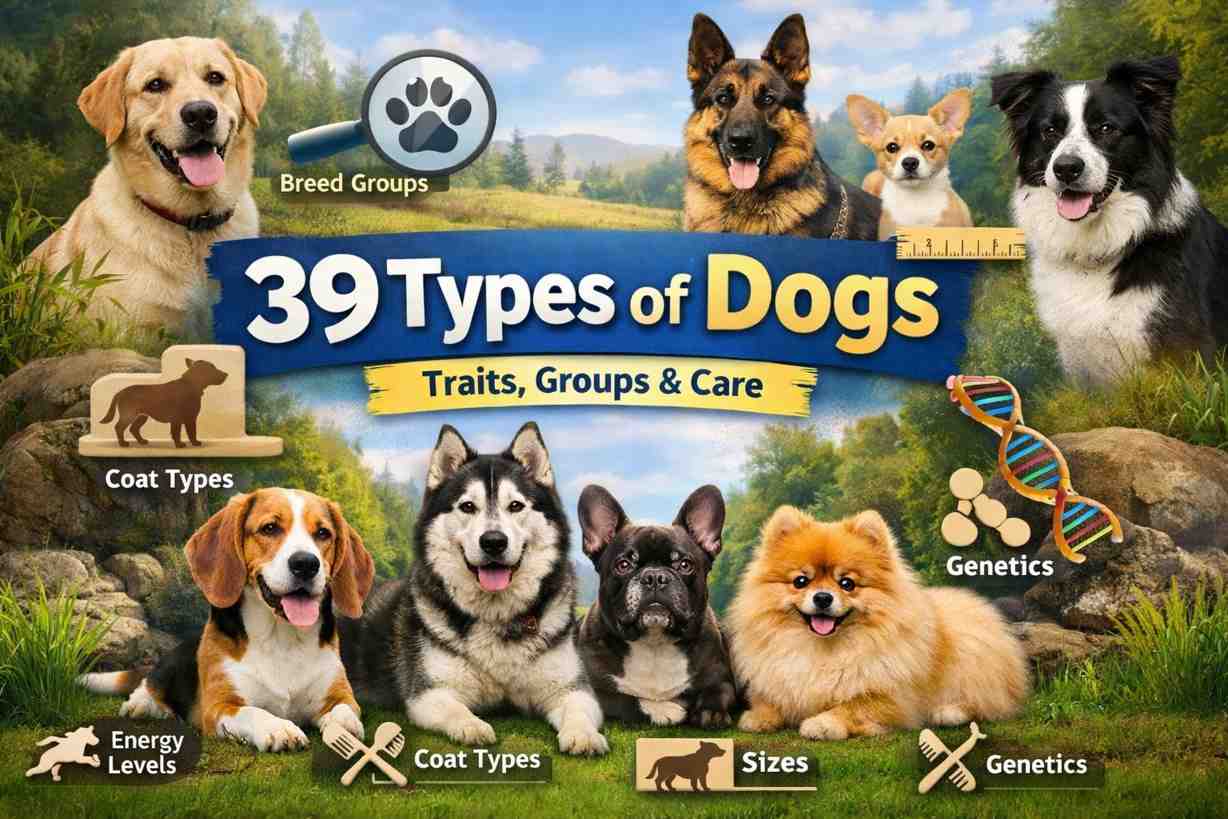
Dogs are one of the most diverse animal species living with humans. Experts from organizations such as the American Kennel Club (AKC), Fédération Cynologique Internationale (FCI), and veterinary research bodies explain this diversity by grouping dogs into clear categories. These categories are known as types of dogs. Each type is based on shared purpose, physical traits, behavior, or genetics. Understanding dog types helps explain why dogs look different, act differently, and fit different human lifestyles.
This guide explains the types of dogs in a clear and simple way, using verified classification systems and practical knowledge.
What “Types of Dogs” Means
The term types of dogs refers to broad classifications, not individual breeds. A breed is a specific genetic line with set standards. A type is a larger group that includes many breeds with shared traits.
Experts classify dogs to:
-
Explain behavior patterns
-
Predict care needs
-
Support responsible ownership
-
Improve animal welfare
Types of Dogs Based on Breed Groups
Kennel clubs classify dogs by the work they were originally bred to perform. This is the most widely accepted system.
Sporting Dogs
Sporting dogs were developed to assist hunters, especially for birds.
Key traits
-
High stamina
-
Strong obedience skills
-
Friendly nature
Common examples
-
Labrador Retriever
-
Golden Retriever
-
English Setter
Sporting dogs respond well to training and structured routines. They are often used in detection, assistance, and therapy roles.
Hound Dogs
Hound dogs were bred to track animals using scent or sight.
Key traits
-
Strong prey drive
-
Independent thinking
-
Specialized senses
Two main types
-
Scent hounds: Beagle, Bloodhound
-
Sight hounds: Greyhound, Saluki
Hounds often follow instincts over commands, which affects training style.
Working Dogs
Working dogs perform physically demanding or protective roles.
Key traits
-
Strength and endurance
-
Alertness
-
Task focus
Common examples
-
Rottweiler
-
Siberian Husky
-
Doberman Pinscher
Working dogs have a long history in guarding, rescue, sled pulling, and military service.
Terrier Dogs
Terriers were bred to hunt pests and small animals.
Key traits
-
High confidence
-
Determined behavior
-
Compact build
Common examples
-
Jack Russell Terrier
-
Scottish Terrier
-
Bull Terrier
Terriers are known for persistence and strong personalities.
Toy Dogs
Toy dogs were developed mainly for companionship.
Key traits
-
Small size
-
Strong attachment to humans
-
Lower exercise needs
Common examples
-
Chihuahua
-
Pomeranian
-
Maltese
Toy dogs often adapt well to indoor living but require careful handling.
Non-Sporting Dogs
This group includes dogs with varied backgrounds.
Key traits
-
Diverse body types
-
Mixed behavior patterns
Common examples
-
Bulldog
-
Poodle
-
Dalmatian
Non-sporting dogs are grouped together due to unique histories rather than shared function.
Herding Dogs
Herding dogs were bred to control livestock movement.
Key traits
-
High intelligence
-
Quick learning ability
-
Strong work drive
Common examples
-
Border Collie
-
German Shepherd
-
Australian Shepherd
Herding dogs excel in obedience, agility, and service roles.
See More: What painkillers can I give my dog: clear, safe, and vet-approved guidance
Types of Dogs Based on Size
Veterinary standards also classify dogs by adult size.
Small Dogs
-
Weight: Under 10 kg
-
Traits: Long lifespan, lower food needs
-
Examples: Shih Tzu, Dachshund
Medium Dogs
-
Weight: 10–25 kg
-
Traits: Balanced strength and agility
-
Examples: Beagle, Cocker Spaniel
Large and Giant Dogs
-
Weight: Over 25 kg
-
Traits: Strength, higher space needs
-
Examples: German Shepherd, Great Dane
Types of Dogs Based on Coat
Coat type affects grooming, shedding, and climate tolerance.
Short-Coated Dogs
-
Smooth hair
-
Low grooming needs
-
Examples: Boxer, Whippet
Double-Coated Dogs
-
Thick undercoat and outer coat
-
Seasonal shedding
-
Examples: Husky, Akita
Curly or Wiry-Coated Dogs
-
Continuous hair growth
-
Regular grooming required
-
Examples: Poodle, Schnauzer
Types of Dogs Based on Energy Level
Energy level affects daily care and lifestyle fit.
High-Energy Dogs
-
Require intense exercise
-
Examples: Belgian Malinois, Border Collie
Moderate-Energy Dogs
-
Balanced activity needs
-
Examples: Labrador Retriever, Boxer
Low-Energy Dogs
-
Prefer calm routines
-
Examples: Basset Hound, Bulldog
Types of Dogs Based on Genetics
Purebred Dogs
Purebred dogs come from controlled breeding lines. They have predictable traits and known health risks.
Mixed-Breed Dogs
Mixed-breed dogs have diverse ancestry. Genetic diversity often reduces inherited diseases.
Designer Dogs
Designer dogs are intentional crosses of two pure breeds, such as Labradoodle. Traits vary by generation.
Common Dog Type Categories
| Classification Method | Main Purpose | Example |
|---|---|---|
| Breed Group | Original work | Herding dogs |
| Size | Physical care needs | Small dogs |
| Coat | Grooming needs | Double-coated dogs |
| Energy | Activity planning | High-energy dogs |
| Genetics | Health predictability | Mixed-breed dogs |
How to Choose the Right Type of Dog
Experts recommend matching dog traits with real-life conditions.
Key factors to consider
-
Living space size
-
Daily activity level
-
Grooming time availability
-
Presence of children or other pets
-
Climate and environment
Choosing the correct type supports long-term welfare for both dog and owner.
Common Myths About Types of Dogs
-
Large dogs are always aggressive: False
-
Small dogs require no training: False
-
Mixed breeds lack predictability: False
Scientific studies show behavior depends on genetics, training, and environment combined.
Read Also: Kangal Dog Price: Complete Guide to Cost, Factors, and Ownership Expenses
Frequently Asked Questions About Types of Dogs
How many types of dogs exist?
Canine experts recognize multiple classification systems, but most dogs fit into functional, size, coat, and genetic types.
Is dog type the same as dog breed?
No. A breed is specific. A type includes many breeds with shared traits.
Which dog type is best for families?
Moderate-energy sporting and herding types often show strong family compatibility.
Which dog types live the longest?
Small and mixed-breed dogs show longer average lifespans.
Are dog types recognized worldwide?
Yes. Major kennel organizations use similar classification principles with regional differences.
Conclusion
Types of dogs explain the wide variety seen in domestic dogs today. Classification by breed group, size, coat, energy, and genetics provides reliable insight into behavior, care needs, and suitability. Understanding these types supports informed decisions, responsible ownership, and improved canine welfare across all environments.
