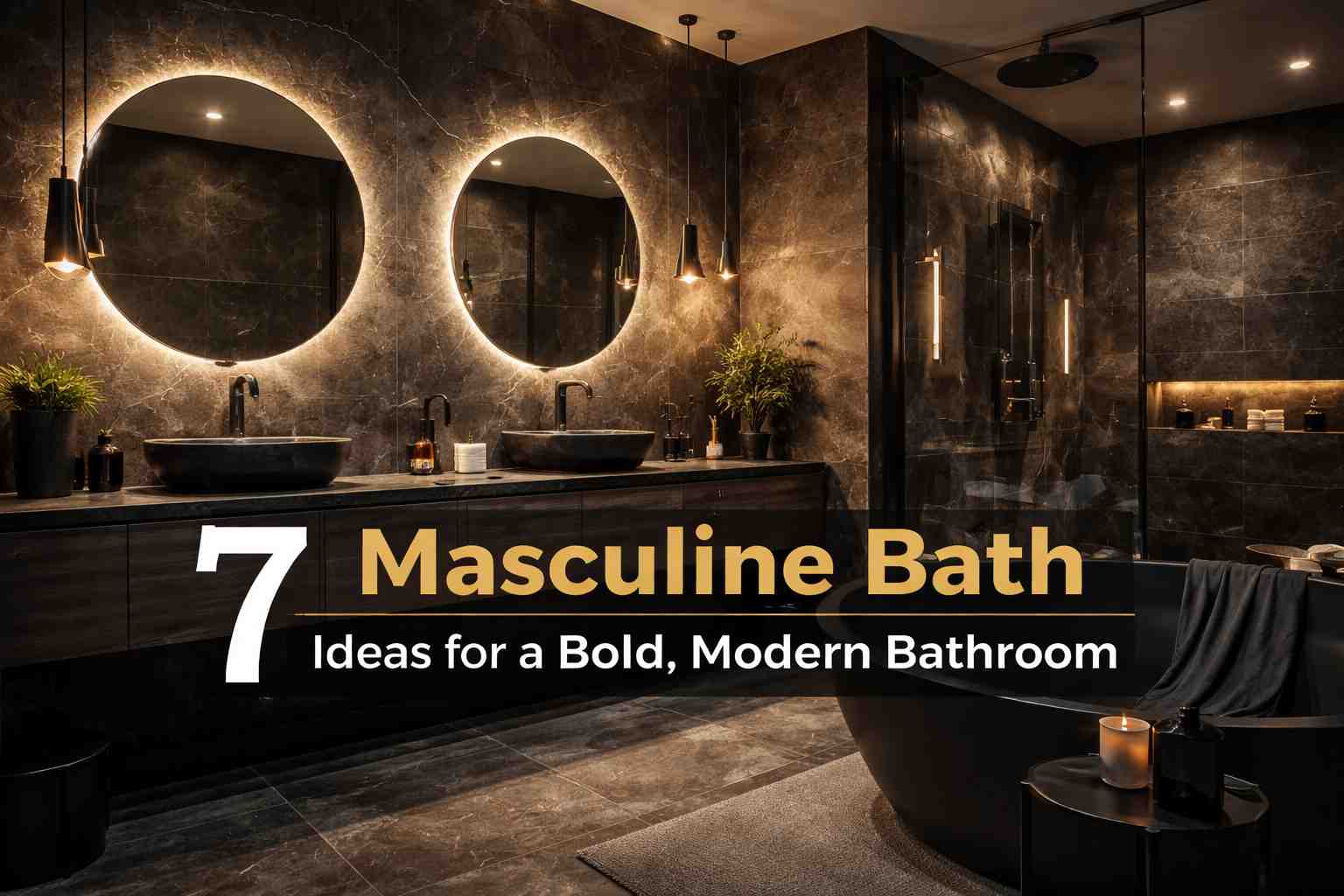
A masculine bath is a bathroom design approach defined by structure, function, and controlled contrast. The concept focuses on clean geometry, durable materials, and low visual noise. Industry authorities such as Plumbworld and This Old House describe masculine bathroom design as a system that uses dark neutral colors, stone or concrete surfaces, and practical storage. The goal is to create a space that supports hygiene, durability, and visual order.
A masculine bath emphasizes purpose. Each element serves a clear role. Fixtures define geometry. Materials define texture. Lighting defines depth. Storage defines order. This design system improves daily use and long-term maintenance.
Core Design Principles of a Masculine Bath
Color System and Visual Control
A masculine bath uses a controlled color system. Dark neutrals form the base palette. Charcoal, slate, graphite, and matte black provide structure. Light neutrals provide balance. Warm white and soft beige stabilize brightness. Accent hues remain limited. Navy blue, forest green, and rust provide depth without visual clutter.
This color control improves visual clarity. High contrast defines edges. Low saturation reduces distraction. The result is a calm and ordered space.
Key color rules
Material Selection and Surface Performance
Material choice defines the durability of a masculine bath. Porcelain tile resists water and stains. Natural stone adds texture and weight. Concrete finishes add industrial character. Wood surfaces add warmth when properly sealed.
Each material carries a function. Stone resists abrasion. Porcelain resists moisture. Metal resists corrosion when coated. Sealed wood resists swelling.
Common materials and roles
| Material Type |
Primary Function |
Performance Benefit |
| Porcelain tile |
Wall and floor surfaces |
Water resistance, durability |
| Natural stone |
Feature walls, counters |
Texture, heat retention |
| Concrete finish |
Walls, sinks |
Industrial texture |
| Sealed wood veneer |
Cabinets, shelves |
Warmth, visual balance |
| Brushed metal |
Fixtures, hardware |
Corrosion resistance |
Fixture Geometry and Functional Layout
Fixtures define structure. Rectangular vanities provide clean lines. Wall-mounted cabinets increase visible floor area. Frameless glass showers maintain visual flow. Square-edge basins control splash.
A functional layout separates wet and dry zones. The shower and tub form the wet zone. The vanity and storage form the dry zone. Clear circulation paths support ease of use.
Functional layout rules
-
Place the shower away from the vanity.
-
Maintain clear walking paths.
-
Align fixtures along straight axes.
-
Keep storage within arm’s reach of use zones.
Lighting Strategy for a Masculine Bath
Layered Lighting System
Lighting controls mood and visibility. A masculine bath uses layered lighting. Ambient lighting provides general brightness. Task lighting supports grooming. Accent lighting defines depth.
Warm color temperature supports skin tone. Light reflection from mirrors and glazed tiles improves brightness without glare.
Lighting layers
-
Ambient: ceiling downlights
-
Task: vertical sconces near mirrors
-
Accent: LED strips under vanities and shelves
Lighting performance table
Tile Patterns and Surface Design
Tile Formats and Patterns
Tile design sets the visual rhythm. Large-format tiles reduce grout lines and visual noise. Rectangular tiles reinforce structure. Herringbone patterns add controlled movement. Hex tiles add texture in small areas.
Dark grout creates continuity. Light grout increases contrast. Matte finishes reduce glare. Honed finishes improve grip.
Tile pattern benefits
-
Large format: clean visual field
-
Herringbone: directional depth
-
Hex mosaic: texture in wet zones
-
Vertical ribbed tile: height emphasis
Storage, Organization, and Visual Order
Storage Systems
Storage controls clutter. Recessed niches store bath products. Medicine cabinets store grooming tools. Wall shelves hold daily items. Concealed hampers store laundry.
Storage placement improves workflow. Items remain near their use area. This reduces surface clutter and improves hygiene.
Effective storage types
-
Recessed shower niches
-
Wall-mounted cabinets
-
Floating shelves
-
Drawer organizers
Masculine Bath Styles
Industrial Masculine Bath
Industrial style uses concrete textures, matte black fixtures, and exposed metal details. This style emphasizes durability and raw materials. Warm wood accents balance mineral surfaces.
Modern Masculine Bath
Modern style uses large porcelain slabs, handle-free cabinets, and integrated lighting. This style emphasizes minimalism and clean lines. Hidden drains and flush panels improve continuity.
Classic Masculine Bath
Classic style uses natural stone, framed mirrors, and traditional tubs. This style emphasizes heritage materials and balanced proportions. Warm metals such as brushed nickel stabilize contrast.
Style comparison table
| Style Type |
Key Materials |
Visual Character |
| Industrial |
Concrete, steel |
Raw, textured |
| Modern |
Porcelain slabs |
Clean, minimal |
| Classic |
Marble, nickel |
Formal, balanced |
Moisture Control and Durability
Moisture Management
Moisture control protects materials. Ventilation removes humidity. Waterproof membranes protect walls. Sealed grout resists staining. Proper drainage prevents pooling.
Durability Planning
Durability planning extends lifespan. High-density porcelain resists wear. Stainless steel resists corrosion. UV-stable finishes resist fading. Quality fixtures reduce repair frequency.
Durability checklist
Step-by-Step Setup Process for a Masculine Bath
-
Define the color palette using dark neutrals.
-
Select durable materials for walls and floors.
-
Plan fixture layout with clear wet and dry zones.
-
Install layered lighting with warm temperature.
-
Add storage to reduce surface clutter.
-
Apply final accessories with minimal decoration.
This sequence maintains design consistency and functional performance.
Common Mistakes to Avoid
-
Using too many colors in one space
-
Mixing high-gloss finishes without balance
-
Ignoring ventilation and waterproofing
-
Placing storage far from use zones
-
Using decorative clutter on counters
These errors reduce function and visual clarity.
Read Also: Understanding a 2 Qt Baking Dish in Simple Terms
Best Practices for Long-Term Maintenance
-
Clean stone surfaces with neutral cleaners.
-
Reseal grout and stone at set intervals.
-
Wipe fixtures to prevent mineral buildup.
-
Maintain ventilation systems.
-
Inspect seals around wet areas.
Proper maintenance preserves appearance and hygiene.
Frequently Asked Questions
What makes a bath design masculine
A masculine bath uses structured geometry, dark neutral colors, durable materials, and minimal decoration. The design focuses on function and order.
Which colors work best for a masculine bath
Charcoal, slate, graphite, navy, and warm white work well. These colors provide contrast and stability.
Which materials last longest in a masculine bath
Porcelain tile, sealed stone, stainless steel, and waterproof cabinetry last longer due to moisture resistance.
How can small bathrooms follow masculine bath design
Small bathrooms use large-format tiles, wall-mounted fixtures, and mirrors to increase visual space. Dark tones remain balanced with light surfaces.
Does a masculine bath suit modern homes
A masculine bath fits modern homes because the design uses clean lines, integrated storage, and functional lighting.
Key Takeaways
-
A masculine bath is a structured and functional bathroom design system.
-
Dark neutrals and controlled accents define the palette.
-
Durable materials ensure long-term performance.
-
Layered lighting improves visibility and depth.
-
Organized storage maintains visual order.
This design framework creates a bathroom that supports daily use, durability, and visual clarity while maintaining a refined masculine character.
Conclusion
A masculine bath is a structured bathroom design system defined by clear geometry, controlled color palettes, durable materials, and functional layouts. Dark neutrals establish visual order. Stone, porcelain, metal, and sealed wood provide long-term performance. Layered lighting improves visibility and depth. Zoning separates wet and dry functions. Integrated storage reduces surface clutter and supports hygiene. These elements operate as a unified framework rather than isolated decor choices. When color control, material performance, lighting architecture, and spatial planning align, the bathroom achieves consistent function, durability, and visual coherence.