
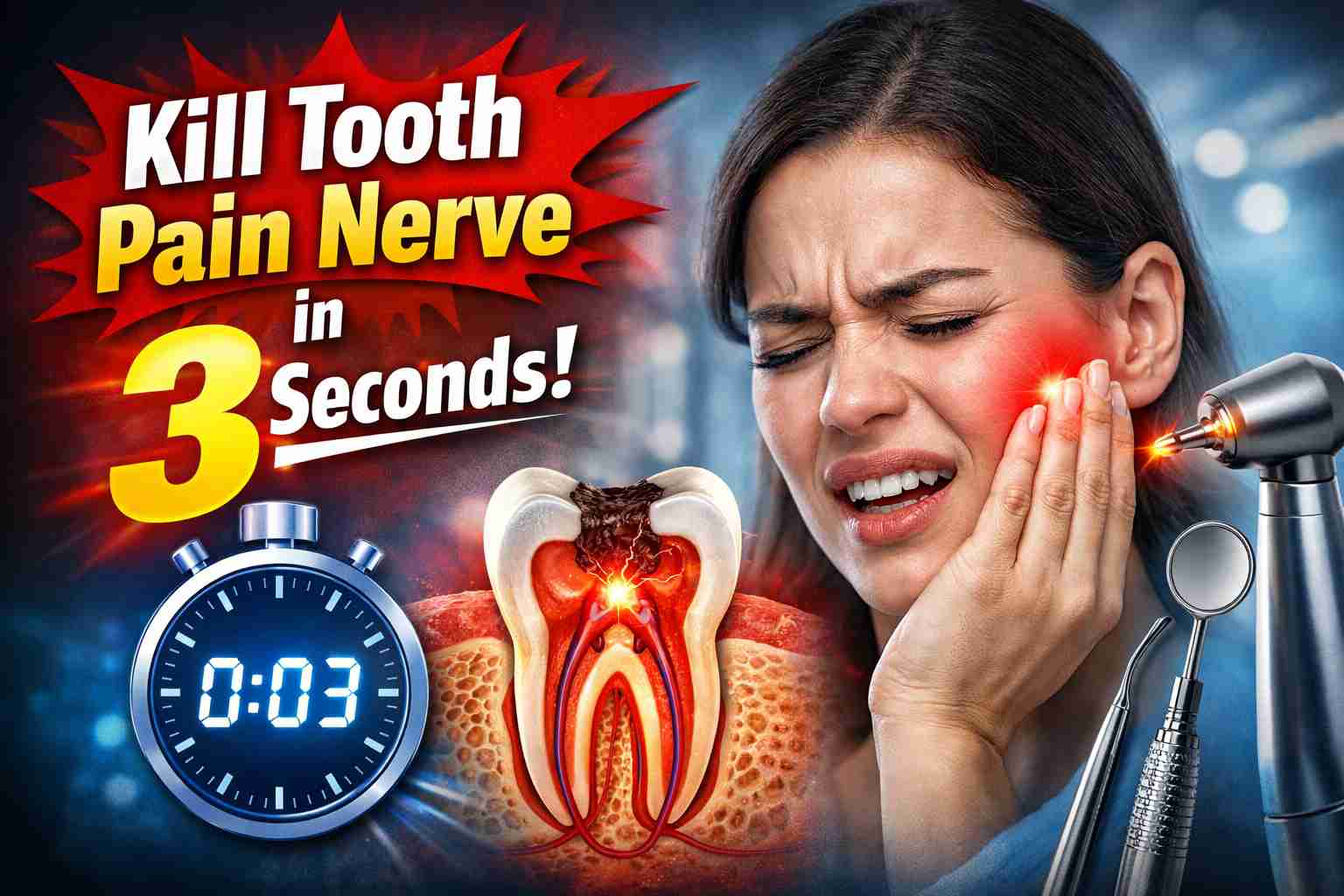
People often search for quick remedies when experiencing sharp nerve pain in a tooth. Many phrases like “kill tooth pain nerve in 3 seconds permanently” appear online. The idea suggests that a person can end nerve pain instantly and permanently with one method or trick.
Fact: No safe home method exists that destroys the nerve and stops pain forever within seconds. The only permanent ways involve dental procedures performed by professionals.
Understanding this difference is vital before trying remedies that could harm your mouth, gum, or overall health.
Why Tooth Nerve Pain Happens
Tooth pain comes from irritation or infection inside the tooth’s central tissue called the dental pulp. The pulp contains:
-
Nerves that sense pain
-
Blood vessels that help nourish the tooth
-
Connective tissue inside the pulp chamber
When the pulp becomes inflamed, infected, or damaged, it sends intense pain signals to the brain. This is why people feel sharp, throbbing discomfort.
Common Causes of Nerve Pain
| Cause | What Happens |
|---|---|
| Deep decay | Bacteria reach the nerve area |
| Trauma | A crack exposes nerve endings |
| Abscess | Infection forms a pocket at tooth base |
| Gum recession | Root surface becomes sensitive |
| Failed filling | Seals break and bacteria reenter |
| Grinding | Pressure irritates nerves |
Can Tooth Nerve Pain Really Be Stopped in 3 Seconds?
No safe method exists to permanently kill a tooth nerve in just 3 seconds.
Why It Is Not Possible
-
The nerve lies deep inside the tooth.
-
Protective hard structures like enamel and dentin shield it.
-
No quick‑acting chemical can safely reach this deep tissue.
-
Using harsh household substances can damage gums and bone.
Even strong dental anesthesia works only when applied by professionals.
Read Also: MI Paste: The Ultimate Guide to Tooth Remineralization and Sensitivity Relief
Best Temporary Pain Relief Options
Although permanent nerve destruction in seconds is not real, you can reduce pain quickly. These methods offer temporary relief only.
❗Note
These should not replace proper dental evaluation or treatment.
Instant Comfort Techniques
1. Apply a Cold Compress
Wrap ice in a clean cloth and hold against cheek near the pain. Cold reduces swelling and numbs pain signals.
2. Rinse with Salt Water
Mix ½ teaspoon of salt in warm water and rinse for 30 seconds. Saltwater can reduce inflammation and bacteria.
3. Use Clove Oil
Clove oil contains eugenol, a natural pain‑relieving compound. Apply with a cotton bud directly on the sore area.
4. Over‑the‑Counter Pain Medication
Ibuprofen or acetaminophen can reduce pain signals. Always follow the dosage directions.
5. Hydrogen Peroxide Rinse
Mix equal parts 3% hydrogen peroxide and water and rinse gently. This can reduce bacteria but should not be swallowed.
6. Peppermint Tea Compress
After steeping, cool a peppermint tea bag and place it on the painful area. The temperature and menthol can cause a numbing effect.
What Permanent Relief Actually Means
Temporary relief only masks the symptom. True permanent relief means addressing the cause of nerve pain.
There are only two reliable ways to permanently eliminate nerve pain:
Professional Methods That Kill the Nerve Permanently
| Treatment | What It Does |
|---|---|
| Root Canal Therapy | Removes infected nerve and seals the tooth |
| Tooth Extraction | Removes the entire diseased tooth |
| Advanced Endodontic Surgery | Treats deep infection that cannot be fixed with routine tools |
Why Root Canal Works
A root canal is a dental therapy where:
-
The dentist numbs the area with local anesthesia
-
The diseased nerve and pulp are removed
-
The canals are cleaned and disinfected
-
The tooth is sealed with a biocompatible material
This stops pain permanently while saving the natural tooth structure.
Why Extraction Works
Tooth extraction permanently removes the source of pain by removing the entire tooth.
Extraction may be necessary when:
-
Nerve damage is too severe
-
Tooth cannot be restored
-
Infection spreads deeper
A missing tooth may then be replaced with an implant, bridge, or denture.
What Happens If You Try Unsafe Home Tricks
Attempting dangerous methods can lead to:
-
Mouth tissue burns
-
Gum recession
-
Worsening infection
-
Bone damage
-
High fever
-
Need for emergency surgery
Never use bleaching agents, battery acid, or industrial chemicals inside your mouth.
Signs You Need Dental Care Now
Seek emergency dental care if you experience:
-
Pain lasting more than 24 hours
-
Severe swelling of face or jaw
-
Fever alongside tooth pain
-
Pus around the tooth
-
Difficulty opening your mouth
-
Pain spreading to ears or temples
These signs may mean the infection is spreading.
Smart Choices for Long‑Term Oral Health
To protect teeth and prevent nerve problems:
- Brush twice daily
- Floss before bed
- Use fluoride toothpaste
- Visit a dentist every 6 months
- Wear a mouth guard if you grind
Taking care of oral hygiene stops bacteria from reaching the nerve in the first place.
Common Myths Debunked
Myth 1: You Can Kill a Nerve With Salt or Baking Soda
False. Salt and baking soda can numb pain slightly, but they do not destroy the dental nerve.
Myth 2: Alcohol or Clove Oil Kills the Nerve
False. These may soothe pain temporarily but do not eliminate the internal nerve.
Myth 3: Cutting Open the Gum Exposes the Nerve
False. Gums do not cover the nerve directly. Cutting them increases risk of infection.
See More: Cheapest All on 4: The Definitive Guide to Getting the Best Value
FAQ Section
Q1. Does clove oil kill nerve pain permanently?
No. Clove oil can numb pain temporarily but does not destroy the nerve.
Q2. Can salt water rinse stop nerve pain forever?
No. Saltwater rinses reduce surface inflammation only.
Q3. Why does cold reduce toothache quickly?
Cold narrows blood vessels and slows pain signals but does not affect the nerve permanently.
Q4. Does flossing prevent nerve pain?
Yes. Good flossing removes trapped food that leads to bacterial infection.
Q5. When should I see a dentist immediately?
If pain does not reduce with home care or if swelling and fever develop.
Fast Relief vs Permanent Fix
| Goal | Method | Outcome |
|---|---|---|
| Fast Pain Ease | Cold compress | Temporary relief |
| Fast Pain Ease | Clove oil | Short‑term numbness |
| Fast Pain Ease | OTC pain meds | Pain signal reduction |
| Permanent Solution | Root canal | Nerve removed |
| Permanent Solution | Extraction | Tooth and nerve removed |
Conclusion
There is no safe way to kill tooth nerve pain in 3 seconds permanently at home. Quick relief methods can manage symptoms for hours but do not fix the root problem. A dentist is required for true permanent resolution, such as a root canal or extraction.
