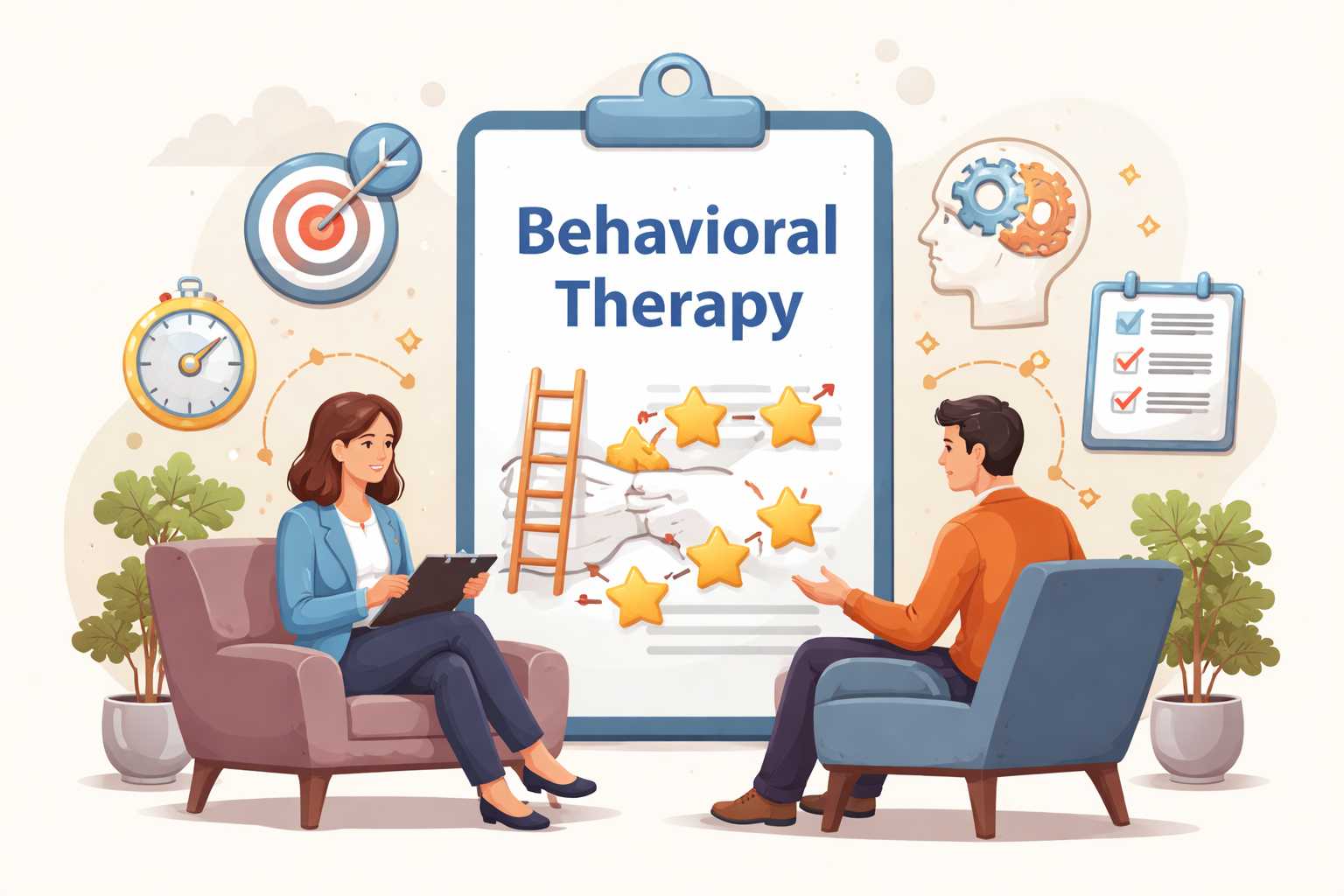
Behavioral therapy techniques are structured methods used to change observable behavior through learning-based processes. Behavioral therapy techniques focus on what a person does, not what a person thinks. Behavioral therapy techniques are grounded in psychological science and supported by decades of clinical research. Behavioral therapy techniques are used in mental health care, education, rehabilitation, healthcare, and performance improvement.
Behavioral therapy techniques are designed to be measurable, repeatable, and goal-focused. These techniques rely on clear observation, defined outcomes, and consistent feedback. This makes behavioral therapy techniques widely accepted across professional and clinical settings.
What behavioral therapy techniques mean in practice
Behavioral therapy techniques refer to specific actions used to increase helpful behaviors and reduce harmful behaviors. These techniques are based on learning theories developed in psychology. The most influential theories include classical conditioning, operant conditioning, and observational learning.
Behavioral therapy techniques work by changing environmental factors that influence behavior. These factors include rewards, consequences, triggers, and routines. By adjusting these factors, behavior becomes predictable and manageable.
Scientific foundations of behavioral therapy techniques
Behavioral therapy techniques originate from behaviorism. Behaviorism studies how behavior is learned and maintained. Key contributors include Ivan Pavlov, who studied conditioned responses, and B.F. Skinner, who studied reinforcement and consequences.
Behavioral therapy techniques rely on three core scientific principles:
-
Behavior is learned through interaction with the environment
-
Behavior changes when consequences change
-
Behavior improves when reinforced consistently
These principles guide every behavioral intervention.
Core goals of behavioral therapy techniques
Behavioral therapy techniques are designed to achieve specific outcomes. These goals remain consistent across applications.
Increase adaptive behavior
Adaptive behavior includes skills that support daily functioning. Examples include communication, task completion, and emotional regulation.
Reduce maladaptive behavior
Maladaptive behavior includes avoidance, aggression, compulsions, and non-compliance. Behavioral techniques reduce these behaviors by changing reinforcement patterns.
Build long-term behavior stability
Behavioral therapy techniques aim for lasting change. This is achieved through repetition, monitoring, and gradual reduction of external supports.
Key behavioral therapy techniques explained
Positive reinforcement
Positive reinforcement involves adding a reward after a desired behavior. The reward increases the likelihood of the behavior repeating. Rewards may include praise, privileges, points, or tangible items.
Positive reinforcement is effective because it strengthens motivation. It is widely used in parenting programs, schools, therapy clinics, and workplaces.
Negative reinforcement
Negative reinforcement removes an unpleasant condition after a behavior occurs. The removal increases the chance of the behavior happening again. An example includes reducing supervision after consistent task completion.
Negative reinforcement is often misunderstood. It does not involve punishment. It increases behavior by removing discomfort.
Extinction
Extinction occurs when reinforcement is no longer provided for a behavior. Without reinforcement, the behavior gradually decreases. Extinction requires consistency to remain effective.
Extinction may cause a temporary increase in behavior intensity. This response is known as an extinction burst and is a documented behavioral phenomenon.
Shaping
Shaping builds complex behavior step by step. Each small improvement is reinforced until the final behavior is achieved. Shaping is effective for skill development and rehabilitation.
Shaping is commonly used in developmental therapy, physical rehabilitation, and skill training programs.
Modeling
Modeling involves demonstrating a behavior for another person to observe and imitate. Modeling supports learning without direct instruction.
Modeling is effective in social skills training, fear reduction, and communication development.
Token economy
Token economy systems use points or symbols to represent rewards. Tokens are earned for behavior and exchanged for meaningful items or privileges.
Token economies increase consistency and motivation. They are commonly used in classrooms, treatment centers, and behavioral programs.
Behavioral contracts
Behavioral contracts outline expectations, behaviors, and outcomes in written form. Contracts increase accountability and clarity.
Behavioral contracts are effective for adolescents, workplace settings, and habit-building programs.
Exposure therapy
Exposure therapy involves gradual contact with feared situations or objects. Exposure reduces avoidance behavior over time.
Exposure therapy is strongly supported for anxiety disorders, phobias, and obsessive-compulsive behavior.
Systematic desensitization
Systematic desensitization combines exposure with relaxation techniques. The individual progresses through a fear hierarchy while maintaining calm responses.
This technique is effective for specific fears and stress responses.
Behavioral activation
Behavioral activation increases participation in meaningful activities. Increased activity leads to improved mood and motivation.
Behavioral activation is commonly used in depression treatment and recovery programs.
Skills training
Skills training teaches behaviors through structured practice. This includes role-play, repetition, and feedback.
Skills training addresses communication deficits, coping challenges, and social difficulties.
See More: Understanding Anxiety Management
Behavioral therapy techniques by application area
| Application Area |
Common Techniques Used |
| Anxiety Disorders |
Exposure, desensitization |
| Depression |
Behavioral activation |
| ADHD |
Reinforcement, token economy |
| Autism Spectrum |
Shaping, modeling, reinforcement |
| Substance Use |
Contingency management |
| Education |
Positive reinforcement, contracts |
| Healthcare |
Habit formation, self-monitoring |
How professionals select behavioral therapy techniques
Behavioral therapy techniques are selected through behavioral assessment. Assessment identifies the purpose of behavior. This process examines triggers, actions, and consequences.
Behavior functions typically include:
Matching technique to behavior function increases effectiveness and reduces risk.
Measurement in behavioral therapy techniques
Measurement is a defining feature of behavioral therapy techniques. Progress is tracked using observable data.
Common measurement methods include:
-
Frequency counts
-
Duration tracking
-
Intensity rating
-
Latency measurement
Data-driven decisions ensure accuracy and accountability.
Ethical considerations in behavioral therapy techniques
Behavioral therapy techniques follow ethical guidelines. These guidelines protect autonomy, dignity, and safety.
Key ethical principles include:
Ethical oversight is essential when using techniques like exposure or aversion-based methods.
Behavioral therapy techniques vs cognitive approaches
Behavioral therapy techniques focus on actions and outcomes. Cognitive approaches focus on thoughts and beliefs. Behavioral methods change the environment. Cognitive methods change interpretation.
Modern treatment models often integrate both. Behavioral strategies remain foundational due to their measurable nature.
Advantages of behavioral therapy techniques
Behavioral therapy techniques remain effective due to their simplicity and precision.
Limitations of behavioral therapy techniques
-
Limited focus on internal experience
-
Requires consistency and monitoring
-
Progress depends on reinforcement quality
These limitations are addressed through integrated care models.
Future direction of behavioral therapy techniques
Behavioral therapy techniques continue to evolve. Digital monitoring, wearable devices, and data analytics improve precision. Behavior-based programs are expanding into preventive health and performance optimization.
Behavioral therapy techniques remain essential in modern psychological care due to their reliability and adaptability.
Read Also: Understanding How Long Alcohol Stays in Your System
Frequently Asked Questions (FAQs)
What are behavioral therapy techniques?
Behavioral therapy techniques are methods used to change behavior through learning principles such as reinforcement and exposure.
Are behavioral therapy techniques evidence-based?
Yes. Behavioral therapy techniques are supported by controlled studies and clinical guidelines.
Can behavioral therapy techniques be used without medication?
Yes. Many behavioral interventions are effective as standalone treatments.
How long do behavioral therapy techniques take to work?
Behavior change depends on consistency, reinforcement, and complexity of behavior.
Are behavioral therapy techniques suitable for children?
Yes. These techniques are widely used in child development and education.
Do behavioral therapy techniques work for adults?
Yes. Behavioral methods are effective across the lifespan.
What makes behavioral therapy techniques different?
Behavioral therapy techniques focus on observable actions and measurable outcomes.
Conclusion
Behavioral therapy techniques are structured, evidence-based methods for behavior change. Behavioral therapy techniques rely on learning principles, reinforcement, and measurement. Behavioral therapy techniques support mental health treatment, skill development, and habit formation. Behavioral therapy techniques remain essential due to their clarity, effectiveness, and adaptability.