
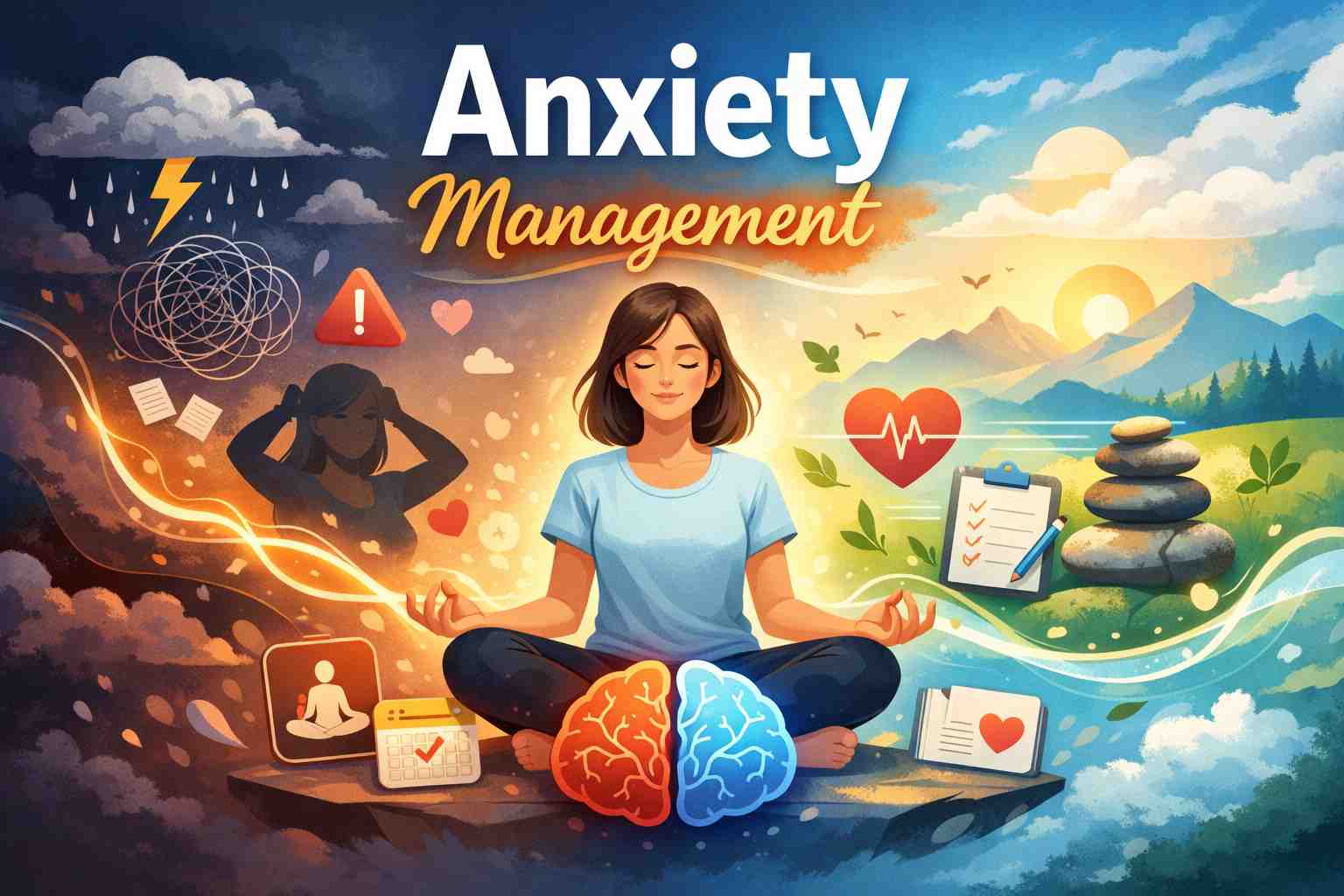
Anxiety management refers to the process of controlling stress, fear, and worry in daily life. Anxiety is a natural human response to pressure, but when it becomes excessive, it can disrupt mental, physical, and social well-being. Managing anxiety involves using practical strategies, lifestyle adjustments, and professional interventions to reduce symptoms and maintain balance.
Anxiety can show as physical, emotional, or behavioral signs. Physically, it can cause rapid heartbeat, muscle tension, sweating, and headaches. Emotionally, it can create constant worry, irritability, and fear of future events. Behaviorally, it can lead to avoidance, procrastination, or social withdrawal. Recognizing these patterns is the first step toward effective management.
Common Symptoms of Anxiety
| Type | Symptoms |
|---|---|
| Physical | Rapid heartbeat, sweating, dizziness, muscle tension, headaches |
| Emotional | Restlessness, fear, irritability, mood swings |
| Cognitive | Racing thoughts, difficulty concentrating, overthinking |
| Behavioral | Avoiding tasks, procrastination, isolation, compulsive behaviors |
Effective Anxiety Management Techniques
Cognitive Strategies
Cognitive Behavioral Techniques (CBT) are widely recognized for reducing anxiety. These include:
-
Thought Challenging: Analyze negative thoughts and replace them with realistic alternatives.
-
Journaling: Write down anxious thoughts to understand patterns and triggers.
-
Behavioral Experiments: Test fears in safe situations to learn they are less harmful than expected.
-
Exposure Hierarchy: Gradually face fears from least to most anxiety-inducing to build resilience.
Breathing and Relaxation Exercises
Breathing techniques reduce physiological arousal caused by anxiety. Common methods include:
-
Diaphragmatic Breathing: Breathe deeply into the abdomen, slowing the heart rate.
-
4-7-8 Breathing: Inhale for 4 seconds, hold for 7, exhale for 8.
-
Box Breathing: Inhale, hold, exhale, and hold each for equal counts.
-
Progressive Muscle Relaxation: Tense and release muscles to release stress.
These exercises activate the parasympathetic nervous system, which helps the body relax.
Mindfulness and Meditation Practices
Mindfulness helps individuals focus on the present and reduces constant worry about the past or future. Key practices include:
-
Mindfulness Meditation: Observe thoughts without judgment to develop emotional control.
-
Guided Meditation: Use apps or audio guides to reduce anxiety during stressful moments.
-
Grounding Techniques: Focus on senses, such as identifying 5 things you see, 4 you touch, 3 you hear, 2 you smell, and 1 you taste.
Daily practice of mindfulness strengthens attention control and emotional regulation.
Lifestyle Strategies
Daily habits significantly impact anxiety levels. Evidence shows that:
-
Exercise: Activities like walking, swimming, or yoga release endorphins and reduce stress hormones.
-
Nutrition: Diets rich in omega-3 fatty acids, magnesium, and vitamins support brain health. Avoid excess caffeine, sugar, and alcohol.
-
Sleep Hygiene: Maintaining regular sleep patterns enhances mental resilience and reduces irritability.
-
Social Connection: Talking to friends, family, or support groups provides perspective and emotional relief.
Tools and Technology for Anxiety Management
Modern technology supports anxiety management through:
-
Tracking Apps: Record symptoms, triggers, and progress over time.
-
Guided CBT Apps: Provide exercises for thought management and behavior change.
-
Virtual Reality Therapy: Helps with exposure therapy in a controlled environment.
-
Online Support Groups: Offer peer support and shared coping strategies.
Read Also: Understanding How Long Alcohol Stays in Your System
Professional Interventions
Professional support is often needed for moderate to severe anxiety. Options include:
-
Cognitive Behavioral Therapy (CBT): Targets thinking patterns and behaviors contributing to anxiety.
-
Acceptance and Commitment Therapy (ACT): Encourages acceptance of anxious thoughts while focusing on meaningful actions.
-
Medication: Prescribed by a doctor, including SSRIs and other anxiety-targeted medications.
-
Metacognitive Therapy: Modifies beliefs about thinking patterns that prolong anxiety.
Professional guidance ensures structured treatment and monitoring, especially when anxiety disrupts daily life.
Daily Routine for Anxiety Management
Creating a consistent routine enhances control over anxiety. Suggested daily schedule:
| Time | Activity |
|---|---|
| Morning | 10 minutes of mindful breathing + light exercise |
| Midday | Short mindfulness or meditation break |
| Afternoon | Journaling of thoughts and triggers |
| Evening | Progressive muscle relaxation + sleep hygiene routine |
Consistency allows techniques to become habitual and more effective over time.
FAQs on Anxiety Management
Q1: Can anxiety be managed without medication?
Yes. Cognitive-behavioral strategies, lifestyle adjustments, breathing exercises, and mindfulness can effectively reduce anxiety symptoms without medication.
Q2: How long does anxiety management take to work?
Results vary, but consistent practice of techniques usually shows noticeable improvement within 4–8 weeks.
Q3: Are mindfulness and meditation scientifically proven to reduce anxiety?
Yes. Multiple studies indicate that mindfulness-based interventions reduce stress, rumination, and physiological arousal associated with anxiety.
Q4: Can diet and exercise influence anxiety levels?
Yes. Physical activity releases endorphins, while proper nutrition supports nervous system function, helping reduce anxiety severity.
Q5: Is it necessary to see a therapist for mild anxiety?
Mild anxiety can often be managed with self-help strategies, but therapy provides structured guidance, monitoring, and skill-building, which improves long-term outcomes.
See More: How to Relax: Evidence-Based Methods to Calm the Body and Mind
Key Takeaways
-
Anxiety management integrates cognitive strategies, relaxation techniques, mindfulness, lifestyle adjustments, and professional therapy.
-
Tracking symptoms and triggers enhances self-awareness and improves outcomes.
-
Consistency and daily practice of techniques strengthen resilience.
-
Lifestyle factors such as exercise, nutrition, sleep, and social support are crucial for effective management.
-
Professional guidance offers structured treatment and reduces the risk of chronic anxiety.
Conclusion
Anxiety management is a holistic approach combining mind, body, and behavior strategies. Using proven techniques, integrating healthy habits, and accessing professional help ensures long-term control over anxiety. Individuals can improve mental health, reduce stress, and enhance overall well-being with consistent practice.
