
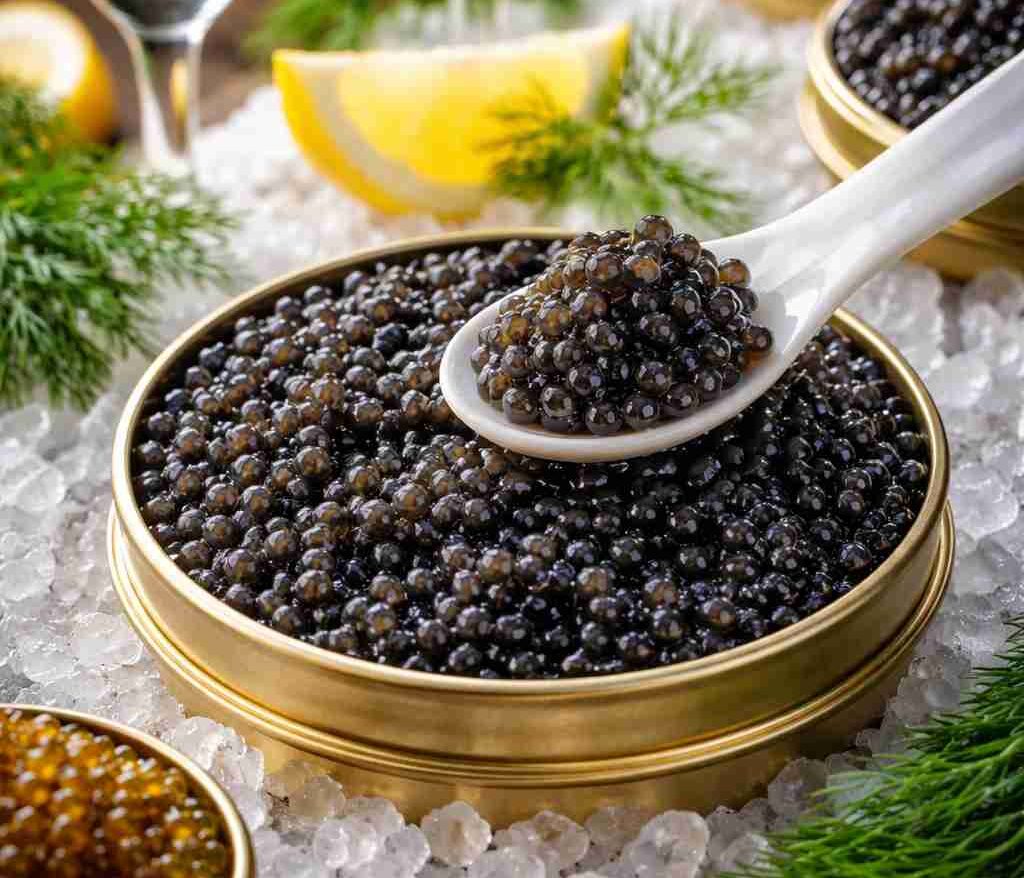
Caviar tastes buttery, slightly salty, and ocean-fresh with a delicate pop when the eggs break on the tongue. High-quality caviar delivers a mild marine flavor rather than a strong fish taste. The flavor often includes nutty, creamy, and umami notes that linger after the roe bursts. These qualities come from the natural oils and proteins inside the eggs of sturgeon fish, the species traditionally used to produce real caviar.
Caviar is widely recognized as a luxury seafood delicacy. Its taste depends on several factors including the type of sturgeon, curing process, egg size, freshness, and mineral content of the water where the fish lives. Because of these variables, different caviar varieties can taste noticeably different even though they share a similar salty and buttery foundation.
Understanding the taste of caviar becomes easier when examining its flavor, aroma, and texture separately.
The Basic Flavor Profile of Caviar
Caviar contains a combination of natural compounds that produce a complex flavor experience. These components include marine salts, healthy fats, and amino acids that create the signature taste.
The most common flavor characteristics include:
-
Buttery richness from omega-3 fatty acids
-
Mild saltiness from the curing process
-
Clean ocean flavor similar to fresh sea breeze
-
Subtle nutty notes in some varieties
-
Savory umami finish that lingers after swallowing
Unlike many seafood products, high-quality caviar rarely tastes strongly fishy. The flavor is refined and balanced. Many first-time tasters describe it as smooth and delicate rather than overpowering.
Texture: The Signature “Pop” of Caviar
Texture plays an important role in how caviar tastes. Each egg, known as a roe pearl, has a thin membrane that holds flavorful liquid inside.
When eaten, the eggs gently burst or “pop” between the tongue and the roof of the mouth. This releases the natural oils and brine contained within the roe.
Key texture qualities include:
-
Firm and glossy pearls
-
Clean burst when pressed
-
Smooth and creamy finish after popping
Poor-quality caviar often feels mushy instead of firm. Properly prepared caviar maintains distinct eggs that separate easily.
Why Caviar Tastes Different Depending on the Type
Not all caviar tastes the same. Different sturgeon species produce eggs with different sizes, oil levels, and flavors. These biological differences create unique taste profiles.
Below are the most well-known varieties and how they taste.
Beluga Caviar
Beluga caviar comes from the Beluga sturgeon (Huso huso) and is considered the most luxurious variety.
Flavor characteristics:
-
Extremely buttery and smooth
-
Mild saltiness
-
Creamy and delicate flavor
-
Large soft eggs
Beluga caviar contains high fat content, which creates its rich texture.
Osetra Caviar
Osetra caviar comes from the Osetra sturgeon (Acipenser gueldenstaedtii).
Flavor characteristics:
-
Slightly nutty taste
-
Balanced saltiness
-
Firm eggs with clear pop
-
Complex marine flavor
Many chefs value Osetra for its balanced taste and golden-brown eggs.
Sevruga Caviar
Sevruga caviar comes from Sevruga sturgeon (Acipenser stellatus).
Flavor characteristics:
-
Stronger briny taste
-
Smaller eggs
-
More intense ocean flavor
Because of its bold taste, Sevruga appeals to people who prefer stronger seafood flavors.
Kaluga Caviar
Kaluga caviar comes from Kaluga sturgeon, often farmed sustainably.
Flavor characteristics:
-
Rich buttery taste
-
Mild saltiness
-
Large eggs similar to Beluga
Kaluga caviar often appears as a popular alternative to Beluga in modern markets.
See Also: All Purpose Flour: Complete Guide to Uses, Protein Content, Substitutes, and Baking Tips
Flavor Differences Between Popular Caviar Types
| Caviar Type | Egg Size | Flavor Strength | Taste Notes | Texture |
|---|---|---|---|---|
| Beluga | Very Large | Mild | Buttery, creamy | Soft pop |
| Osetra | Medium | Balanced | Nutty, briny | Firm pop |
| Sevruga | Small | Strong | Intense marine | Crisp pop |
| Kaluga | Large | Mild-Medium | Rich, buttery | Smooth pop |
This comparison shows how different sturgeon species produce unique sensory experiences.
What Influences the Taste of Caviar?
Several factors determine how caviar tastes. These factors affect the chemical composition of the roe.
Species of Sturgeon
Different fish produce eggs with different fat levels. Higher fat levels create richer flavors.
Diet of the Fish
Sturgeon feeding in mineral-rich water produce roe with more complex taste compounds.
Curing Method
Traditional caviar uses malossol curing, which means “little salt.” This method uses low salt levels to preserve the eggs without overpowering their natural flavor.
Freshness
Fresh caviar maintains firm eggs and balanced aroma. As caviar ages, the oils begin to oxidize, which can create stronger fishy notes.
Storage Temperature
Caviar stored near freezing temperatures maintains texture and flavor longer.
What Bad Caviar Tastes Like
High-quality caviar has a refined flavor. Poor-quality caviar shows noticeable defects.
Common signs of bad caviar include:
-
Strong fish odor
-
Overly salty taste
-
Metallic or bitter aftertaste
-
Mushy texture
-
Broken eggs and cloudy liquid
These problems often occur when caviar is stored incorrectly or produced with poor roe quality.
How to Eat Caviar to Experience Its True Taste
Traditional serving methods help preserve the natural flavor of caviar.
Use Non-Metal Spoons
Caviar is traditionally served with mother-of-pearl, bone, or glass spoons. Metal spoons can react with the eggs and alter flavor.
Serve It Cold
Caviar tastes best when chilled between 26°F and 32°F (-3°C to 0°C). Cold temperature keeps the eggs firm.
Eat Small Portions
A small amount allows the natural flavors to develop on the palate.
Pair with Neutral Foods
Simple foods help highlight the taste of caviar.
Common pairings include:
-
Blini pancakes
-
Toast points
-
Boiled potatoes
-
Crème fraîche
These foods provide mild texture without overpowering the roe.
Caviar vs Fish Roe: Are They the Same?
Many people confuse caviar with other fish eggs. However, true caviar only comes from sturgeon species.
Other fish eggs are classified as roe.
Examples of roe include:
| Roe Type | Fish Source | Taste |
|---|---|---|
| Ikura | Salmon | Sweet and salty |
| Tobiko | Flying fish | Crunchy and smoky |
| Masago | Capelin | Mild and salty |
These eggs differ from caviar in texture and flavor intensity.
Why Caviar Is Considered a Luxury Food
Caviar is expensive due to several biological and economic factors.
Slow Fish Growth
Sturgeon fish take 7 to 20 years to reach maturity and produce roe.
Limited Wild Populations
Overfishing reduced wild sturgeon populations, leading to strict harvesting regulations.
Complex Harvesting Process
Extracting roe requires careful handling to avoid damaging the eggs.
Short Shelf Life
Fresh caviar requires cold storage and quick distribution.
These factors increase the rarity and price of authentic caviar.
Nutritional Value of Caviar
Caviar is not only flavorful but also nutritionally rich. The roe contains important nutrients.
Key nutrients include:
-
Omega-3 fatty acids
-
Vitamin B12
-
Selenium
-
Iron
-
Protein
These nutrients support brain health, heart health, and cellular function.
Read Also: Understanding the Meaning of “Food Near Me”
Who Usually Enjoys the Taste of Caviar?
People who enjoy seafood, oysters, and smoked fish often appreciate caviar. The flavor appeals to individuals who prefer refined and subtle seafood tastes.
However, first-time tasters sometimes find the saltiness unusual. The experience becomes more enjoyable when served properly and paired with mild foods.
Frequently Asked Questions
Does caviar taste fishy?
High-quality caviar tastes clean and mildly briny rather than strongly fishy. A strong fish smell usually indicates poor quality or improper storage.
What does expensive caviar taste like?
Expensive caviar usually tastes smoother, richer, and more balanced. It often includes buttery and nutty flavors with a delicate pop texture.
Is caviar salty?
Caviar contains salt because it is cured during production. However, premium caviar uses minimal salt to preserve the natural flavor of the eggs.
What does caviar taste like for beginners?
Most beginners describe caviar as buttery, slightly salty, and ocean-fresh with a smooth texture and gentle burst.
Is caviar similar to sushi roe?
Caviar and sushi roe share some similarities, but caviar usually tastes more refined and less sweet than salmon roe or tobiko.
Conclusion
Caviar tastes buttery, briny, slightly nutty, and delicately salty, with a unique popping texture that releases rich marine flavor. The exact taste varies depending on the type of sturgeon, curing process, freshness, and roe size. Premium caviar maintains a balanced flavor, smooth texture, and clean ocean aroma.
