
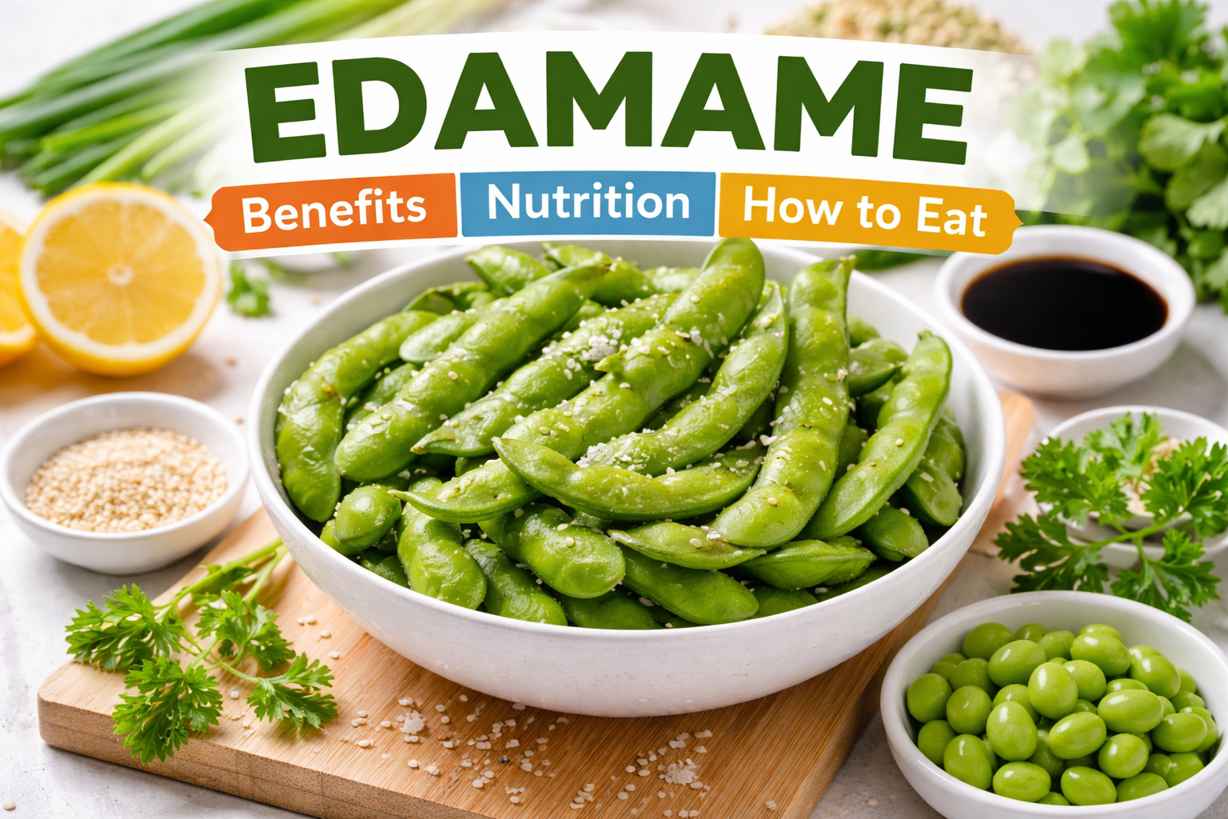
Edamame is a young soybean harvested before full maturity. The beans are green, soft, and high in moisture. Edamame originates from East Asia and is widely used in Japanese, Chinese, and Korean food systems. The plant species is Glycine max. Agricultural sources such as the USDA and FAO define edamame as soybeans collected during the vegetable stage, not the grain stage.
Edamame is commonly sold in two forms. One form is whole pods. The second form is shelled beans, also known as mukimame. The pods are not eaten. Only the beans inside are consumed.
How Edamame Differs From Other Soy Products
Edamame differs from mature soybeans in harvest timing and use. Mature soybeans are dried and processed into oil, flour, tofu, and soy milk. Edamame is consumed fresh or frozen as a vegetable.
Edamame also differs from green peas. Green peas belong to a different plant family and contain less protein and fat.
Key differences at a glance:
| Feature | Edamame | Mature Soybeans | Green Peas |
|---|---|---|---|
| Plant species | Glycine max | Glycine max | Pisum sativum |
| Harvest stage | Immature | Fully mature | Immature |
| Protein content | High | Very high | Moderate |
| Fat content | Moderate | High | Very low |
| Common use | Snack, vegetable | Oil, tofu, flour | Side dish |
Nutritional Profile of Edamame
Edamame provides dense nutrition in a small serving. Nutrient data is documented in USDA FoodData Central.
Average nutrition per 100 grams (boiled, shelled):
| Nutrient | Amount |
|---|---|
| Calories | ~120 kcal |
| Protein | ~11 g |
| Carbohydrates | ~8 g |
| Dietary fiber | ~5 g |
| Fat | ~5 g |
| Iron | ~2 mg |
| Folate | ~300 mcg |
| Potassium | ~430 mg |
Edamame contains all essential amino acids. This qualifies edamame as a complete plant protein. The FAO confirms soy protein quality using amino acid scoring systems.
Important Compounds Found in Edamame
Edamame contains bioactive plant compounds. The most studied compounds are isoflavones. Common isoflavones include genistein and daidzein. These compounds interact with estrogen receptors in a selective manner. Research summaries from the National Institutes of Health (NIH) describe these interactions.
Edamame also contains antioxidants. These compounds help reduce oxidative stress markers in cellular systems.
Edamame provides both soluble and insoluble fiber. Soluble fiber binds bile acids. Insoluble fiber increases stool bulk.
Health Effects Supported by Research
Heart Health
Soy protein intake is associated with modest reductions in LDL cholesterol. The U.S. Food and Drug Administration (FDA) authorizes a health claim for soy protein and heart health when consumed as part of a low-saturated-fat diet.
Blood Sugar Control
Edamame has a low glycemic load. Fiber and protein slow carbohydrate absorption. Studies summarized by Harvard T.H. Chan School of Public Health associate legume intake with improved glucose regulation.
Digestive Health
Fiber in edamame supports gut bacteria fermentation. This process produces short-chain fatty acids. These compounds support colon cell health, according to studies in The American Journal of Clinical Nutrition.
Bone and Menopause Research
Isoflavones in soy interact with estrogen receptor beta. Clinical trials reviewed by the NIH Office of Dietary Supplements report mixed outcomes related to bone density and menopausal symptoms. Results vary based on gut microbiota and intake level.
Safety and Dietary Considerations
Soy is a recognized food allergen. The U.S. FDA lists soy among major allergens. Individuals with soy allergy experience immune reactions after exposure.
Edamame contains goitrogenic compounds. The American Thyroid Association reports no thyroid disruption in iodine-sufficient individuals consuming normal food amounts.
Edamame consumption during pregnancy is considered safe within balanced diets. This position aligns with nutrition guidance from ACOG and public health institutions.
Read Also: Understanding the Meaning of “Food Near Me”
How Edamame Is Cooked Safely
Edamame requires cooking before consumption. Cooking deactivates enzyme inhibitors and improves digestibility. This is confirmed by USDA food preparation guidance.
Common Cooking Methods
-
Boiling: Beans are placed in salted boiling water for 3–5 minutes.
-
Steaming: Beans are steamed for 5–7 minutes to retain nutrients.
-
Microwaving: Beans are heated with minimal water for fast preparation.
-
Pan-searing: Cooked beans are lightly browned for added texture.
Cooking time varies based on pod presence and bean size.
How Edamame Is Eaten
Edamame pods are served warm. The beans are removed using fingers or teeth. Pods are discarded after eating.
Shelled edamame is used in multiple dishes:
-
Grain bowls
-
Salads
-
Stir-fries
-
Soups
-
Plant-based spreads
Seasonings commonly used include salt, sesame oil, garlic, chili flakes, and citrus zest.
Buying Edamame in Stores
Edamame is available fresh during harvest season and frozen year-round. Frozen edamame maintains nutritional value due to rapid post-harvest freezing.
Quality indicators include:
-
Bright green color
-
Firm beans
-
No yellowing or shriveling
Frozen products often provide longer shelf life and consistent quality.
Proper Storage of Edamame
Fresh edamame has a short storage window. Storage recommendations follow USDA food safety standards.
| Storage Type | Temperature | Duration |
|---|---|---|
| Fresh (refrigerated) | ≤4°C | 2–3 days |
| Frozen (raw or cooked) | −18°C | Up to 12 months |
| Cooked (refrigerated) | ≤4°C | 3–4 days |
Airtight containers reduce oxidation and moisture loss.
Edamame Compared With Other Legumes
Edamame contains more protein than most fresh legumes. Edamame also contains more fat, mainly polyunsaturated fatty acids.
Edamame functions as a vegetable snack. Most legumes function as staple protein or starch foods.
See More: Understanding Food That Starts With I
FAQs About Edamame
Is edamame gluten-free?
Edamame contains no gluten. This is confirmed by food lists from the Celiac Disease Foundation.
Is edamame a complete protein?
Edamame provides all essential amino acids, according to FAO protein evaluations.
Does edamame contain cholesterol?
Edamame contains zero dietary cholesterol. This aligns with USDA nutrient data.
Is edamame suitable for plant-based diets?
Edamame provides protein, iron, and folate commonly needed in plant-based nutrition frameworks.
Can edamame be eaten cold?
Cooked edamame remains safe when cooled and stored properly under refrigeration standards.
Is edamame genetically modified?
Edamame varieties sold as fresh vegetables are commonly non-GMO. Certification depends on supplier labeling.
Why Edamame Has Gained Global Popularity
Edamame combines high protein density with simple preparation. Edamame fits modern dietary patterns focused on plant protein and fiber. Food systems research highlights edamame as a sustainable legume crop with nitrogen-fixing benefits.
Conclusion
Edamame is an immature soybean consumed as a vegetable. Edamame provides complete plant protein, dietary fiber, vitamins, and minerals. Edamame contains isoflavones with documented biological activity. Edamame supports heart, metabolic, and digestive health within balanced diets. Edamame requires cooking and proper storage for safety. Edamame remains widely supported by nutritional science and food safety authorities including USDA, FDA, NIH, FAO, and Harvard T.H. Chan School of Public Health.
