
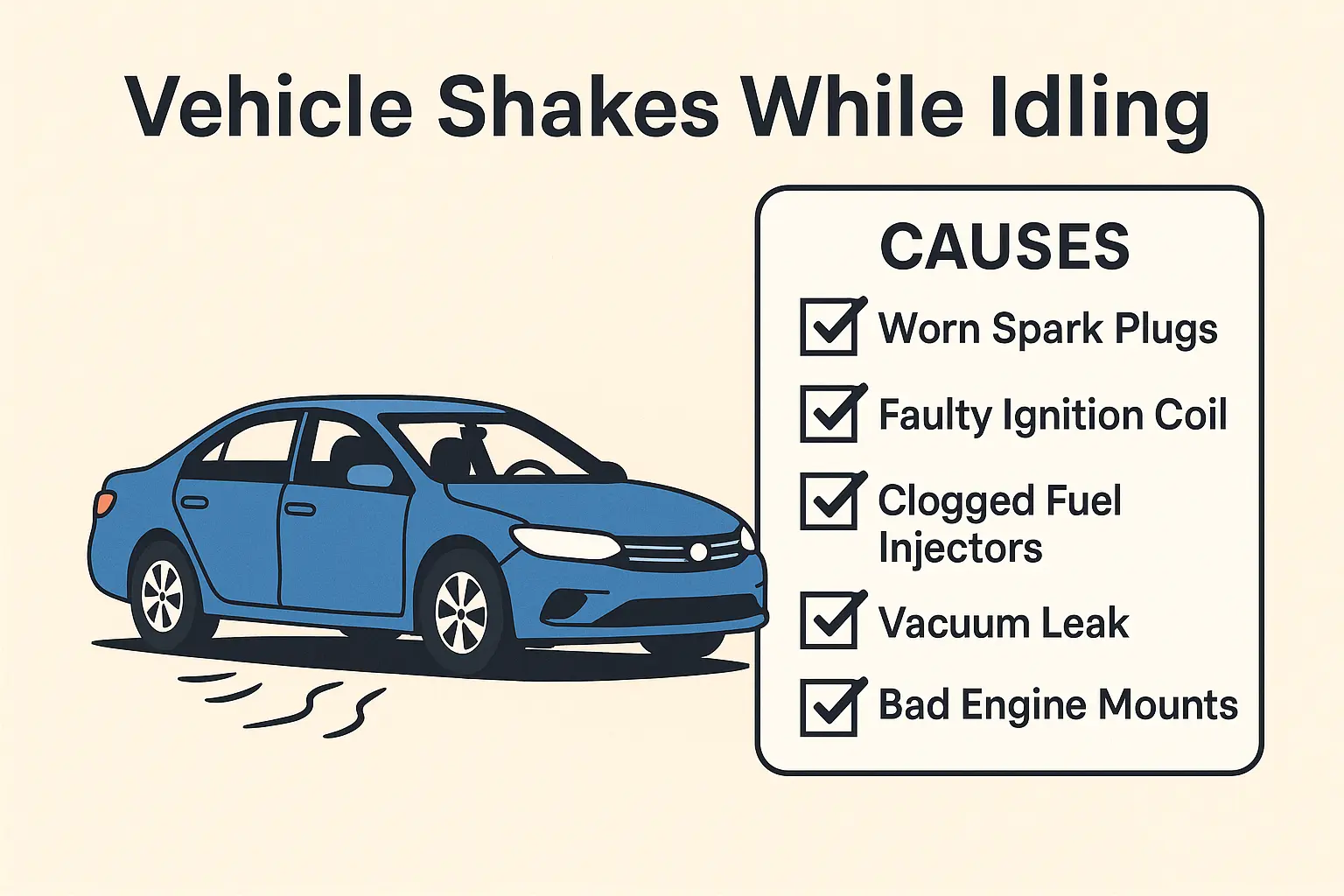
When a vehicle shakes while idling, it means the engine and connected components are not running smoothly at low RPM. A smooth-running vehicle should stay steady when waiting at a traffic light, parked with the engine on, or idling in neutral. Any shaking, vibrating, pulsing, or rough idle feeling signals that something inside the engine, fuel system, air system, or mounting parts is not functioning correctly.
This guide covers all major causes, diagnostic methods, repair solutions, prevention tips, and use-based symptoms so you can understand the issue clearly and handle it before costly damage develops.
What Is Vehicle Idling?
Idling is when the engine stays running without pressing the accelerator and the vehicle remains still. Example situations include:
-
Stopped at a red light
-
Waiting inside the car
-
Warming up the engine
-
Parking with the engine running
A normal idle is quiet, steady, and stable around 600–1000 RPM depending on vehicle type. Anything below or above normal RPM, or showing shake or vibration, is considered a rough idle condition.
Common Symptoms of a Vehicle That Shakes at Idle
If your vehicle shakes while idling, you may also notice:
| Symptom | What It Suggests |
|---|---|
| Vibrating steering wheel | Engine imbalance or mount wear |
| Shaking seat or dashboard | Severe misfire or weak mounts |
| Rising & dropping RPM | Air, fuel, or sensor imbalance |
| Check engine light | Electronic or cylinder issue |
| Exhaust smell or smoke | Fuel mixture problem |
| Increased fuel usage | Injector or air intake problem |
| Slight jerk while in Drive | Transmission or torque converter issue |
Main Reasons Why a Vehicle Shakes While Idling
Here are the most common and verified causes:
Worn or Dirty Spark Plugs
Spark plugs create the ignition needed to burn fuel. When they become worn, oily, or carbon-coated, the engine can misfire, causing vibration at idle.
Faulty Ignition Coils or Plug Wires
Bad ignition coils cannot deliver the correct energy to each plug, which leads to uneven firing and engine shaking.
Clogged or Weak Fuel Injectors
Injectors spray fuel in a fine mist. Dirt or residue can reduce fuel flow, leading to rough idle, shaking, and loss of power.
Vacuum Leak
Modern engines rely on an air-sealed vacuum system. If hoses crack, loosen, or leak, the air-fuel ratio becomes incorrect, and the engine will vibrate noticeably.
Dirty Throttle Body or Air Intake
Carbon buildup inside the throttle body can restrict airflow. When airflow becomes unstable, RPM fluctuates, causing shaking.
Damaged Engine or Transmission Mounts
Mounts isolate vibrations between the engine and chassis. When they crack or lose flexibility, vibration transfers directly into the cabin.
Low or Poor-Quality Engine Oil
Old oil loses lubrication strength. This causes the engine to work harder, leading to noise, shake, and internal friction.
Exhaust Blockage or Catalytic Converter Issue
A clogged exhaust system increases pressure in the engine, which disrupts idle smoothness and causes the car to vibrate or shake.
Incorrect Idle Speed Settings
Some cars develop shaking simply because the idle RPM is set too low, which causes weak combustion.
How to Diagnose the Problem Step-By-Step
Follow these simple checks before visiting a mechanic:
-
Observe RPM using dashboard tachometer
-
Listen for strange noises (hissing, knocking, rattling)
-
Switch between Drive, Neutral, and Park
-
Check spark plugs visually
-
Inspect engine mounts for cracks
-
Scan OBD-II codes using a scanner
-
Check for oil color and level
-
Look for loose wires or hoses under the hood
Idle Shaking vs Driving Shaking (Important Difference)
| Condition | Idle Only Shakes | Shakes While Driving |
|---|---|---|
| Possible Issue | Engine or vacuum system | Tires, wheels, suspension |
| Feel Type | Vibrates while stopped | Vibrates at higher speeds |
| Fix Priority | High | Medium |
Repair Solutions Based on Specific Cause
| Cause | Repair Solution |
|---|---|
| Bad spark plug | Replace full set |
| Weak ignition coil | Install OEM quality coil |
| Dirty injector | Clean or replace |
| Vacuum leak | Replace hose / gasket |
| Dirty throttle body | Clean using throttle spray |
| Bad engine mount | Replace mount assembly |
| Wrong idle RPM | Adjust via ECU / throttle learning |
| Clogged exhaust | Repair or replace converter |
Situations Where Shaking Gets Worse
-
When turning on AC
-
When shifting from Neutral to Drive
-
During cold start
-
When fuel tank is low
-
When electrical load increases (lights, audio, heater)
See More: How Often to Change Transmission Fluid: The Ultimate Expert Guide
Prevention Tips to Avoid Future Idle Shaking
-
Use high-quality fuel
-
Replace spark plugs on time
-
Get injector cleaning every 20,000–30,000 miles
-
Clean air intake parts regularly
-
Avoid letting the car idle for long periods
-
Perform engine oil changes on schedule
-
Avoid aftermarket low-quality parts
Quick Home Remedies
-
Clean air filter
-
Add injector cleaner additive
-
Remove excess weight from vehicle
-
Check for loose engine cover
-
Reset ECU by battery disconnect (if safe)
Frequently Asked Questions (FAQs)
1. Is it safe to drive when my vehicle shakes while idling?
It may be safe for short distances, but shaking can indicate misfire, fuel, or mount issues, which may lead to engine damage or breakdown if ignored.
2. Why does my vehicle shake more when the AC is ON?
The AC compressor puts extra load on the engine, which increases vibration if there is any weak engine component.
3. Can dirty engine oil cause idle shaking?
Yes, old oil loses thickness and lubrication strength, leading to unstable idle and internal friction.
4. Does cold weather increase idle vibration?
Yes, cold weather thickens fluids and delays optimal combustion, which can temporarily increase vibration.
5. How much does it cost to fix idle shaking?
Repairs range from $15 to $950, depending on whether the issue is spark plugs, mounts, injectors, or sensors.
Conclusion
Vehicle shakes while idling is a sign that air, fuel, ignition, engine stability, or exhaust flow is not working correctly. While many of the causes are not extremely expensive, ignoring them can lead to serious engine damage and higher repair costs. Proper diagnosis, regular maintenance, and quick action are the keys to restoring smooth engine performance.
