
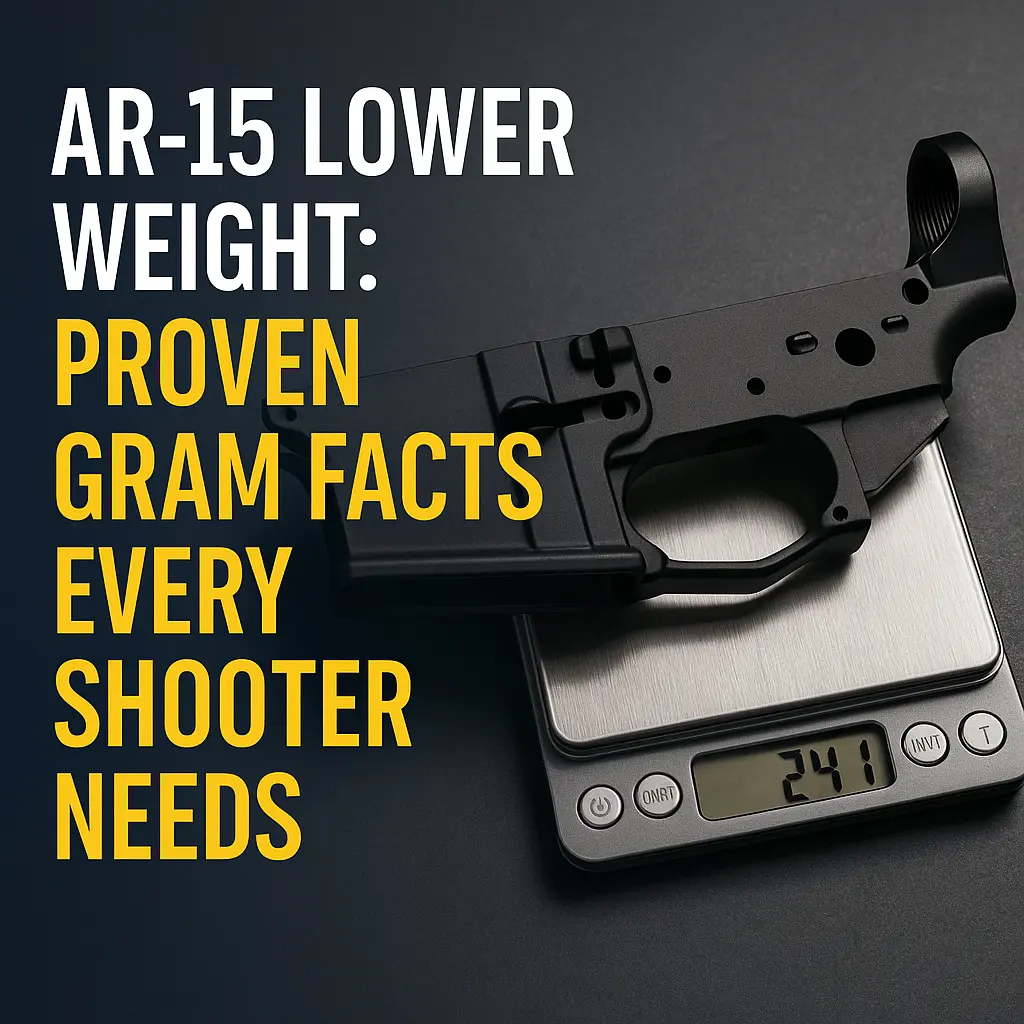
Many new rifle owners ask a simple but important question: How many grams does an ar15 lower weigh?
A typical stripped AR-15 lower weighs between 230 g and 260 g, depending on the material and design. Some lightweight polymer or carbon-fiber models weigh far less, while enhanced billet lowers can weigh slightly more. This guide explains every detail in plain English so you can understand what affects weight, why it matters, and how to choose the right lower for your build.
What Is an AR-15 Lower Receiver?
The lower receiver is the main body of the rifle. It connects the stock, grip, trigger parts, and magazine. It also houses the serial number, which means it is the legally controlled part of the firearm.
There are two basic types:
-
Stripped Lower – Only the receiver itself with no parts installed.
-
Complete Lower – Includes the stock, buffer system, trigger, safety, and all internal components.
The weight varies depending on which type you measure.
Average Weight of an AR-15 Lower in Grams
The chart below shows the most common weight ranges:
| Type of Lower | Average Weight (Grams) | Notes |
|---|---|---|
| Stripped 7075 Aluminum | 230–260 g | Most common for standard AR-15 builds |
| Stripped Billet Aluminum | 260–310 g | Heavier due to extra metal and design cuts |
| Stripped 6061 Aluminum | 240–270 g | Slightly softer alloy but similar weight |
| Stripped Polymer Lower | 100–150 g | Lightest option for weight-focused builds |
| Carbon-Fiber Reinforced | 105–130 g | Strong but extremely lightweight |
| Complete Lower Assembly | 700–1200 g | Includes stock, buffer tube, and full parts kit |
These numbers help shooters compare materials and choose the right lower based on their goals.
Why Do AR-15 Lowers Have Different Weights?
Lower receivers do not all weigh the same because manufacturing method, material strength, and design features change the final mass. Below are the main reasons.
1. Material Type Affects Weight
7075-T6 Aluminum
Most trusted for the AR-15 platform. Known for high strength and low weight.
Stripped weight: 230–260 g
6061-T6 Aluminum
Easier to machine. Slightly softer alloy.
Stripped weight: 240–270 g
Billet Aluminum
Machined from a solid block. Many lowers include thicker walls, flared magazine wells, and custom designs.
Stripped weight: 260–310 g
Polymer
Made from reinforced plastics. Designed to cut weight in half compared to metal.
Stripped weight: 100–150 g
Carbon-Fiber Composite
Used in ultra-light rifles. Strong, rigid, and extremely light.
Stripped weight: 105–130 g
2. Manufacturing Process Changes Mass
There are three main manufacturing styles:
-
Forged – Metal is compressed under high pressure. Strongest and normally the lightest.
-
Billet – Milled from a solid block. Allows custom shapes but often adds extra grams.
-
Polymer Molded – Uses molds and reinforced plastics. Cuts mass dramatically.
3. Design Features Add or Reduce Grams
Features that add weight:
-
Thickened trigger guards
-
Oversized magwells
-
Extra reinforcement ribs
-
Integrated flares or fluting
Features that reduce weight:
-
Skeletonized cuts
-
Thinner walls on billet designs
-
Polymer construction
-
Carbon-fiber reinforcement
Manufacturers balance durability and weight, so each design is a little different.
See More: Vehicle Shakes While Idling: Complete Expert Guide to Causes, Diagnosis & Fixes
How Much Does a Complete AR-15 Lower Weigh in Grams?
A complete lower includes:
-
Stock
-
Buffer tube
-
Buffer and spring
-
Trigger system
-
Safety
-
Grip
-
Pins and springs
Because these parts vary widely, complete lowers weigh 700–1200 grams.
Lightweight complete lower:
700–850 g (polymer receiver, minimalist stock)
Standard complete lower:
900–1100 g (7075 receiver, M4-style stock)
Heavy-duty complete lower:
1100–1200 g (billet receiver, enhanced stock, heavy buffer)
These numbers help buyers match weight to their shooting style.
How Lower Weight Affects Rifle Handling
Lower weight influences how the rifle feels in your hands. Even a 50-gram difference can change balance.
A lighter lower:
-
Improves speed for fast transitions
-
Reduces fatigue during long training days
-
Makes the rifle feel more front-heavy when paired with a long barrel
A heavier lower:
-
Adds stability to recoil
-
Improves follow-up shot control
-
Moves balance point closer to the body
Neither option is “good” or “bad.” It depends on your shooting purpose.
Best Uses for Each Lower Weight Category
Lightweight Polymer (100–150 g)
-
Hiking rifles
-
Competition builds
-
Youth training setups
Standard Forged Aluminum (230–260 g)
-
Home defense
-
Duty and patrol rifles
-
General range use
Heavy Billet Aluminum (260–310 g)
-
Precision builds
-
Custom designs
-
Rifles that need extra strength in harsh conditions
How to Measure Your Lower in Grams
You can measure your lower at home using a digital kitchen scale.
Follow these simple steps:
-
Clean and dry the receiver.
-
Place the scale on a level surface.
-
Switch the scale to grams.
-
Set the receiver gently on the center of the scale.
-
Take note of the displayed weight.
-
Repeat the measurement twice to confirm accuracy.
This gives you the same weight rating manufacturers use.
Most Common AR-15 Lower Weights by Brand
Below are typical weights found in real user reports:
-
Aero Precision Forged Lower: ~235–245 g
-
Anderson Manufacturing Lower: ~240–250 g
-
Bravo Company Lower: ~240–255 g
-
Spike’s Tactical Lower: ~245–260 g
-
KE Arms KP-15 Polymer Lower: ~100–120 g stripped
-
Tennessee Arms Hybrid Polymer: ~130–150 g
Weights may vary slightly by year or model.
See More: How Often to Change Transmission Fluid: The Ultimate Expert Guide
Factors to Consider When Choosing a Lower
-
Weight in grams
-
Material strength
-
Manufacturing method
-
Price
-
Intended use (range, duty, competition)
-
Compatibility with aftermarket parts
-
Warranty and build quality
These points ensure you choose the right option the first time.
Conclusion
So, how many grams does an ar15 lower weigh? A typical AR-15 lower weighs 230–260 grams, but the range spreads from 100 g (polymer) to 310 g (billet aluminum). Complete lowers weigh 700–1200 g, depending on the parts used.
Understanding these numbers helps shooters build a rifle that handles exactly the way they want. Whether weight, durability, or features matter most, the right lower receiver always starts with knowing its mass.
FAQs About AR-15 Lower Weight
1. What is the lightest AR-15 lower ever made?
Some carbon-fiber models weigh as little as 105 grams, making them the lightest commercially available options.
2. Does a lighter lower reduce recoil?
A lighter lower does not reduce recoil. It can actually increase felt recoil because it reduces mass behind the rifle.
3. Why do billet lowers weigh more?
Billet lowers often use thicker walls, aggressive styling, and reinforced shapes, which add extra grams compared to forged lowers.
4. Is a polymer lower strong enough for long-term use?
Modern polymer lowers perform well for standard shooting. Heavy or repeated abuse may wear them faster than aluminum.
5. How much does weight matter for accuracy?
Lower weight does not directly change accuracy. The barrel and upper assembly affect accuracy far more.
6. Can I make my lower lighter?
You cannot safely remove metal yourself, but switching to a lighter stock, grip, or buffer system reduces total lower assembly weight.
7. Why do manufacturers list weight in ounces?
Firearms traditionally use imperial measurements, but converting to grams helps shooters compare parts more precisely.
