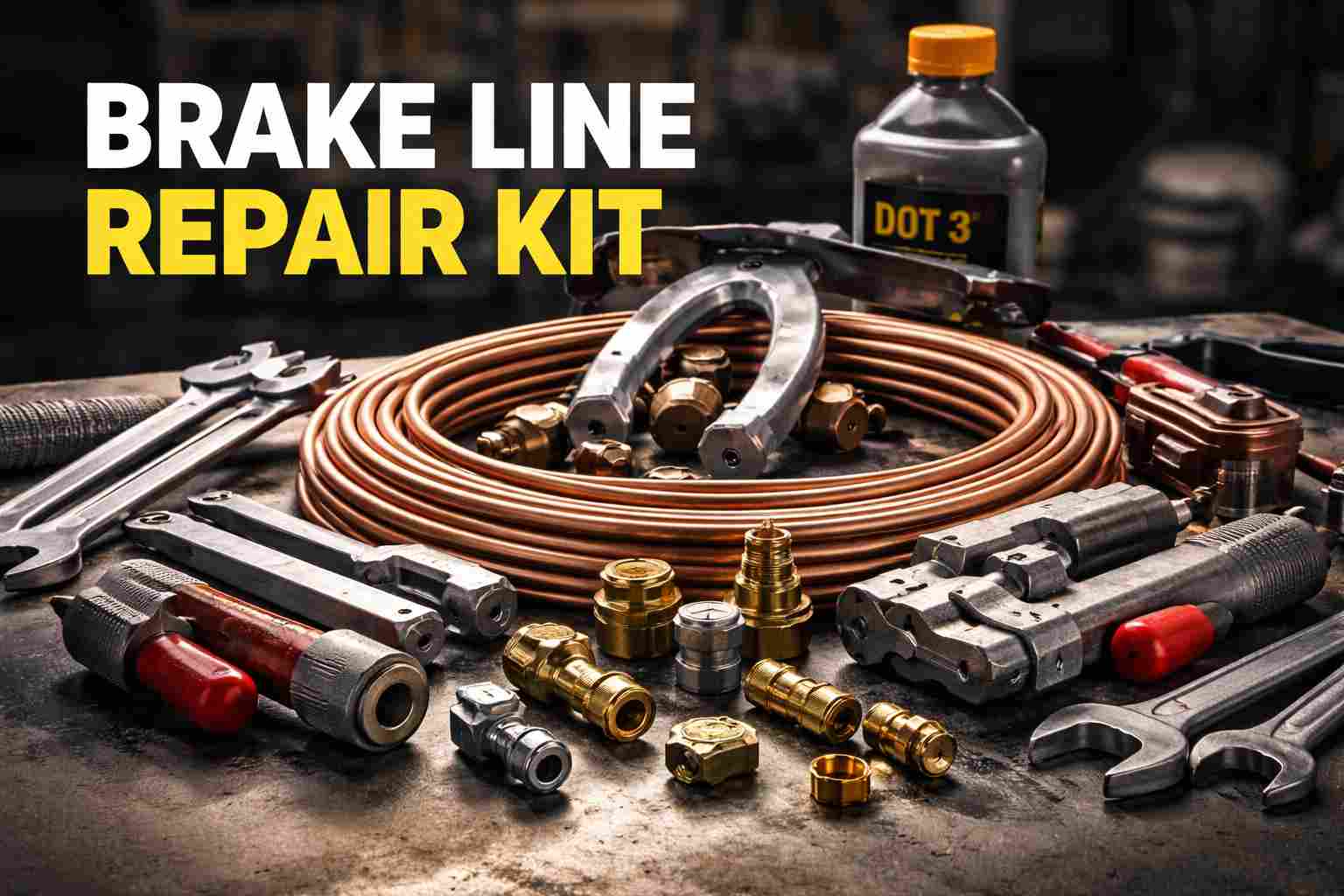
A brake line repair kit is a set of components used to restore the hydraulic brake lines in a vehicle. Brake lines carry pressurized brake fluid from the master cylinder to the brakes at each wheel. When a brake line leaks or corrodes, braking power drops immediately. According to National Highway Traffic Safety Administration, brake hydraulic failure directly affects stopping distance and vehicle control. A brake line repair kit exists to restore this hydraulic path safely and accurately.
Why Brake Lines Fail in Real Vehicles
Brake lines fail due to environmental and mechanical factors. These failures develop gradually and often remain hidden until pressure loss occurs.
Corrosion exposure
Steel brake lines react with moisture and road salt. Vehicles driven in winter regions experience accelerated rust formation under the chassis.
Mechanical stress
Brake lines flex slightly during suspension movement. Over time, vibration and stress fatigue weaken the tubing wall.
Heat cycles
Brake fluid heats during braking and cools afterward. Repeated heat cycles expand and contract the metal, increasing failure risk.
Improper previous repairs
Incorrect fittings or poor flares create weak points. These points often fail under emergency braking pressure.
What Comes Inside a Brake Line Repair Kit
A brake line repair kit contains precision parts designed for hydraulic systems. Each component has a defined role.
Brake tubing
Tubing forms the main fluid channel. Common sizes include:
-
3/16 inch (most passenger vehicles)
-
1/4 inch (trucks and rear axle feeds)
Brake fittings
Fittings connect tubing to brake components. Typical types include:
-
Inverted (double) flare fittings
-
Bubble flare fittings
-
Straight unions
-
Reducing unions
Adapters and connectors
Adapters allow transitions between different thread sizes or standards.
Optional tools
Some kits include:
-
Tubing cutters
-
Hand benders
-
Flaring tools
-
Deburring tools
These tools support on-site repair without shop equipment.
See More: Out for Delivery Meaning: A Complete and Clear Explanation
Types of Brake Line Repair Kits Explained
Brake line repair kits are grouped by purpose and installation method.
Universal brake line repair kits
Universal kits include coiled tubing and mixed fittings. They allow custom cutting and bending. These kits suit partial repairs or custom routing.
Pre-flared brake line kits
Pre-flared kits provide straight tubing with factory-made flares. These kits reduce installation errors caused by poor flare geometry.
Vehicle-specific brake line kits
Vehicle-specific kits include pre-shaped lines designed for exact factory routing. Dorman Products distributes these kits segmented by front, rear, and axle systems.
Section repair kits
Section kits replace only damaged portions of a line. They use unions to connect new tubing to existing lines.
Compression fitting kits
Compression kits seal using ferrules instead of flares. Many service authorities restrict these kits for permanent on-road use.
Brake Line Materials Used in Repair Kits
Material choice determines durability, ease of installation, and corrosion resistance.
Nickel-copper alloy (NiCopp)
NiCopp tubing combines copper and nickel. This alloy resists rust and bends easily. Society of Automotive Engineers recognizes nickel-copper tubing under SAE J1650 standards.
Stainless steel
Stainless steel tubing resists corrosion and handles high pressure. It requires precision tools due to stiffness.
Coated steel
Coated steel tubing uses protective layers over steel. It costs less but corrodes faster in salt-heavy climates.
Material comparison table
| Material Type | Corrosion Resistance | Ease of Bending | Typical Lifespan |
|---|---|---|---|
| Nickel-Copper | Very High | Easy | Long |
| Stainless | Very High | Difficult | Very Long |
| Coated Steel | Moderate | Moderate | Medium |
How to Choose the Right Brake Line Repair Kit
Selecting the correct brake line repair kit depends on accurate system identification.
Match tubing size
Measure the existing brake line diameter using calipers. Incorrect sizing causes sealing failure.
Match flare type
Inspect the brake fitting seat. North American vehicles commonly use double flares. European and Asian vehicles often use bubble flares.
Match thread standard
Threads follow SAE or metric standards. Mixing standards damages fittings and seats.
Match repair scope
Localized rust supports section repair kits. Widespread corrosion supports full replacement kits.
Match environment
High-salt regions benefit from nickel-copper or stainless tubing.
Tools Required for Brake Line Repair
Brake line repair requires accuracy. The correct tools preserve hydraulic integrity.
Cutting tools
Tubing cutters create square, burr-free cuts.
Bending tools
Hand benders form smooth curves without flattening the tube.
Flaring tools
Double-flare and bubble-flare tools form pressure-rated sealing ends.
Installation tools
Line wrenches grip fittings without rounding corners.
Bleeding tools
Brake bleeding tools remove air after installation.
Read More: Is Fire Alarm Sounds and Elevator Stops? Complete Guide to Safety, Causes & Real Building Behavior
Step-by-Step Overview of Brake Line Repair
To repair a brake line, follow a controlled hydraulic restoration process recognized by Brake Manufacturers Council.
-
Inspect the brake system for leaks and rust.
-
Secure the vehicle using certified jack stands.
-
Drain residual brake fluid safely.
-
Remove the damaged brake line section.
-
Measure and cut replacement tubing.
-
Deburr and flare tubing ends.
-
Bend tubing to match original routing.
-
Install fittings and unions.
-
Refill brake fluid reservoir.
-
Bleed air from the system.
-
Verify pedal firmness and leak-free joints.
Common Errors During Brake Line Repair
Brake line failures often result from avoidable mistakes.
Incorrect flare formation
Poor flares crack under pressure.
Over-tightened fittings
Excess torque distorts flare seats.
Contaminated brake fluid
Dirt and moisture degrade seals.
Improper routing
Lines routed near heat or moving parts fail prematurely.
Safety Importance of a Brake Line Repair Kit
Brake systems rely on sealed hydraulics. Insurance Institute for Highway Safety links brake failures to increased crash severity. A brake line repair kit restores braking force transmission and vehicle control.
Cost Factors of Brake Line Repair Kits
Repair cost varies by material and repair depth.
| Kit Type | Material Cost | Labor Time | Overall Cost |
|---|---|---|---|
| Universal Kit | Low | High | Medium |
| Pre-Flared Kit | Medium | Medium | Medium |
| Vehicle-Specific Kit | High | Low | High |
Regulatory Considerations
Brake line repairs must comply with safety regulations enforced by United States Department of Transportation. Non-compliant materials or fittings risk inspection failure and unsafe operation.
FAQs
What size brake line does most cars use?
Most passenger cars use 3/16 inch brake line tubing.
Are brake line repair kits universal?
Brake line repair kits vary. Universal kits fit many vehicles. Vehicle-specific kits fit only listed models.
Is nickel-copper tubing approved for road use?
Nickel-copper tubing meets SAE and DOT performance standards for on-road use.
Can a single brake line be repaired without replacing all lines?
A single line can be repaired if corrosion does not extend beyond the damaged section.
Do brake line kits include brake fluid?
Brake line repair kits do not include brake fluid. Fluid selection depends on vehicle specifications.
How long does a brake line repair last?
A correctly installed nickel-copper or stainless brake line lasts longer than original steel lines in corrosive environments.
Conclusion
A brake line repair kit restores hydraulic braking integrity using compliant tubing, fittings, and connectors. Material selection, flare accuracy, and routing precision determine repair success. Safety authorities including National Highway Traffic Safety Administration and Society of Automotive Engineers recognize brake line integrity as essential to vehicle safety. Proper kit selection and correct installation ensure reliable braking performance, regulatory compliance, and long-term durability.
