
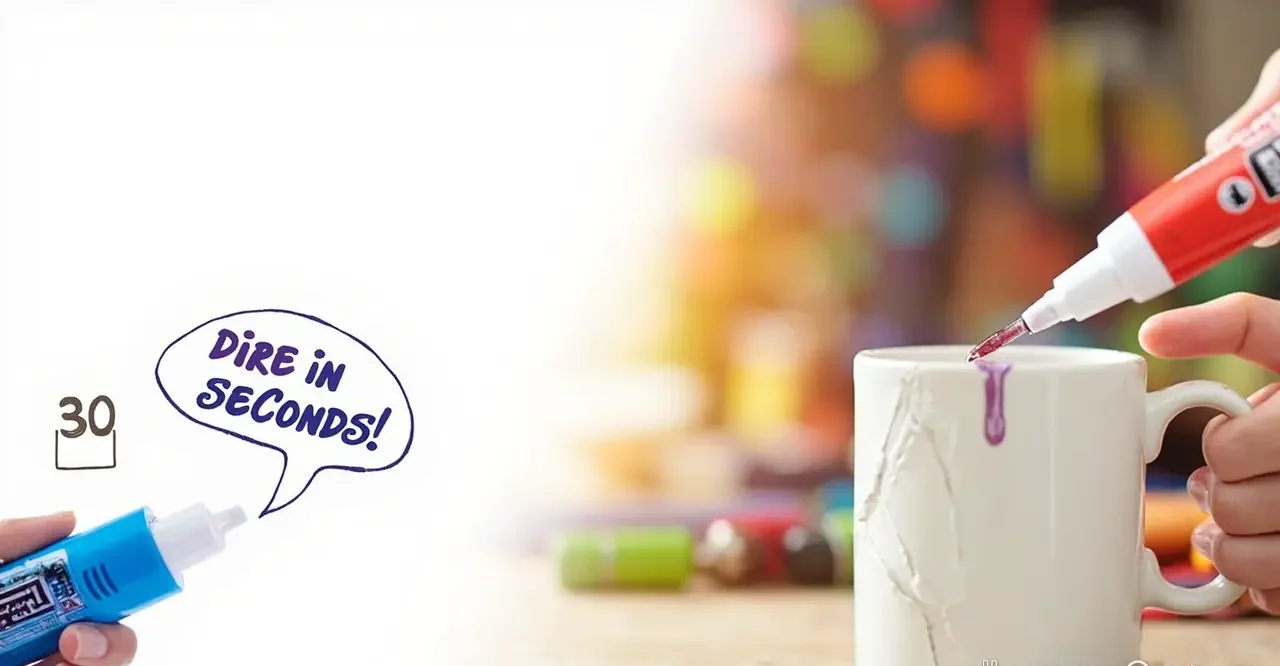
Super glue is known for its fast-drying power, but the exact drying time depends on many small details. In most cases, super glue dries in 10–60 seconds, becomes ready to handle in 1–5 minutes, and reaches full strength after 12–24 hours. This guide explains the full drying process, what affects it, how to make it dry faster, and how to get the strongest bond possible.
What Is Super Glue and Why Does It Dry So Fast?
Super glue is a cyanoacrylate adhesive. This type of glue reacts instantly when it touches moisture in the air or on surfaces. Even a tiny amount of moisture triggers a chemical reaction that turns the liquid glue into a hard, solid bond.
Key features of super glue
-
Works on many materials
-
Needs only a small amount
-
Dries extremely fast
-
Creates a strong, long-lasting hold
Drying Time Breakdown: From Seconds to Full Cure
Below is an easy-to-understand breakdown of how long super glue takes to dry at each stage.
1. Initial Dry Time (10–60 seconds)
This is when the glue stops feeling wet and the surfaces stick together lightly.
2. Handling Time (1–10 minutes)
The glued parts can be moved gently, but heavy stress should be avoided.
3. Full Cure Time (12–24 hours)
This is when the glue reaches maximum strength and becomes fully hardened.
Drying Time Table for Different Materials
Super glue does not dry the same on all surfaces. Some materials absorb glue, some resist it, and some speed up the reaction.
| Material | Initial Dry Time | Safe Handling Time | Full Cure Time |
|---|---|---|---|
| Wood | 5–20 seconds | 2–5 minutes | 12 hours |
| Metal | 10–40 seconds | 5–10 minutes | 24 hours |
| Plastic | 15–60 seconds | 5–15 minutes | 24 hours |
| Glass | 20–60 seconds | 5–10 minutes | 24 hours |
| Ceramic | 10–30 seconds | 3–7 minutes | 24 hours |
| Rubber | 20–50 seconds | 5–10 minutes | 24 hours |
| Leather/Fabric | 5–15 seconds | 1–3 minutes | 8–12 hours |
See More: Detailed Guide to HCOOCH CH₂ H₂O: Hydrolysis, Properties, and Applications
Factors That Change How Fast Super Glue Dries
Several conditions can make super glue dry faster or slower. Understanding them helps you get better results every time.
1. Surface Texture and Porosity
Porous surfaces (dry faster)
-
Wood
-
Fabric
-
Leather
These materials absorb moisture and help glue react faster.
Non-porous surfaces (dry slower)
-
Glass
-
Metal
-
Glazed ceramic
Smooth materials lack moisture and slow the initial reaction.
2. Temperature
Warm temperatures speed up drying.
Cold temperatures slow the chemical reaction.
Best temperature: Between 20°C and 30°C (68°F–86°F).
3. Humidity
Super glue needs moisture to activate.
-
Medium humidity (40–60%) = fastest drying
-
Very dry air = slower drying
-
High humidity = may cause surface curing too quickly
4. Amount of Glue Used
A small amount dries fastest.
Too much glue traps moisture and creates a weaker bond.
5. Airflow
Good airflow removes vapors and helps the glue set more evenly.
6. Type of Formula
Different super glue formulas dry at different speeds:
-
Liquid (fastest)
-
Gel (slower but controlled)
-
Special fast-set formulas (very fast)
See More: Green and What Color Make Red? The Complete Color Theory Guide
How to Make Super Glue Dry Faster
If you want super glue to dry quickly and strongly, follow the steps below.
Quick Steps to Speed Up Drying
-
Clean the surfaces with alcohol or a dry cloth.
-
Apply a thin layer of glue.
-
Press the parts tightly to remove air gaps.
-
Use a fan for better airflow.
-
Add gentle warmth using a warm air setting (not hot).
-
Use an accelerator designed for cyanoacrylate.
Mistakes to Avoid for Faster Drying
-
Do not use too much glue.
-
Do not glue dirty or oily surfaces.
-
Do not move the parts too soon.
-
Do not use expired glue.
-
Do not work in cold rooms.
Step-by-Step Guide: How to Get the Strongest Bond
Follow this simple process for the best results:
1. Prepare Surfaces Properly
-
Remove dust, oil, or paint.
-
Wipe with isopropyl alcohol.
-
Lightly sand smooth surfaces like metal or plastic to help bonding.
2. Apply Glue Correctly
-
Use a small drop, not a thick line.
-
Spread lightly if needed.
-
Avoid touching the nozzle to the surface.
3. Join Parts Firmly
-
Press surfaces together quickly after applying glue.
-
Hold steady for at least 10–20 seconds.
-
Use clamps if available.
4. Let It Cure Naturally
Do not rush the curing process.
Let the bond set for 12–24 hours before adding weight.
Why Super Glue Sometimes Dries Slowly
Super glue may take longer to dry due to:
-
Cold weather
-
Thick application
-
Very smooth surfaces
-
Oils or grease
-
Low humidity
-
Cheap or expired glue
If your glue isn’t drying, one of these is likely the reason.
How Long Should You Wait Before Using the Bond?
-
For light use: Wait at least 10 minutes.
-
For normal use: Wait 1–3 hours.
-
For full strength: Wait 12–24 hours.
Always wait longer for metal, ceramic, and glass repairs.
Safety Tips When Using Super Glue
Super glue is powerful, so handle it carefully.
-
Avoid touching it with bare fingers.
-
Work in a ventilated space.
-
If it gets on your skin, use warm water and acetone (nail polish remover).
-
Keep away from children.
FAQs About Super Glue Drying Time
1. Can super glue dry instantly?
Super glue cannot dry instantly, but it can dry in a few seconds when used with a chemical accelerator.
2. Why does super glue dry faster on skin?
Human skin contains natural moisture, which triggers the glue’s chemical reaction quickly.
3. How long does super glue last after opening?
Opened super glue usually stays good for 4–8 weeks if stored in a cool, dry place.
4. Does temperature affect drying time?
Yes. Warm temperatures speed up the reaction, while cold conditions slow it down.
5. Can I dry super glue with a hair dryer?
Yes, but only on a warm, low setting. High heat can damage materials or create fumes.
6. Why is my super glue still sticky after hours?
It may be old glue, too much applied, or the material could be resisting the bonding process.
7. Does super glue work on all plastics?
No. Plastics like PP and PE require a primer to bond properly.
Conclusion
Super glue dries quickly, but the exact drying time depends on the material, temperature, humidity, glue amount, and formula type. Most repairs are dry within seconds, safe to handle within minutes, and fully cured in 24 hours.
