
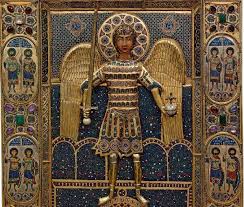
Byzantine imagery in the Catholic Church represents a visual system formed through centuries of exchange between Eastern and Western Christian communities. Its development inside Catholic environments shows how sacred art shaped doctrine, liturgy, and architectural identity across continents.
Historical Background of Byzantine Imagery in Catholic Contexts
Early Transmission Through Cultural Exchange
Byzantine art entered Catholic regions through pilgrimages, merchant routes, and monastic communication. Italian territories such as Venice, Ravenna, and Sicily housed Greek-speaking communities who brought icon traditions and mosaic workshops into Catholic urban centers.
Influence of Political and Religious Contacts
Diplomatic ties between Rome and Constantinople contributed to the circulation of icons, liturgical books, and reliquary decorations. Crusader settlements later expanded this exchange by commissioning Eastern-trained artists to decorate Latin churches in the Holy Land.
Core Visual Features of Byzantine Imagery Used by Catholic Artists
Hieratic Stance and Symbolic Presentation
Figures in Byzantine imagery stand front-facing with intentional stillness. Catholic churches adopted this style to emphasize divine authority rather than natural movement.
Gold Backgrounds Representing the Eternal Realm
Gold fields signify uncreated light. Catholic apse mosaics preserved this effect to convey the heavenly dimension during worship.
Iconographic Order and Theological Precision
Byzantine programs follow strict visual rules, placing Christ, Mary, prophets, and saints in structured positions. Catholic basilicas and cathedrals mirrored this organization to support doctrinal teaching.
Emphasis on Contemplative Expression
Byzantine imagery avoids dramatic emotion. Catholic leaders favored this calm atmosphere because it supported meditation and doctrinal clarity.
Major Icon Types Shared Between Byzantine and Catholic Traditions
Christ Pantocrator
A commanding portrayal of Christ holding the Gospel. Catholic domes and apses often used this icon to signify divine kingship.
Theotokos Hodegetria
Mary directing attention to Christ. Western Marian shrines adopted this icon due to its doctrinal accuracy.
Deesis Triad
Christ flanked by Mary and John the Baptist. Medieval Catholic manuscripts and portals preserve versions of this composition.
Liturgical Feast Cycles
Scenes from Christ’s life arranged according to the church calendar. Catholic mural cycles drew directly from these Eastern models.
See More: Lookout Position at the Top of the Mast: Full Guide to History, Purpose & Modern Use
Role of Byzantine Imagery in Catholic Liturgy and Worship
Visual Structure of Sacred Architecture
| Location | Byzantine Function | Use in Catholic Churches |
|---|---|---|
| Dome | Christ enthroned | Pantocrator mosaics |
| Apse | Marian or Christological image | Marian apses in Rome & Venice |
| Sanctuary | Apostolic witnesses | Altarpiece mosaics |
| Nave walls | Old Testament preparation | Didactic biblical sequences |
Liturgical Significance
-
Reinforced sermons with visual theology
-
Supported catechesis for non-literate congregations
-
Unified parish identity through shared sacred symbols
Geographical Spread of Byzantine Imagery in Catholic Settings
Italy as the Western Center
Cities like Venice, Palermo, and Ravenna served as major hubs. Greek artisans created mosaics for St. Mark’s Basilica, Monreale Cathedral, and other Catholic monuments.
Crusader Territories
Latin churches in Jerusalem, Acre, and Bethlehem blended Byzantine, Syrian, and Western elements, forming a hybrid style that influenced Europe.
Eastern Catholic Communities
Melkite, Maronite, and Ukrainian Greek Catholic churches preserved full icon traditions while remaining in communion with Rome. Their liturgical environments remain closely aligned with Byzantine standards.
Symbolic Framework of Byzantine Imagery Retained in Catholic Art
Color Meanings
-
Blue: heavenly wisdom
-
Red: divine majesty
-
Green: renewal
-
White: resurrection
Sanctity Markers
-
Halos represent holiness
-
Gestures communicate blessing or teaching
-
Architectural frames symbolize sacred space
These symbols provided Catholic worshippers with clear visual cues that supported doctrinal comprehension.
Distinctions Between Byzantine and Western Catholic Artistic Styles
| Aspect | Byzantine Approach | Western Catholic Development |
|---|---|---|
| Style | Symbolic and timeless | Gradual realism |
| Emotion | Controlled and serene | Increasing expressiveness |
| Medium | Icons and mosaics | Frescoes, sculpture, altarpieces |
Both systems coexist in many Catholic regions, enriching the visual diversity of the Church.
Enduring Importance of Byzantine Imagery in Contemporary Catholic Life
Modern Catholic institutions commission iconographers to restore ancient mosaic techniques and produce new icons for parish worship. Seminaries, monasteries, and cathedral programs often require formal study of Byzantine iconography to preserve its theological and artistic heritage.
Key Contributions of Byzantine Imagery to Catholic Tradition
| Contribution | Outcome in Catholic Practice |
|---|---|
| Symbolic clarity | Stronger theological education |
| Liturgical structure | Unified church decoration |
| Cultural continuity | Connection to early Christianity |
| Sacred atmosphere | Enhanced worship experience |
See More: Australian High School to US: The Definitive Guide for Smooth Academic Transition
FAQs About Byzantine Imagery in the Catholic Church
Why did the Catholic Church adopt Byzantine imagery?
Catholic communities adopted Byzantine imagery because it expressed doctrine with precision, strengthened liturgical identity, and carried authority from centers such as Constantinople and Antioch.
Is Byzantine imagery approved for Catholic worship today?
Yes. The Catholic Church recognizes icons as sacred art and encourages their use, especially in Eastern Catholic rites.
Where can Byzantine imagery be found in Catholic churches?
It appears in domes, apses, chapels, icon screens, manuscripts, and modern mosaic installations.
How does Byzantine iconography differ from Romanesque or Gothic art?
Byzantine imagery prioritizes symbolic representation, while Romanesque and Gothic art moved toward increased realism and emotional expression.
Why is Christ Pantocrator central in both traditions?
The image communicates Christ’s authority and divine kingship, making it central in theological and architectural programs across both traditions.
Conclusion
Byzantine imagery in the Catholic Church stands as a lasting testament to the shared foundations of Eastern and Western Christianity. Its symbolic clarity, structured iconography, and theological depth helped shape Catholic worship, architecture, and artistic expression for more than a thousand years. The continued presence of these visual traditions in modern Catholic spaces reflects an enduring respect for the spiritual language developed in the Byzantine world. As churches, scholars, and artisans renew interest in ancient Christian forms, Byzantine imagery remains a vital link to the early Church, preserving a sacred heritage that continues to inform Catholic identity today.
