
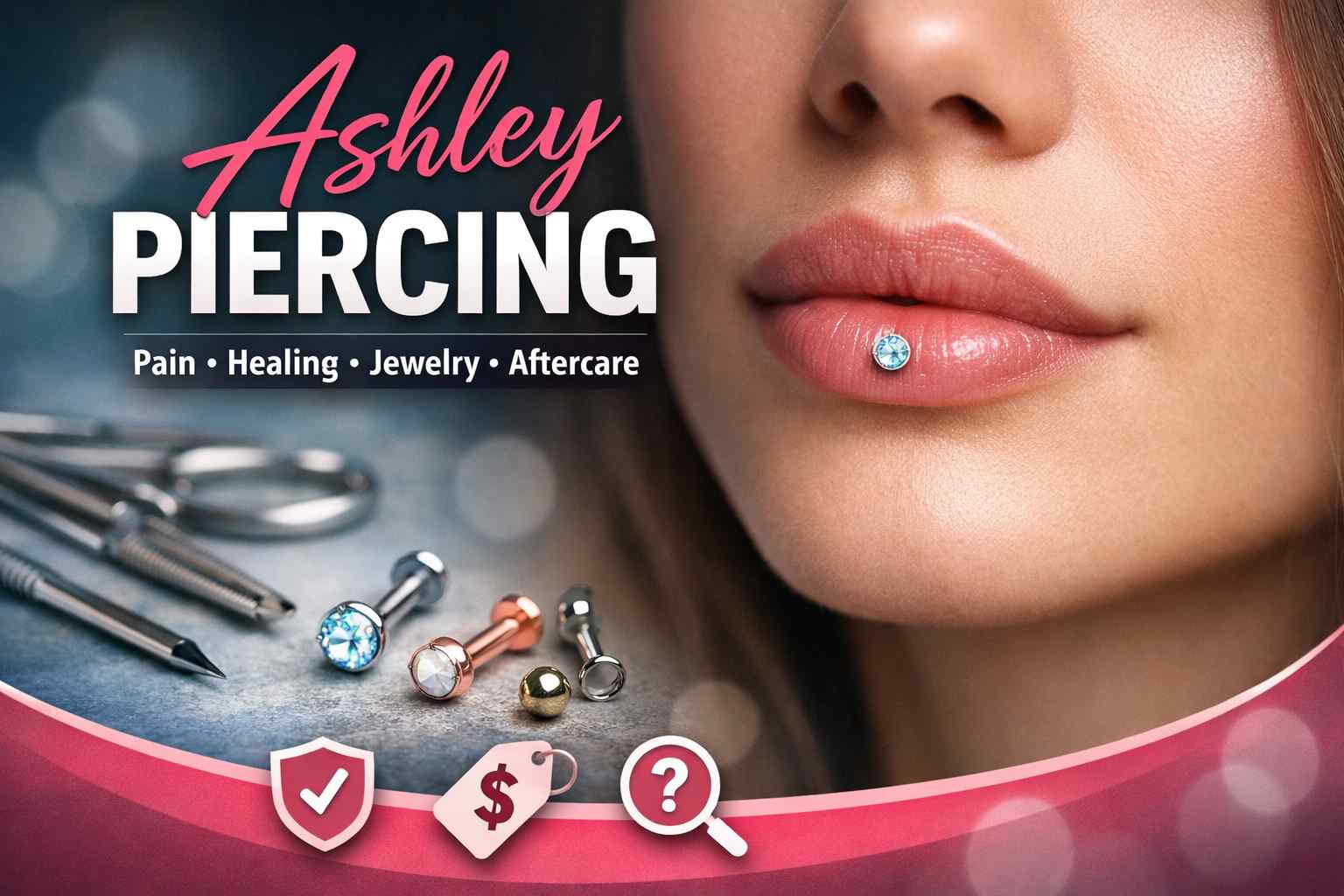
An Ashley piercing is a type of lip piercing placed through the center of the lower lip with only one visible jewelry end on the outside. Professional piercers classify it as an inverted vertical labret piercing because the jewelry exits inside the mouth instead of outside the lip. The outer side usually shows a small gem or metal ball, while the inside uses a flat disc that rests against the inner lip tissue.
Body piercing professionals and studios explain that the Ashley piercing highlights the shape of the lower lip and creates a minimalist appearance. The design makes the piercing visually unique because the jewelry appears to float on the lip surface. Many people choose it because it looks subtle yet noticeable.
This guide explains every important detail about Ashley piercings, including placement, pain level, healing time, jewelry types, risks, cost, and proper aftercare.
What Is an Ashley Piercing?
An Ashley piercing is a single lip piercing located in the center of the lower lip. The jewelry goes directly through the lip and exits inside the mouth. The outside side shows one decorative end, usually a small gemstone or metal ball.
Piercing professionals often describe it as the opposite of a vertical labret. A vertical labret piercing shows two visible ends of jewelry outside the lip. An Ashley piercing hides the inner part inside the mouth.
Key characteristics of Ashley piercing include:
-
Central lower-lip placement
-
Single visible jewelry end
-
Jewelry exits inside the mouth
-
Uses flat-back labret jewelry
-
Creates a minimalist lip highlight
Because the jewelry touches inner lip tissue, proper placement and professional piercing techniques are important.
Ashley Piercing Placement and Anatomy
Correct placement determines comfort and safety. Professional piercers examine lip structure before performing the piercing.
The piercing goes through the vermilion area of the lower lip, which is the pink part of the lip. The needle enters from the outside surface and exits through the inner lip lining.
Important anatomical factors include:
-
Lip thickness
-
Tooth position
-
Gum health
-
Lip symmetry
-
Bite alignment
People with extremely thin lips or dental issues may not be good candidates for the piercing.
Ashley Piercing Procedure: Step-by-Step
Professional piercing studios follow strict hygiene procedures to reduce infection risk. The entire procedure usually takes only a few minutes.
Step-by-Step Piercing Process
-
Consultation
The piercer examines lip anatomy and discusses jewelry options. -
Cleaning
The lip area is disinfected with antiseptic solution. -
Marking the Placement
A sterile surgical marker identifies the exact piercing point. -
Piercing the Lip
A hollow sterile needle passes through the lip tissue. -
Inserting Jewelry
The piercer inserts a labret stud immediately after the needle. -
Aftercare Instructions
The client receives detailed cleaning and healing guidance.
Professional piercers normally use 14-gauge or 16-gauge jewelry for this piercing.
Ashley Piercing Pain Level
Ashley piercing pain is usually described as moderate compared to other lip piercings.
Lip tissue contains many nerve endings, which makes the area sensitive. However, the piercing itself takes only a few seconds.
Pain level depends on several factors:
-
Individual pain tolerance
-
Lip thickness
-
Piercer experience
-
Anxiety level
-
Swelling after piercing
Most people report pain between 4 and 6 out of 10. Swelling and tenderness often feel more uncomfortable than the actual piercing.
See Also: Core Surgical Training: Complete Guide to the UK Surgical Training Pathway
Ashley Piercing Healing Time
Ashley piercings heal relatively quickly compared to cartilage piercings.
Typical healing time ranges from 8 to 16 weeks.
Healing occurs in several stages.
Healing Stages
| Healing Stage | Time Period | What Happens |
|---|---|---|
| Initial swelling | 1–7 days | Redness and swelling appear |
| Early healing | 2–4 weeks | Tissue begins repairing |
| Stabilization | 4–8 weeks | Irritation decreases |
| Full healing | 8–16 weeks | Piercing channel strengthens |
During early healing, the jewelry bar is usually longer to allow swelling. Piercers may recommend downsizing jewelry after swelling decreases.
Ashley Piercing Jewelry Types
Ashley piercings require specific jewelry styles for comfort and safety.
The most common jewelry type is a flat-back labret stud.
Common Jewelry Materials
| Material | Why It Is Used |
|---|---|
| Implant-grade titanium | Hypoallergenic and lightweight |
| Surgical stainless steel | Durable and affordable |
| 14k gold | Safe and decorative |
| Niobium | Good for sensitive skin |
| PTFE plastic | Flexible option |
Jewelry Designs
Popular decorative options include:
-
Crystal gemstones
-
Opal stones
-
Titanium balls
-
Flat disc tops
-
Minimalist studs
Jewelry size usually ranges between 14g and 16g.
Ashley Piercing Cost
Ashley piercing prices vary by studio location and jewelry quality.
Typical price range:
| Service | Average Cost |
|---|---|
| Piercing fee | $30 – $60 |
| Starter jewelry | $20 – $80 |
| Premium jewelry | $100+ |
High-quality studios often charge more because they use sterile equipment and implant-grade jewelry.
Ashley Piercing Aftercare Guide
Proper aftercare helps prevent infection and promotes faster healing.
Essential Aftercare Steps
-
Clean the piercing twice daily with saline solution.
-
Rinse mouth after eating with alcohol-free mouthwash.
-
Avoid touching jewelry with dirty hands.
-
Avoid smoking during early healing.
-
Avoid lipstick and lip balm near the piercing.
-
Eat soft foods during the first week.
Keeping good oral hygiene is extremely important because the jewelry sits inside the mouth.
Possible Risks and Complications
Like all oral piercings, Ashley piercings carry certain risks.
Common Risks
-
Swelling
-
Infection
-
Gum irritation
-
Tooth enamel damage
-
Jewelry migration
-
Scar tissue formation
Jewelry touching teeth or gums repeatedly may cause dental problems. Professional placement helps reduce this risk.
Ashley Piercing vs Vertical Labret
Many people confuse Ashley piercings with vertical labret piercings. The two styles look similar but differ in structure.
| Feature | Ashley Piercing | Vertical Labret |
|---|---|---|
| Jewelry visibility | One visible end | Two visible ends |
| Exit location | Inside mouth | Outside lip |
| Gum contact | Possible | Rare |
| Style appearance | Minimalist | More decorative |
Both piercings highlight the lower lip but create different visual effects.
Who Should Avoid an Ashley Piercing
Not everyone has the right anatomy for this piercing.
People who may not be good candidates include:
-
Individuals with very thin lips
-
People with gum disease
-
Those with severe teeth alignment issues
-
Individuals who frequently bite their lips
-
People undergoing orthodontic treatment
Professional piercers always evaluate anatomy before performing the piercing.
Advantages and Disadvantages of Ashley Piercings
Advantages
-
Unique lip style
-
Minimalist jewelry appearance
-
Fast healing compared to cartilage piercings
-
Wide jewelry variety
Disadvantages
-
Possible dental contact
-
Swelling during healing
-
Requires strong oral hygiene
-
Not suitable for all lip shapes
Read Also: Nicotine Free Vape: Complete Guide to 0mg Vaping, Benefits, Safety, and Options
Ashley Piercing Care Tips for Long-Term Health
Proper care helps maintain a healthy piercing.
Long-Term Care Tips
-
Use high-quality jewelry materials.
-
Visit professional piercers for jewelry changes.
-
Avoid playing with the jewelry.
-
Maintain strong oral hygiene.
-
Replace damaged jewelry quickly.
Regular dental checkups also help monitor potential oral irritation.
Conclusion
Ashley piercings are a distinctive lip modification that highlights the center of the lower lip with a single visible jewel. The piercing creates a minimalist look that many people prefer over traditional lip piercings.
The procedure is quick, healing time is moderate, and jewelry options are widely available. However, proper placement and aftercare are essential because the jewelry sits inside the mouth.
Choosing an experienced piercer, using high-quality jewelry materials, and maintaining good oral hygiene are the most important factors for a healthy Ashley piercing.
When these steps are followed carefully, the piercing becomes a long-lasting and visually striking addition to personal style.
Frequently Asked Questions About Ashley Piercing
How long does an Ashley piercing take to heal?
Healing usually takes 8 to 16 weeks, depending on aftercare and individual healing ability.
Does an Ashley piercing damage teeth?
Dental damage can occur if jewelry constantly touches teeth or gums. Correct placement and jewelry size reduce this risk.
Can you eat normally after getting an Ashley piercing?
Soft foods are recommended during the first week because swelling may make eating uncomfortable.
When can jewelry be changed?
Professional piercers often allow jewelry downsizing after 2–4 weeks when swelling decreases.
Is Ashley piercing safe?
The piercing is safe when performed by a trained professional using sterile equipment and proper jewelry materials.
Does the piercing leave a scar?
A small scar may remain if the piercing is removed, but it is usually minimal.
