
The evil eye refers to a belief that a jealous or negative gaze can cause harm, bad luck, or misfortune to another person. Many cultures describe this idea as a spiritual influence connected to envy. Anthropologists and historians document the evil eye belief across regions such as the Mediterranean, Middle East, South Asia, North Africa, and Latin America. Protective symbols and rituals developed to block this harmful intention.
The evil eye concept appears in ancient texts, folklore traditions, and religious cultures. Societies created protective amulets, prayers, and rituals to guard against negative energy. Today, the evil eye symbol also appears in jewelry, home decoration, fashion design, and cultural artwork.
What Does the Evil Eye Mean?
The evil eye belief describes a harmful influence created by envy or jealousy. Cultural traditions state that a person who receives too much praise or attention can attract negative energy from others.
Historians and folklorists explain the idea as a social warning against envy. Communities used the concept to remind people to remain humble and cautious about displaying wealth or success.
In many traditions, the evil eye represents three connected ideas:
-
A jealous or harmful gaze
-
Negative spiritual influence
-
Protection through symbols or rituals
The protective eye symbol appears in charms and ornaments designed to reflect harmful intention away from the person.
Historical Origins of the Evil Eye
Archaeological research shows that the evil eye belief existed more than 5,000 years ago. Ancient civilizations recorded protective spells and symbols meant to prevent harm from envious people.
Ancient Mesopotamia
Clay tablets from Mesopotamian cultures mention curses caused by jealousy. These tablets also describe rituals used to remove harmful energy.
Ancient Greece
Greek philosophers discussed the destructive power of envy. The Greek term “mati” describes the evil eye belief in this culture. Protective charms and prayers became common household practices.
Ancient Rome
Romans adopted the belief from Greek traditions. Roman households used protective charms known as fascinum, which symbolized protection against envy and misfortune.
Middle Eastern Traditions
Middle Eastern cultures developed the nazar amulet, a blue eye-shaped bead made from glass. This symbol became widely recognized as a protective charm.
South Asian Traditions
In India and Pakistan, the evil eye belief appears as “nazar” or “buri nazar.” Cultural practices include black thread bracelets, chili and lemon charms, and protective marks applied to children.
Over time, trade routes helped spread the symbol across Europe, Asia, and Africa.
See Also: Mythology Stories: Meaning, Origins, and Global Importance
Evil Eye Symbol and Its Cultural Meaning
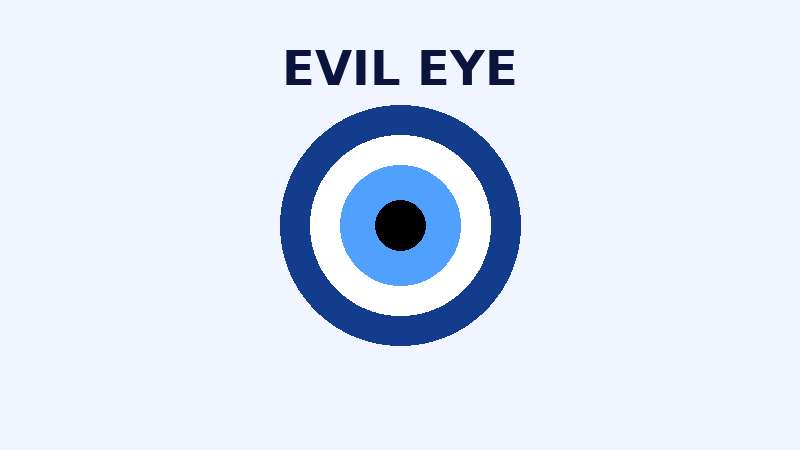
The evil eye symbol commonly appears as a circular eye with multiple colored rings. The design represents awareness and protection.
The symbol functions as a spiritual shield. Cultural traditions describe the eye charm as reflecting negative energy back toward its source.
The most recognizable version includes:
-
Dark blue outer ring
-
White circle
-
Light blue inner ring
-
Black center pupil
This design resembles a human eye watching for danger.
In many cultures, the symbol appears in:
-
Jewelry pieces
-
Wall decorations
-
Home protection charms
-
Ceramic art
-
Religious ornaments
The visual design communicates protection, vigilance, and awareness.
Evil Eye Colors and Their Symbolic Meanings
Different colored evil eye charms represent specific symbolic ideas. Although meanings vary by culture, several interpretations appear frequently.
| Evil Eye Color | Symbolic Meaning |
|---|---|
| Blue | Protection and calm |
| Light Blue | Truth and clarity |
| Red | Strength and courage |
| Green | Growth and prosperity |
| Yellow | Health and energy |
| White | Purity and focus |
| Black | Power and defense |
| Purple | Spiritual awareness |
| Pink | Love and friendship |
Blue remains the most traditional color because Mediterranean cultures associated blue with spiritual protection.
Evil Eye Jewelry and Fashion
Evil eye jewelry combines cultural symbolism with decorative design. Jewelry designers incorporate the symbol into bracelets, necklaces, rings, and earrings.
Common jewelry materials include:
-
Glass beads
-
Enamel designs
-
Silver and gold metals
-
Gemstones and crystals
Fashion brands use the eye motif as both a protective emblem and an artistic element. Many people wear evil eye jewelry as a daily accessory that represents protection and positive energy.
Jewelry historians trace the popularity of the symbol to Mediterranean and Turkish craftsmanship, where artisans created handcrafted glass beads.
Today, modern designers combine traditional symbolism with contemporary fashion trends.
Evil Eye Protection in Homes and Spaces
Many households place evil eye symbols inside homes for protection. Cultural traditions describe these objects as barriers against harmful intentions entering the space.
Common placement areas include:
-
Front door entrances
-
Living room walls
-
Office desks
-
Car mirrors
-
Children’s rooms
Home decor designers often integrate the symbol into ceramic plates, wall hangings, or decorative ornaments.
In Mediterranean cultures, placing an evil eye charm near the entrance represents constant protection against jealousy or negative attention.
Cultural Objects Used for Evil Eye Protection
Different cultures developed protective objects to guard against harmful gazes.
Common Protective Symbols
-
Nazar bead
-
Hamsa hand
-
Black thread bracelet
-
Lemon and chili charm
-
Salt cleansing ritual
-
Protective prayer inscriptions
The Hamsa symbol, widely used in Middle Eastern cultures, features a hand with an eye in the center. This design represents divine protection and blessings.
The nazar bead remains the most widely recognized symbol of protection against the evil eye.
Signs Traditionally Associated With the Evil Eye
Folklore traditions sometimes link certain experiences with the evil eye belief. These signs appear in many cultural narratives.
Reported signs include:
-
Sudden fatigue
-
Headaches or weakness
-
Unexpected financial loss
-
Emotional stress
-
Continuous bad luck
Cultural researchers note that these interpretations belong to traditional belief systems rather than scientific evidence.
Some traditions perform rituals to remove the evil eye, including water tests or prayer ceremonies.
Evil Eye vs Nazar vs Hamsa
Many people confuse these terms, but they represent different elements of the same tradition.
| Term | Meaning |
|---|---|
| Evil Eye | The harmful gaze caused by jealousy |
| Nazar | The protective eye-shaped amulet |
| Hamsa | A hand-shaped protective symbol |
All three relate to protection against negative intentions.
The evil eye describes the problem, while the nazar and Hamsa represent protective symbols.
Read Also: Mythology Stories: Meaning, Origins, and Global Importance
Interesting Cultural Facts About the Evil Eye
Several fascinating facts explain why the evil eye remains popular today.
-
The belief appears in more than 40 cultures worldwide.
-
Blue glass nazar beads originate from Anatolian craftsmanship.
-
Mediterranean fishermen often paint eye symbols on boats for protection.
-
Ancient Greek drinking cups displayed eye designs to ward off envy.
-
Modern fashion brands incorporate the symbol into luxury jewelry.
These traditions demonstrate how the symbol evolved from folklore into a global cultural icon.
Frequently Asked Questions About the Evil Eye
What is the evil eye belief?
The evil eye belief describes a harmful influence created by envy or jealousy directed through a gaze.
Why do people wear evil eye jewelry?
People wear evil eye jewelry as a protective symbol and cultural ornament representing defense against negative energy.
Why is the evil eye symbol blue?
Mediterranean cultures historically associated the color blue with divine protection and spiritual safety.
Where should an evil eye charm be placed?
Common placement areas include entrances, jewelry accessories, vehicles, and household walls.
What does it mean when an evil eye bracelet breaks?
Folk traditions interpret a broken charm as a sign that it absorbed negative energy.
Is the evil eye religious?
The belief appears in multiple cultural traditions, but it also exists as folklore and symbolism outside organized religion.
Conclusion
The evil eye represents one of the oldest cultural beliefs related to envy and protection. Historical evidence traces the concept back thousands of years across civilizations including Mesopotamia, Greece, and the Middle East.
Protective symbols such as the nazar bead and Hamsa hand developed as spiritual defenses against jealousy and harmful attention. Today, the symbol continues to appear in jewelry, home decoration, and cultural art.
Although modern science describes the evil eye as a cultural belief rather than a proven phenomenon, the symbol remains a powerful representation of protection and awareness in many societies around the world.
