
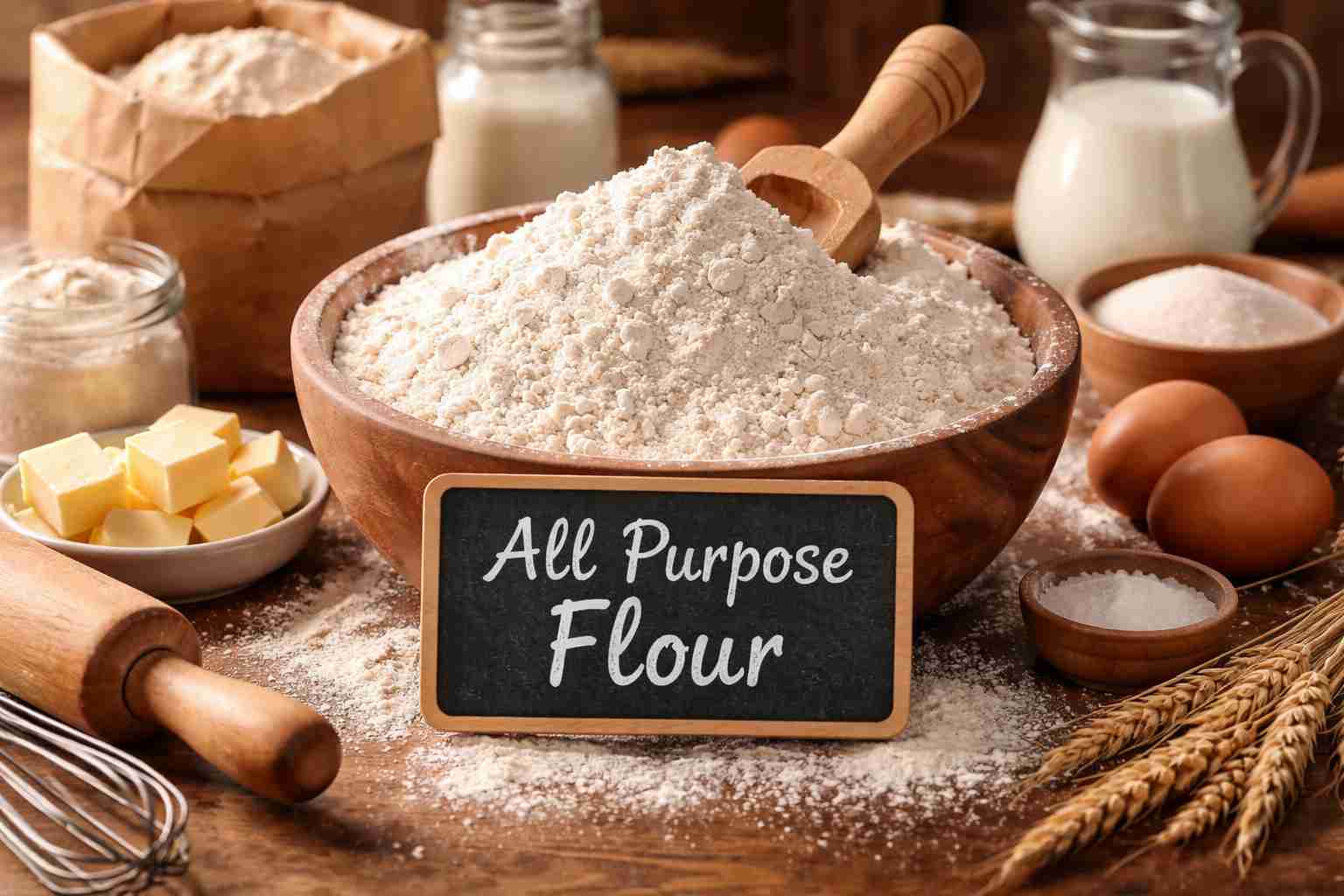
All purpose flour is refined wheat flour designed for general cooking and baking. It contains moderate protein and balanced gluten strength. The flour works in cookies, muffins, cakes, biscuits, sauces, and many breads. The term “all purpose” describes its versatility across many recipes.
Wheat flour has been a core ingredient in human food systems for thousands of years. According to the Food and Agriculture Organization (FAO), wheat remains one of the most widely cultivated grains in the world. Modern milling processes convert wheat kernels into different flour types. Among these types, all purpose flour serves as the most common household flour.
All purpose flour forms the base for countless baked goods and cooking preparations. Its balanced protein structure allows it to create structure while still maintaining tenderness.
What Is All Purpose Flour?
All purpose flour is a refined wheat flour milled from the endosperm of wheat kernels. The endosperm contains starch and protein that form gluten when mixed with water.
Wheat kernels contain three main parts:
-
Bran
-
Germ
-
Endosperm
During flour production, milling machines remove the bran and germ layers. The milling process retains only the endosperm. This removal produces a fine white powder known as refined wheat flour.
All purpose flour usually contains 10–12 percent protein. This protein level sits between bread flour and cake flour. The balanced protein range allows the flour to work in both tender and structured baked goods.
How All Purpose Flour Is Made
Modern flour production uses a systematic milling process. Industrial mills process wheat through multiple stages to produce consistent flour quality.
Key steps in flour production include:
-
Cleaning wheat grains
-
Conditioning wheat with moisture
-
Grinding kernels using roller mills
-
Sifting and separating bran and germ
-
Blending different wheat types
-
Packaging refined flour
Manufacturers blend hard wheat and soft wheat during milling. Hard wheat contains higher protein levels. Soft wheat contains lower protein levels. Combining both wheat varieties produces balanced flour suitable for general baking.
This blending process explains why all purpose flour performs well in many different recipes.
Protein Content and Gluten Formation
Protein level strongly influences flour performance. When water mixes with flour proteins, gluten begins forming.
Gluten creates structure in dough and batter. The gluten network traps air bubbles during baking. This trapped air allows baked goods to rise and hold shape.
The following table shows typical protein levels in common flour types.
| Flour Type | Average Protein | Typical Use |
|---|---|---|
| Cake Flour | 7–8% | Soft cakes and pastries |
| Pastry Flour | 8–9% | Pie crusts and pastries |
| All Purpose Flour | 10–12% | General baking |
| Bread Flour | 12–14% | Yeast breads |
Balanced protein content allows all purpose flour to work across many recipes. Higher protein flour produces chewy textures, while lower protein flour produces softer baked goods.
Common Uses of All Purpose Flour
All purpose flour works in a wide range of recipes. Bakers and chefs use it because it provides reliable results.
Baking Uses
All purpose flour commonly appears in baked goods such as:
-
Cookies
-
Muffins
-
Brownies
-
Pancakes
-
Cupcakes
-
Quick breads
-
Biscuits
-
Pie crusts
These foods require moderate gluten structure and soft texture. All purpose flour provides both qualities.
Cooking Uses
All purpose flour also functions in savory cooking.
Typical cooking applications include:
-
Thickening soups
-
Thickening gravies
-
Thickening sauces
-
Dredging meat before frying
-
Dredging vegetables before frying
-
Preparing roux for sauces
When flour heats in liquid, starch granules absorb water. The starch swells and thickens the mixture. This process is called starch gelatinization.
See Also: Edamame: Complete Guide to Nutrition, Benefits, Uses, and Storage
Bleached vs Unbleached All Purpose Flour
All purpose flour exists in two main varieties: bleached and unbleached.
Bleached flour undergoes chemical treatment that whitens the flour and softens proteins.
Unbleached flour ages naturally through oxygen exposure.
The following table compares both types.
| Feature | Bleached Flour | Unbleached Flour |
|---|---|---|
| Color | Bright white | Cream colored |
| Protein structure | Slightly weaker | Slightly stronger |
| Best use | Cakes and pastries | Breads and general baking |
| Processing | Chemical bleaching | Natural aging |
Both types perform similarly in most recipes. Many bakeries prefer unbleached flour because its protein structure produces stronger dough.
All Purpose Flour vs Other Flour Types
Different flour types exist because baking requires different gluten strengths. Understanding these differences helps achieve better results.
All Purpose Flour vs Bread Flour
Bread flour contains higher protein than all purpose flour. The extra protein produces stronger gluten.
Bread flour creates:
-
Chewy texture
-
Strong dough structure
-
Better fermentation support
All purpose flour creates:
-
Softer crumb
-
Balanced texture
-
Moderate elasticity
Many home bakers successfully use all purpose flour in bread recipes.
All Purpose Flour vs Cake Flour
Cake flour contains lower protein. This lower protein reduces gluten formation.
Cake flour produces:
-
Light cakes
-
Tender crumb
-
Soft texture
All purpose flour produces slightly firmer cakes. Bakers sometimes mix cornstarch with all purpose flour to mimic cake flour texture.
All Purpose Flour vs Self Rising Flour
Self rising flour contains added ingredients.
Self rising flour includes:
-
All purpose flour
-
Baking powder
-
Salt
The added leavening agents help baked goods rise without extra ingredients.
All purpose flour contains only flour. Bakers add baking powder or baking soda separately when needed.
How to Measure All Purpose Flour Correctly
Incorrect flour measurement causes baking failures. Too much flour produces dry and dense baked goods.
Professional bakers measure flour by weight instead of volume.
One standard measurement equals:
1 cup all purpose flour = about 120 grams
Correct measuring methods include:
-
Use a digital kitchen scale
-
Spoon flour into measuring cup
-
Level the cup using a flat edge
Scooping flour directly from the bag compresses the flour. Compression adds excess flour to the recipe.
Proper Storage of All Purpose Flour
Flour storage affects freshness and safety. Although refined flour contains little oil, improper storage may still cause spoilage.
Best storage practices include:
-
Keep flour in airtight containers
-
Store flour in cool dry places
-
Protect flour from moisture
-
Avoid direct sunlight exposure
Typical shelf life varies by storage method.
| Storage Location | Approximate Shelf Life |
|---|---|
| Pantry | 6–8 months |
| Refrigerator | 1 year |
| Freezer | Up to 2 years |
Freezing flour also helps prevent pantry pests such as flour beetles.
Nutritional Value of All Purpose Flour
All purpose flour provides carbohydrates and small amounts of protein. Some flour products are enriched, meaning vitamins and minerals are added after milling.
Typical nutrients include:
-
Iron
-
Folic acid
-
Thiamine
-
Riboflavin
-
Niacin
Enriched flour programs began in the 1940s to prevent nutrient deficiencies. Many countries still require enrichment of refined wheat flour.
Common Baking Mistakes When Using All Purpose Flour
Certain mistakes affect baking results.
Common issues include:
Using too much flour
Excess flour produces heavy baked goods.
Overmixing batter or dough
Overmixing strengthens gluten and toughens texture.
Ignoring flour brand differences
Different manufacturers produce flour with slightly different protein levels.
Poor storage conditions
Moisture exposure causes clumping and spoilage.
Understanding these factors improves baking consistency.
Read Also: Understanding the Meaning of “Food Near Me”
Popular Brands of All Purpose Flour
Many companies produce all purpose flour with consistent milling standards.
Common global brands include:
-
King Arthur Baking Company
-
Gold Medal Flour
-
Pillsbury Flour
-
Bob’s Red Mill
-
White Lily Flour
Each brand uses slightly different wheat blends. These blends create small variations in protein percentage and baking performance.
Frequently Asked Questions About All Purpose Flour
What is the difference between plain flour and all purpose flour?
Plain flour and all purpose flour refer to the same product in many countries. The difference exists mainly in terminology. The United States commonly uses the term all purpose flour, while the United Kingdom uses plain flour.
Can all purpose flour be used for bread?
Yes. All purpose flour can produce many types of bread. Bread flour produces stronger gluten and chewier texture, but all purpose flour still works in most home baking recipes.
Is all purpose flour the same as maida?
Maida is a refined wheat flour widely used in South Asian cooking. The milling process resembles all purpose flour production. However, wheat varieties may differ slightly depending on regional agriculture.
How many grams are in one cup of all purpose flour?
One cup of all purpose flour weighs about 120 grams when measured using the spoon and level method.
Does all purpose flour expire?
All purpose flour gradually loses freshness over time. Proper storage in airtight containers extends shelf life and maintains baking quality.
Can all purpose flour thicken sauces?
Yes. All purpose flour thickens sauces because its starch absorbs water and expands during heating.
Conclusion
All purpose flour stands as one of the most versatile ingredients in modern kitchens. Its balanced protein structure allows it to perform well in both sweet and savory recipes. Bakers rely on it for cookies, cakes, biscuits, pancakes, sauces, and many breads.
Understanding how flour protein, measurement, and storage affect baking performance improves recipe outcomes. With correct handling and proper technique, all purpose flour provides consistent results across a wide variety of cooking and baking applications.
