
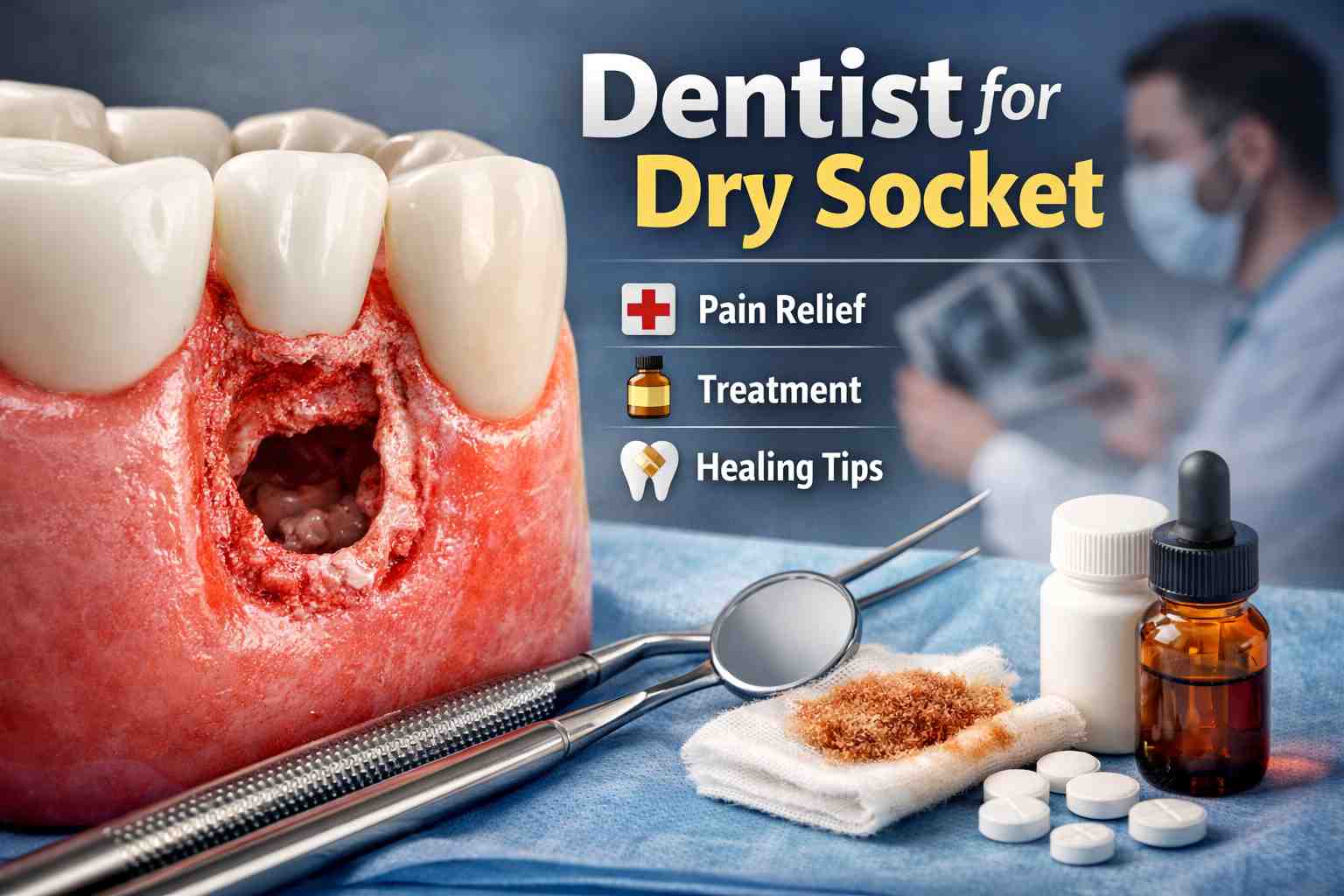
A dentist for dry socket is a dental professional who diagnoses and treats a painful complication that sometimes occurs after a tooth extraction. Dry socket, also called alveolar osteitis, develops when the protective blood clot inside the extraction site disappears or dissolves too early. According to the American Dental Association (ADA) and Cleveland Clinic, the blood clot normally shields bone tissue and nerve endings during healing. When the clot is lost, bone becomes exposed and severe pain develops.
Dry socket usually appears two to four days after a tooth extraction, especially after wisdom tooth removal. A dentist treats this condition by cleaning the socket, placing medication, and helping the tissue heal properly. Early treatment improves recovery and reduces discomfort.
What Is Dry Socket
Dry socket is a dental condition that occurs after tooth removal when the normal healing process fails. According to Mayo Clinic, a healthy extraction site forms a blood clot that protects the underlying bone and nerves. This clot acts as a natural bandage that supports tissue growth.
When the clot is missing or dislodged, the bone becomes exposed to air, food particles, and bacteria. This exposure causes inflammation and intense pain.
Dentists identify dry socket using several visible and symptomatic signs.
Common indicators include:
-
Severe throbbing pain in the extraction area
-
Visible bone in the socket
-
Bad breath or unpleasant taste
-
Pain spreading to ear, jaw, or temple
-
Empty or dry appearance inside the socket
The pain associated with dry socket is usually stronger than normal extraction discomfort.
Why People Need a Dentist for Dry Socket
A dentist provides specialized treatment that stops pain and supports healing. According to Cleveland Clinic, untreated dry socket can prolong recovery and increase infection risk.
A dentist performs several clinical steps during treatment.
Key reasons to visit a dentist include:
-
Diagnose the condition accurately
-
Clean the extraction socket
-
Remove food debris and bacteria
-
Apply medicated dressing to protect bone
-
Provide pain control medications
Dental treatment improves healing and reduces inflammation in the surrounding tissues.
Causes of Dry Socket
Dry socket develops due to disruption of the protective blood clot. According to research in the Journal of Oral and Maxillofacial Surgery, several factors can interfere with clot formation.
Major causes include:
-
Blood clot dislodgement after extraction
-
Bacterial contamination of the socket
-
Trauma during difficult tooth removal
-
Excessive rinsing or spitting after surgery
The extraction site becomes vulnerable when the clot breaks down.
Smoking also increases risk because tobacco chemicals reduce blood flow and slow tissue healing.
Read Also: Nicotine Free Vape: Complete Guide to 0mg Vaping, Benefits, Safety, and Options
Risk Factors Associated With Dry Socket
Certain behaviors and health conditions increase the likelihood of dry socket. Dentists evaluate these risk factors before and after extraction procedures.
Important risk factors include:
-
Smoking or tobacco use
-
Previous history of dry socket
-
Poor oral hygiene
-
Wisdom tooth extraction surgery
-
Hormonal contraceptive use
According to National Institutes of Health (NIH) studies, dry socket appears more frequently after third molar removal, commonly known as wisdom tooth extraction.
Symptoms That Indicate Dry Socket
Dry socket symptoms usually appear within a few days after the tooth extraction procedure. Pain intensity becomes the most noticeable sign.
Typical symptoms include:
-
Severe throbbing pain around the extraction site
-
Pain radiating toward the ear or temple
-
Foul taste in the mouth
-
Bad breath caused by exposed bone
-
Swelling near the jaw
Pain often becomes stronger during chewing or speaking.
Difference Between Normal Healing and Dry Socket
After a tooth extraction, some discomfort is expected. However, dry socket produces unique symptoms that dentists recognize easily.
Normal Healing vs Dry Socket
| Feature | Normal Healing | Dry Socket |
|---|---|---|
| Pain level | Mild and decreasing | Severe and increasing |
| Blood clot | Present in socket | Missing or dislodged |
| Bone visibility | Covered by clot | Bone visible |
| Breath odor | Normal | Unpleasant odor |
| Healing progress | Improves daily | Pain worsens |
This comparison helps patients recognize when professional dental care is required.
How Dentists Diagnose Dry Socket
Dentists perform a simple clinical examination to confirm dry socket. According to American Association of Oral and Maxillofacial Surgeons, diagnosis mainly involves visual inspection.
Dentists follow several diagnostic steps.
Typical diagnostic procedures include:
-
Inspect extraction site visually
-
Identify exposed bone tissue
-
Check for missing blood clot
-
Evaluate pain pattern and timing
Sometimes dentists use dental X-rays to rule out infection or bone fragments.
Treatment Provided by a Dentist for Dry Socket
Dentists treat dry socket by cleaning the affected area and protecting the exposed bone. According to Mayo Clinic, treatment aims to reduce pain and promote healing.
Dentists perform several procedures during treatment.
Common treatment steps include:
-
Irrigate the socket using sterile saline
-
Remove debris and bacteria
-
Place medicated dressing inside the socket
-
Apply antiseptic medication
-
Provide pain relief medication
Medicated dressings often contain eugenol, a compound known for soothing nerve pain.
The dentist may replace the dressing after a few days until healing begins.
Recovery Timeline After Dry Socket Treatment
Recovery depends on the severity of the condition and how quickly treatment begins. According to Cleveland Clinic, pain relief often starts within 24 hours after treatment.
Typical healing timeline:
| Recovery Stage | What Happens |
|---|---|
| Day 1 | Pain decreases after medicated dressing |
| Day 2–3 | Inflammation begins to reduce |
| Day 4–7 | Gum tissue gradually covers socket |
| Day 7–10 | Normal healing process resumes |
Complete healing occurs when new tissue covers the exposed bone.
Home Care Tips During Dry Socket Recovery
Dentists often provide home care instructions that help maintain cleanliness around the extraction site.
Recommended care practices include:
-
Rinse mouth gently using warm salt water
-
Eat soft foods such as yogurt or mashed potatoes
-
Drink plenty of water to stay hydrated
-
Avoid smoking or tobacco exposure
-
Avoid using drinking straws
These actions protect the healing tissues and reduce bacterial growth.
How to Prevent Dry Socket
Prevention plays an important role after tooth extraction. Dentists provide instructions to preserve the blood clot and support recovery.
Important prevention steps include:
-
Avoid smoking during the first week after extraction
-
Avoid aggressive mouth rinsing
-
Follow dentist instructions carefully
-
Maintain gentle oral hygiene
-
Attend follow-up dental appointments
Dentists sometimes prescribe chlorhexidine mouthwash to reduce bacterial activity during healing.
When to Visit a Dentist for Dry Socket
Severe pain after tooth extraction often signals the need for professional evaluation.
Situations that require dental attention include:
-
Persistent pain after three days
-
Visible bone inside the extraction site
-
Bad taste or smell from the mouth
-
Pain spreading to ear or jaw
Early dental care helps prevent prolonged discomfort.
See Also: How Long Does Adderall Stay in Your System? (Complete, Evidence-Based Guide)
FAQs About Dentist for Dry Socket
What type of dentist treats dry socket?
A general dentist or oral surgeon treats dry socket by cleaning the socket and applying medication.
How soon should someone visit a dentist for dry socket?
Dental evaluation is recommended when pain increases within two to three days after extraction.
Does dry socket heal without treatment?
Healing eventually occurs, but dental treatment significantly reduces pain and speeds recovery.
Is dry socket common after tooth extraction?
According to Cleveland Clinic, dry socket occurs in about 2–5% of routine extractions and more frequently after wisdom tooth removal.
How long does dry socket pain last?
Pain usually improves within one to three days after treatment, while full healing takes about one week.
Can food cause dry socket?
Food debris trapped in the extraction site can contribute to infection and clot dislodgement.
Can antibiotics cure dry socket?
Antibiotics treat bacterial infection but dentists mainly use cleaning and medicated dressing to relieve pain.
Conclusion
A dentist for dry socket plays a key role in treating this painful complication after tooth extraction. Dry socket occurs when the blood clot protecting the extraction site disappears too early. The exposed bone causes severe pain and inflammation. Dentists treat the condition through socket cleaning, medication, and protective dressings.
Early diagnosis and treatment improve recovery and reduce discomfort. Proper oral hygiene, avoiding smoking, and following dental instructions help prevent dry socket and support healthy healing after tooth extraction.
