
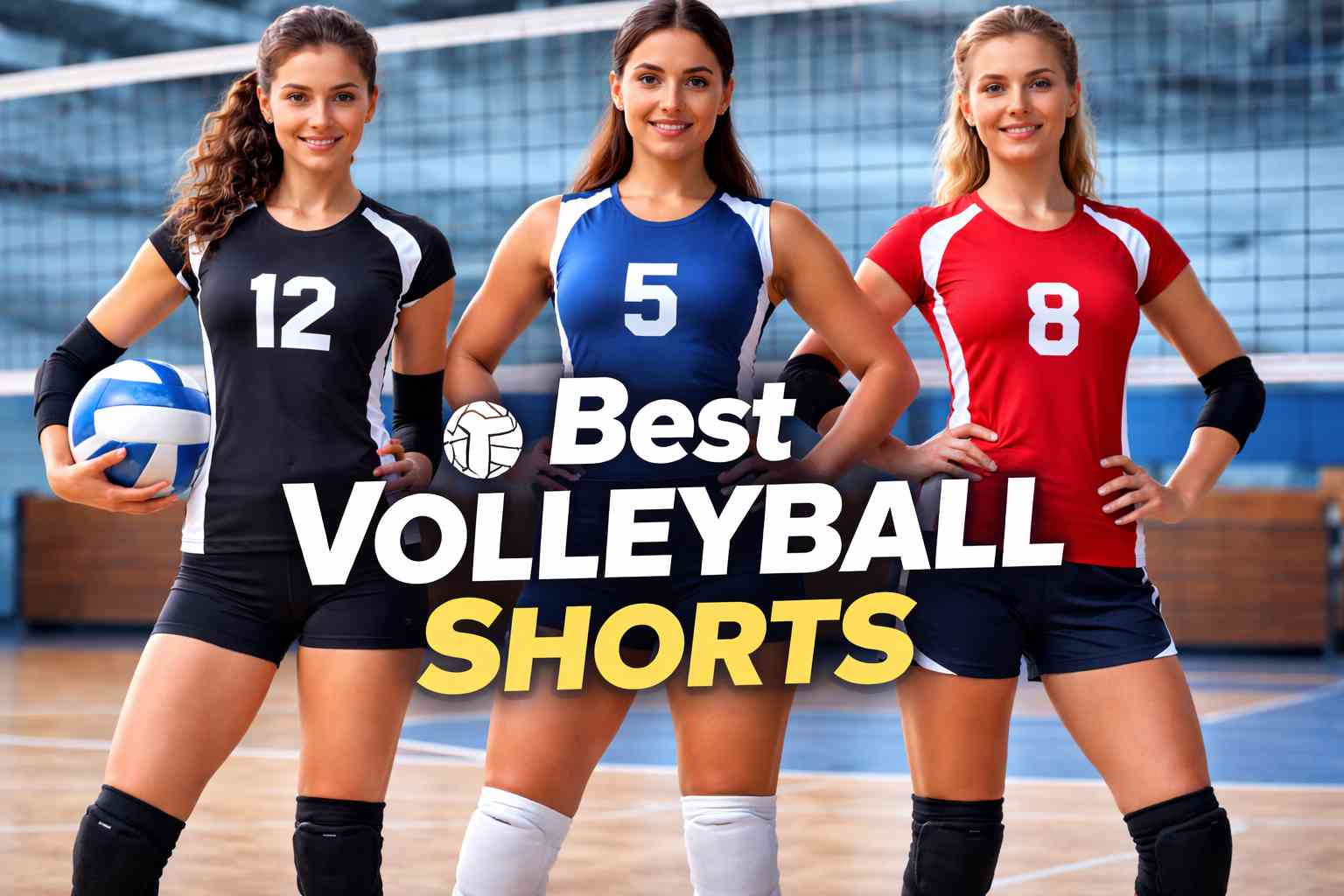
Volleyball shorts are specialized sports garments designed for the physical and technical demands of volleyball. The Fédération Internationale de Volleyball (FIVB) recognizes shorts as part of official volleyball uniforms. The National Federation of State High School Associations (NFHS) regulates uniform standards for school-level volleyball. The National Collegiate Athletic Association (NCAA) sets competition rules for collegiate volleyball apparel. These organizations define how volleyball shorts fit, cover the body, and remain safe during play.
Volleyball shorts support jumping, diving, lateral movement, and rapid direction changes. Volleyball involves repeated vertical jumps, quick stops, and floor contact. Sports science literature documents high eccentric muscle loading in volleyball. Volleyball shorts reduce skin abrasion during defensive actions and assist thermal comfort during extended rallies.
What Are Volleyball Shorts?
Volleyball shorts are lower-body athletic garments designed to permit unrestricted hip and knee motion. The International Volleyball Federation (FIVB) includes shorts in uniform guidelines for women and men. The American Volleyball Coaches Association (AVCA) describes compression-style shorts as standard match attire in women’s volleyball.
Volleyball shorts differ from generic athletic shorts in fabric elasticity, seam placement, and fit profile. Volleyball shorts use high-stretch textiles to maintain close contact with the body. Volleyball shorts reduce garment displacement during jumps and dives. Volleyball shorts provide consistent coverage in defensive stances.
Types of Volleyball Shorts
Volleyball shorts exist in multiple design categories. Each category supports a specific use context and movement pattern.
Compression and Spandex Shorts
Compression shorts maintain direct contact with the skin. Spandex fibers provide elastic recovery. Compression shorts stabilize soft tissue during repeated jumping. Sports medicine research links compression garments with reduced muscle oscillation. Volleyball players use compression shorts during matches and high-intensity training.
Team and Practice Shorts
Team shorts feature a relaxed silhouette. Team shorts allow airflow and ease of wear during warm-ups. Team shorts are common during drills and off-court training. Many teams pair team shorts with compression layers for coverage control.
Hybrid Layering Systems
Hybrid systems combine compression shorts under team shorts. Hybrid systems provide coverage flexibility. Hybrid systems adapt to varying uniform policies. Hybrid systems support temperature regulation in variable gym environments.
Indoor and Beach Volleyball Shorts
Indoor volleyball shorts focus on abrasion resistance due to hardwood or sport-court surfaces. Beach volleyball shorts emphasize UV resistance and sand-shedding fabrics. The FIVB differentiates uniform styles for indoor and beach volleyball events.
Read Also: How Long Does 18 Holes of Golf Take? (Complete Guide 2025)
Fabric Technology and Material Composition
Volleyball shorts rely on performance textiles. The American Society for Testing and Materials (ASTM) defines durability and stretch testing methods. Textile standards guide fiber selection and knit structure.
Common materials used in volleyball shorts:
| Material | Primary Property | Performance Role |
|---|---|---|
| Polyester | Moisture transport | Sweat evaporation |
| Nylon | Abrasion resistance | Surface durability |
| Elastane (Spandex) | Elastic recovery | Compression fit |
| Mesh panels | Air permeability | Thermal regulation |
Polyester fibers transport moisture away from the skin. Nylon fibers resist surface wear during floor contact. Elastane fibers restore garment shape after repeated stretch cycles. Mesh inserts increase airflow in high-heat zones.
Volleyball shorts use four-way stretch fabrics. Four-way stretch permits multi-directional movement. Knit density determines opacity during deep squats and lunges. Double-knit structures maintain coverage under tensile strain.
Fit, Sizing, and Body Mechanics
Proper fit supports athletic performance. The International Organization for Standardization (ISO) provides anthropometric references for apparel sizing. Fit accuracy determines garment stability during motion.
Key fit elements in volleyball shorts:
-
Waistband height influences coverage in defensive stances.
-
Thigh circumference determines leg opening stability.
-
Inseam length affects mobility and coverage balance.
-
Gusseted crotch panels permit deep hip flexion.
-
Flatlock seams reduce skin irritation.
Compression distribution varies by design. Graduated compression profiles apply controlled pressure across muscle groups. Silicone-backed waistbands reduce slippage during jumps. Bonded hems limit ride-up during lateral movement.
Performance Benefits in Volleyball
Volleyball shorts support specific biomechanical demands. The Journal of Sports Sciences documents repeated jumping and rapid deceleration in volleyball. Apparel design adapts to these movement patterns.
Performance contributions of volleyball shorts:
-
Support muscle stability during landing phases.
-
Enable full hip abduction during defensive slides.
-
Reduce fabric drag during sprint acceleration.
-
Maintain skin protection during floor contact.
-
Preserve thermal balance during extended rallies.
Compression garments stabilize muscle vibration during impact. Streamlined fits reduce aerodynamic resistance in short sprints. Moisture-wicking fabrics maintain a stable skin microclimate.
Uniform Regulations and Compliance
Uniform compliance follows published rules. The FIVB, NFHS, and NCAA regulate competition attire. Uniform rules define garment coverage, color consistency, and logo placement.
Regulatory considerations for volleyball shorts:
| Authority | Scope | Key Requirements |
|---|---|---|
| FIVB | International | Color consistency, logo size |
| NFHS | High school | Modesty coverage, safety |
| NCAA | Collegiate | Number visibility, uniformity |
Uniform shorts maintain non-transparent coverage. Uniform shorts avoid hard trims and sharp edges. Uniform shorts maintain team color uniformity. Uniform shorts permit unrestricted movement within competition guidelines.
Indoor vs. Beach Volleyball Use
Use environments influence design selection. Indoor courts involve hardwood or synthetic sport surfaces. Beach courts involve sand exposure and solar radiation.
Environmental adaptation features:
-
Indoor designs emphasize abrasion-resistant face yarns.
-
Beach designs emphasize UV-stable dyes.
-
Sand environments require quick-drying textiles.
-
Indoor environments favor breathable knit density.
-
Outdoor settings require colorfast pigments.
Indoor volleyball shorts face higher abrasion from dives. Beach volleyball shorts face higher moisture and UV exposure. Fabric selection adapts to each environment.
Care, Maintenance, and Durability
Care practices affect garment lifespan. The ISO 6330 standard defines domestic laundering impacts on textiles. Elastane fibers degrade under high heat and chlorine exposure.
Care guidelines for volleyball shorts:
-
Wash in cold water to preserve elasticity.
-
Avoid high-heat drying to limit fiber fatigue.
-
Use mild detergents to protect dye stability.
-
Avoid chlorine exposure that degrades elastane.
-
Air-dry to maintain compression recovery.
Durability correlates with seam construction and fabric density. Flatlock seams resist unraveling. Reinforced stitch patterns increase lifecycle under high-frequency use.
See Also: VIPRow: Everything You Need to Know About Free Sports Streaming in 2025
Buying Guide: How to Choose Volleyball Shorts
Selecting volleyball shorts requires evaluation of performance attributes and compliance factors.
Selection checklist:
-
Verify uniform compliance with league regulations.
-
Confirm fabric stretch and recovery ratings.
-
Evaluate opacity during deep movement.
-
Assess waistband stability during jumps.
-
Inspect seam placement to prevent chafing.
Comparison of common options:
| Feature | Compression Shorts | Team Shorts |
|---|---|---|
| Fit | Skin-tight | Relaxed |
| Mobility | High | Moderate |
| Coverage | Moderate | High |
| Use Case | Matches | Training |
Common Mistakes When Buying Volleyball Shorts
Purchasing errors reduce performance and comfort.
-
Selecting incorrect inseam length reduces coverage or mobility.
-
Choosing low-opacity fabrics compromises uniform standards.
-
Ignoring waistband stability increases garment displacement.
-
Using low-durability fabrics increases abrasion wear.
-
Overlooking size charts reduces fit accuracy.
Frequently Asked Questions (FAQs)
What length of volleyball shorts is most common?
Three-inch inseams are common in women’s indoor volleyball. Five-inch inseams are common in training and beach contexts.
Are volleyball shorts different from running shorts?
Volleyball shorts use higher stretch and compression profiles. Running shorts emphasize airflow and loose fit.
Do volleyball shorts affect performance?
Garment stability and moisture control influence comfort and movement efficiency.
Are pockets allowed in volleyball shorts?
Competition uniforms typically exclude pockets due to safety and uniform standards.
How often do volleyball shorts require replacement?
Compression decline and fabric thinning indicate end-of-life after high wash-cycle counts.
Conclusion
Volleyball shorts function as regulated performance garments. International and national governing bodies define uniform compliance. Fabric engineering determines moisture control, abrasion resistance, and elastic recovery. Fit systems support volleyball-specific biomechanics. Proper care preserves compression and coverage across the garment lifecycle.
