
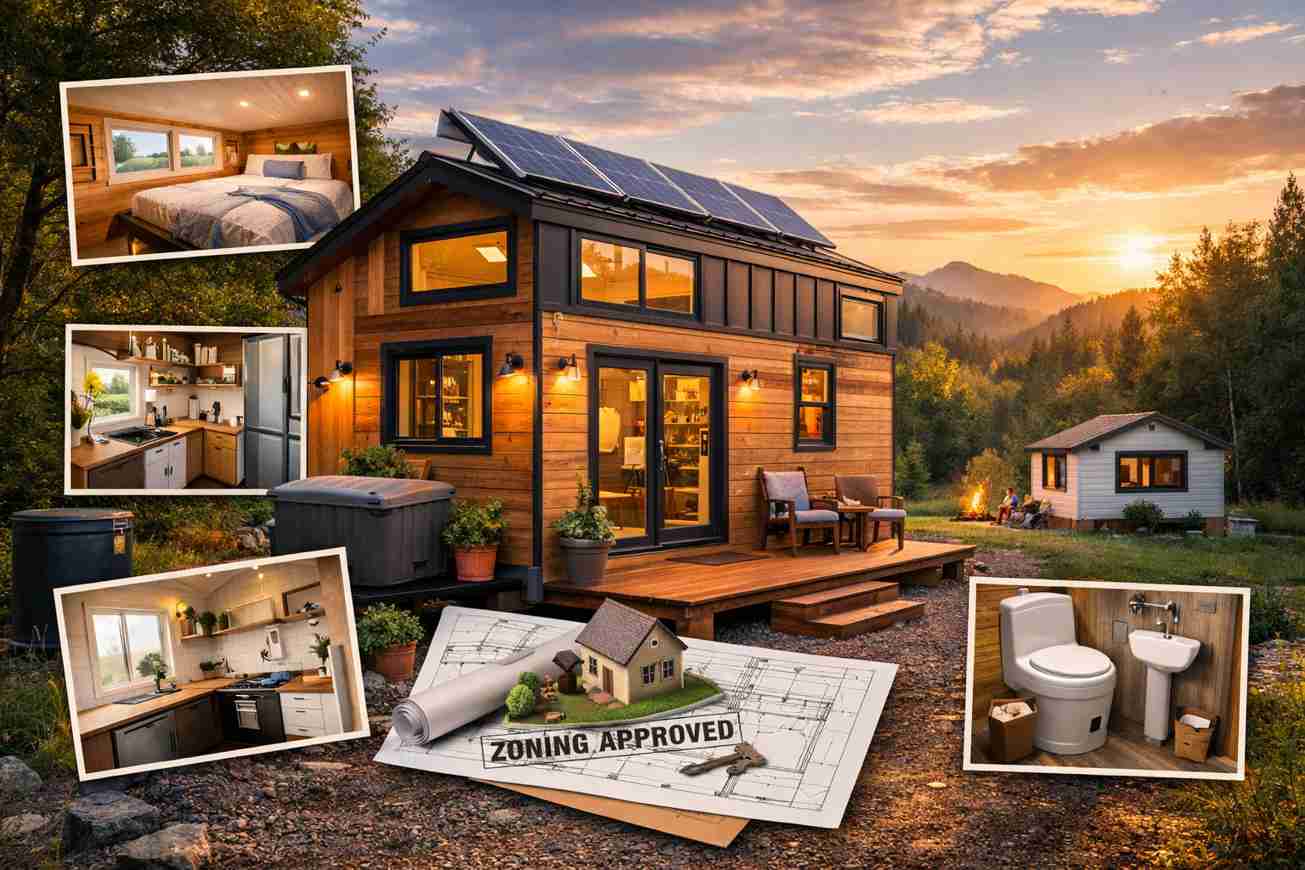
Tiny house living is a housing approach based on living in a very small, efficient home. A tiny house usually measures between 100 and 400 square feet. Tiny house living focuses on space efficiency, cost control, and simplified daily systems. Tiny house living is not temporary housing. Tiny house living is a permanent residential option for many people. Tiny house living exists in rural land, suburban backyards, and organized communities.
What Defines a Tiny House
A tiny house is defined by size, layout, and function. A tiny house uses compact design instead of unused space. A tiny house contains sleeping, cooking, bathing, and living areas.
Key structural characteristics
-
Total area under 400 square feet
-
One main living level with lofts
-
Built-in furniture and storage
-
Lightweight materials for mobile units
Tiny houses follow residential or RV construction standards depending on placement.
Types of Tiny House Living
Tiny house living includes different formats based on mobility and land use.
Tiny house on wheels
A tiny house on wheels is built on a trailer.
This type allows relocation without rebuilding.
It often follows RV safety and weight standards.
Foundation-based tiny house
A foundation-based tiny house is fixed to land.
It follows local residential building codes.
It may qualify as an accessory dwelling unit in some areas.
Backyard tiny house
A backyard tiny house is placed behind a main home.
It is commonly used as an ADU or guest unit.
It shares utilities with the main house in many cases.
Why People Choose Tiny House Living
Tiny house living attracts people for practical reasons.
It reduces housing expenses.
It simplifies daily routines.
It limits unnecessary ownership.
Common reasons include
-
Lower construction cost
-
Reduced utility bills
-
Smaller maintenance workload
-
Easier cleaning
-
Flexible location options
Tiny house living focuses on function rather than excess.
Cost Breakdown of Tiny House Living
Tiny house living costs depend on build type and systems used.
Average cost ranges
| Category | Cost Range (USD) |
|---|---|
| DIY build | $20,000 – $40,000 |
| Professional build | $50,000 – $90,000 |
| Prefab models | $60,000 – $120,000 |
| Land (optional) | Varies by location |
Tiny houses cost less than traditional homes but vary by customization.
Monthly Expenses in Tiny House Living
Monthly expenses remain lower due to size and efficiency.
Typical monthly costs
-
Electricity: $25–$60
-
Water: $15–$40
-
Heating or propane: $20–$50
-
Insurance: $30–$100
Tiny house living reduces long-term financial pressure.
Interior Design Principles for Tiny Houses
Tiny house design focuses on usability.
Core design strategies
-
Vertical storage instead of floor storage
-
Multi-use furniture
-
Light colors to increase visual space
-
Large windows for daylight
Common interior features
-
Loft sleeping areas
-
Fold-down tables
-
Stair storage drawers
-
Built-in seating
Design supports movement and daily comfort.
Utilities in Tiny House Living
Tiny house utilities operate in grid-connected or off-grid setups.
Water systems
-
Municipal hookups
-
Water tanks
-
Rainwater collection (where legal)
Waste systems
-
Standard sewer connections
-
Septic tanks
-
Composting toilets
Power systems
-
Grid electricity
-
Solar panels with battery storage
Tiny house living allows flexible utility choices.
Legal and Zoning Considerations
Tiny house living is regulated by local laws.
Rules vary by city, county, and state.
Common legal factors
-
Minimum dwelling size rules
-
Zoning classification
-
Permanent foundation requirements
-
RV parking regulations
Researching local codes is essential before placement.
Tiny House Living and Sustainability
Tiny house living reduces environmental impact.
Environmental benefits
-
Lower material use
-
Reduced energy demand
-
Smaller land footprint
-
Easier integration of renewable energy
Tiny house living supports efficient resource use.
Daily Life in a Tiny House
Daily life requires organization.
Every item has a defined location.
Storage is planned intentionally.
Daily habits include
-
Regular decluttering
-
Compact cooking methods
-
Efficient cleaning routines
Tiny house living supports simple daily systems.
Challenges of Tiny House Living
Tiny house living includes real limitations.
Common challenges
-
Limited storage
-
Privacy constraints
-
Zoning restrictions
-
Limited resale market
Understanding these factors improves long-term satisfaction.
Read Also: Understanding Citronella Candle for Bees
Tiny House Communities
Tiny house communities provide shared infrastructure.
Community features
-
Shared utilities
-
Common outdoor areas
-
Organized governance
-
Legal zoning frameworks
Communities reduce isolation and legal risk.
Tiny House Living vs Apartment Living
| Feature | Tiny House | Apartment |
|---|---|---|
| Ownership | Yes | No |
| Outdoor access | Often | Limited |
| Utility control | Full | Shared |
| Mobility | Possible | No |
Who Benefits Most from Tiny House Living
Tiny house living suits people with specific priorities.
Suitable groups
-
Remote workers
-
Retirees
-
Minimalist households
-
Single occupants
-
Travel-focused individuals
Tiny house living fits intentional lifestyles.
Long-Term Value of Tiny House Living
Tiny house living focuses on usage rather than appreciation.
Value exists in cost savings and flexibility.
Resale value depends on location and condition.
Future Trends in Tiny House Living
Tiny house living continues to expand.
Emerging trends
-
Urban ADU adoption
-
Improved prefab designs
-
Better zoning acceptance
-
Energy-efficient materials
Tiny house living integrates into mainstream housing.
Frequently Asked Questions About Tiny House Living
Is tiny house living legal everywhere
No. Laws depend on local zoning and building codes.
Can families live in tiny houses
Yes. Layout and storage planning determine comfort.
Are tiny houses safe
Yes. Proper construction follows safety standards.
Do tiny houses appreciate in value
Some do. Location and build quality affect value.
Can tiny houses be financed
Yes. Financing options include personal and RV loans.
Conclusion
- Tiny house living is a structured housing solution.
- It prioritizes efficiency, affordability, and control.
- It operates within legal, design, and utility frameworks.
- Tiny house living is not a trend.
- Tiny house living is a functional housing model.
