
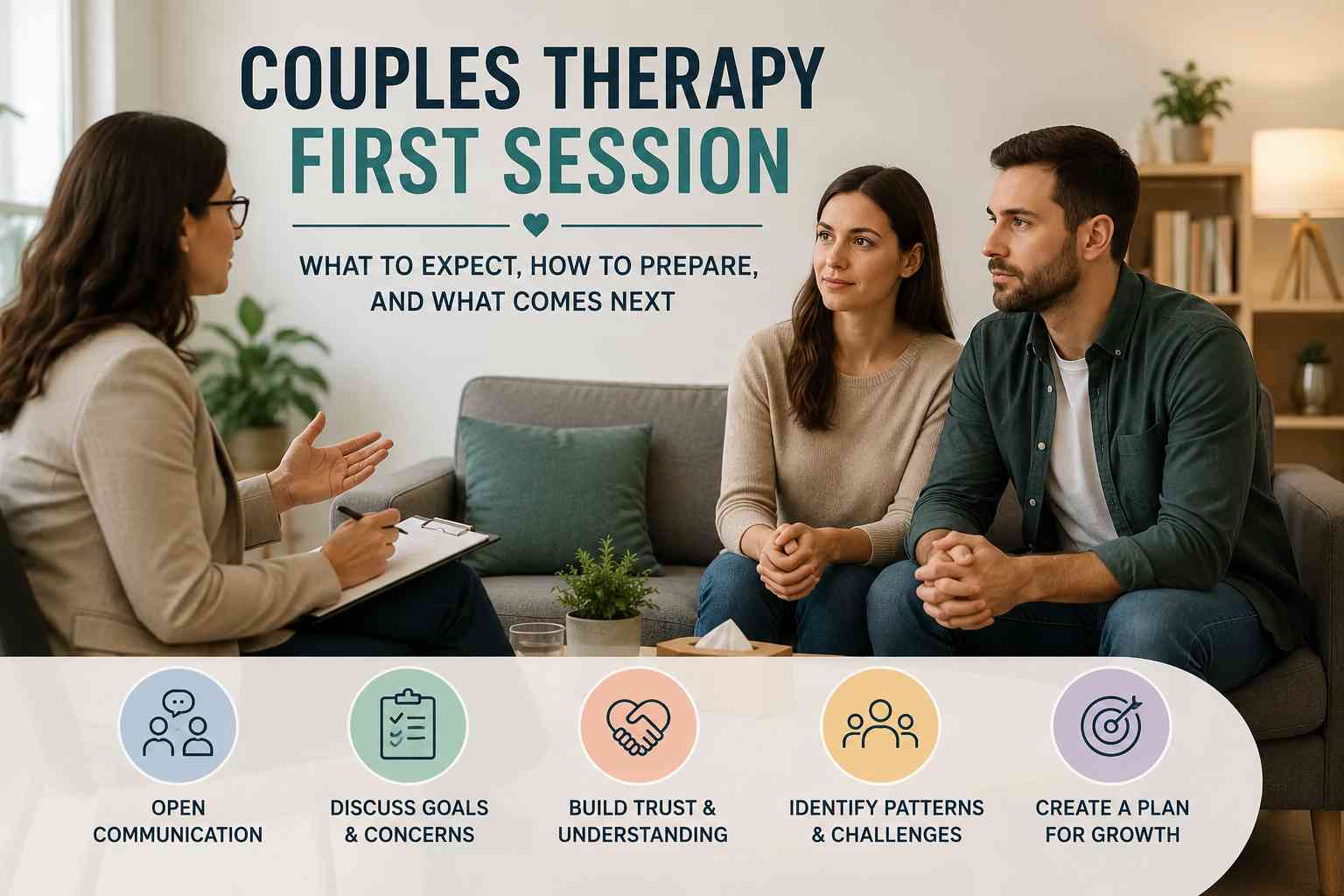
Deciding to start couples therapy is a big step. Whether you are dealing with communication problems, trust issues, frequent arguments, or simply want to strengthen your relationship, the first therapy session can feel uncertain.
Many couples worry about what will happen during the appointment. Will the therapist take sides? Will you be expected to discuss painful experiences right away? Can one session make a difference?
The truth is that the first couples therapy session is usually focused on understanding your relationship rather than fixing every issue immediately. It is an opportunity for both partners to share their experiences, discuss concerns, and create a roadmap for future progress.
This guide explains exactly what to expect during your first couples therapy session, how to prepare, and how therapy can help build a healthier relationship.
What Is Couples Therapy?
Couples therapy, also called relationship counseling or marriage counseling, is a form of professional support that helps partners improve communication, resolve conflict, rebuild trust, and strengthen emotional connection.
A licensed therapist acts as a neutral guide who helps both individuals understand relationship patterns and develop healthier ways to communicate.
Common reasons couples seek therapy include:
- Frequent arguments
- Communication breakdowns
- Trust issues
- Emotional distance
- Parenting disagreements
- Financial stress
- Life transitions
- Premarital counseling
- Intimacy concerns
Contrary to popular belief, therapy is not only for couples experiencing major problems. Many healthy couples use counseling as a tool for personal growth and relationship maintenance.
Why the First Session Matters
The first session is important because it creates the foundation for future therapy.
During this meeting, the therapist gathers information about:
- Your relationship history
- Current challenges
- Communication styles
- Individual concerns
- Shared goals
Think of the first session as an assessment rather than a treatment session. The therapist needs to understand the full picture before recommending solutions.
Main Goals of the First Session
| Goal | Purpose |
|---|---|
| Understand the relationship | Learn about your history and experiences |
| Hear both perspectives | Ensure each partner feels heard |
| Identify challenges | Recognize recurring issues |
| Set expectations | Explain how therapy works |
| Create goals | Establish a direction for future sessions |
What Happens During the First Couples Therapy Session?
Although every therapist has a different style, most first sessions follow a similar structure.
1. Introduction and Orientation
The therapist will begin by explaining:
- Confidentiality policies
- Session structure
- Appointment scheduling
- Communication guidelines
- Therapy expectations
This step helps create a comfortable and professional environment.
2. Exploring Relationship History
Understanding the past helps the therapist understand the present.
Common questions may include:
- How did you meet?
- How long have you been together?
- What attracted you to each other?
- What major events shaped your relationship?
- When did challenges begin?
Relationship history often reveals important strengths and patterns that influence current issues.
3. Hearing Both Partners’ Perspectives
Each person will usually have an opportunity to explain:
- Why they came to therapy
- Their concerns
- Their goals
- Their view of the relationship
One of the most valuable parts of therapy is having a neutral space where both people can speak openly.
4. Identifying Relationship Patterns
Therapists look for recurring behaviors that affect the relationship.
Examples include:
| Pattern | Impact |
|---|---|
| Poor communication | Misunderstandings |
| Avoiding conflict | Unresolved resentment |
| Defensiveness | Escalating arguments |
| Lack of trust | Emotional distance |
| Emotional withdrawal | Reduced intimacy |
Identifying these patterns helps create targeted solutions.
Common Questions Therapists Ask
Many couples worry about saying the wrong thing. Fortunately, there are no perfect answers.
A therapist may ask:
- Why did you decide to seek counseling now?
- What are your biggest relationship concerns?
- What do you appreciate about your partner?
- What would you like to improve?
- How do you usually handle disagreements?
- What are your goals for therapy?
The purpose of these questions is understanding, not judgment.
Will the Therapist Take Sides?
This is one of the most common concerns before counseling.
Professional couples therapists do not choose sides. Their responsibility is to support the relationship and help both individuals communicate more effectively.
A therapist may challenge unhealthy behaviors when necessary, but this should not be confused with favoritism.
The goal is to:
- Improve understanding
- Increase empathy
- Encourage healthy communication
- Create constructive solutions
How to Prepare Before Your First Session
Preparation can help reduce anxiety and make the experience more productive.
Helpful Preparation Tips
Think about your goals
Be ready to discuss relationship challenges
Stay open to feedback
Listen respectfully
Focus on solutions rather than blame
Avoid These Mistakes
Preparing a list of accusations
Expecting instant results
Interrupting your partner
Hiding important information
Viewing therapy as a competition
What Does Not Usually Happen During the First Session?
Many people have unrealistic expectations about counseling.
Common Myths vs Reality
| Myth | Reality |
|---|---|
| The therapist fixes everything immediately | Therapy is a process |
| The therapist decides who is right | Therapists stay neutral |
| Every issue must be discussed immediately | Progress happens gradually |
| Arguments are not allowed | Respectful disagreement is normal |
| Therapy only helps struggling couples | Many healthy couples attend therapy |
What Happens After the First Session?
Once the therapist understands the relationship, they typically create a treatment plan.
Future sessions may focus on:
- Communication skills
- Conflict resolution
- Trust rebuilding
- Emotional connection
- Healthy boundaries
- Relationship goals
Some therapists also provide exercises that couples can practice between appointments.
Signs Your First Session Was Successful
You do not need a major breakthrough for therapy to be effective.
Positive signs include:
- Both partners felt heard
- Communication improved during the session
- Goals were identified
- The therapist created a safe environment
- Relationship challenges became clearer
- Both partners feel hopeful
Even small improvements can be meaningful.
Benefits of Couples Therapy
Research and clinical experience show that therapy can provide many benefits.
Key Benefits
| Benefit | Description |
|---|---|
| Better communication | Express thoughts more clearly |
| Stronger trust | Rebuild confidence in the relationship |
| Healthier conflict resolution | Reduce destructive arguments |
| Improved emotional connection | Strengthen intimacy |
| Better teamwork | Solve problems together |
| Greater relationship satisfaction | Improve overall happiness |
Conclusion
Understanding what to expect during your first couples therapy session can make the experience less intimidating and more productive. The first session focuses on learning about your relationship, identifying challenges, and setting meaningful goals for future work.
While counseling does not provide instant solutions, it offers a structured and supportive environment where couples can improve communication, rebuild trust, and strengthen their connection over time. Taking the first step toward therapy is often the first step toward a healthier and more fulfilling relationship.
Frequently Asked Questions
How long is a first couples therapy session?
Most first sessions last between 50 and 90 minutes.
Should both partners attend?
Yes. Couples therapy is generally most effective when both individuals participate.
Is it normal to feel nervous?
Absolutely. Many couples feel anxious before their first appointment.
Can online couples therapy work?
Yes. Many therapists now offer virtual sessions that can be effective for couples.
How many sessions are usually needed?
The number varies depending on relationship goals and challenges.
Can therapy save a relationship?
Therapy can help improve communication, trust, and understanding, but success depends on both partners being willing to participate.
